
How Can I Climb Stairs With Back Pain? 10 Practical Ways To Make Every Step Easier
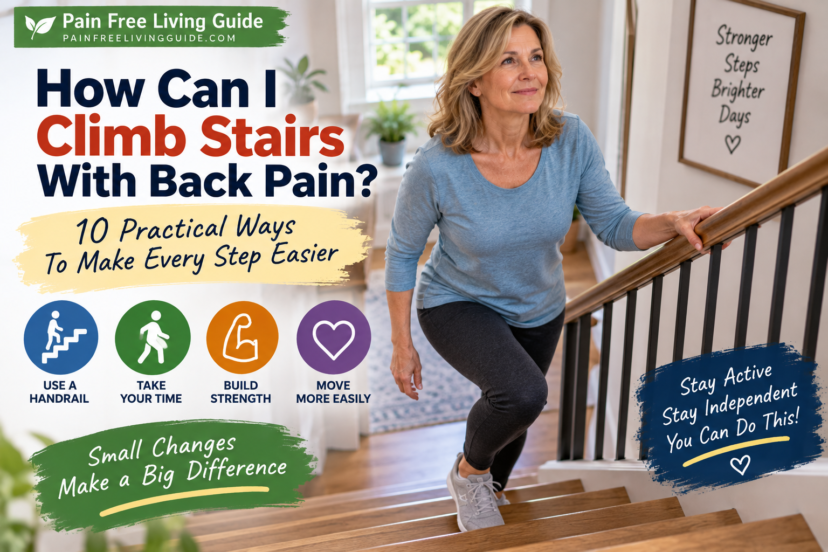
When back pain turns every staircase into a challenge, even getting from the living room to the bedroom can require extra thought. If you’re wondering how can I climb stairs with back pain, the goal isn’t necessarily to avoid stairs or force yourself through significant discomfort. It’s to make an unavoidable everyday movement safer, easier, and more comfortable.
Stair climbing requires more leg strength, balance, hip movement, and muscular effort than walking on level ground. When you’re already living with lower back pain, stiffness, weakness, or reduced mobility, those extra demands can become much more noticeable.
Fortunately, simple changes can help. Using the handrail, slowing down, reducing what you carry, improving stair safety, and gradually strengthening your legs and hips can all make a difference. With patience and consistent practice, stairs can become less intimidating and more manageable.
🪜 Quick Answer: How Can I Climb Stairs With Back Pain?
To climb stairs more comfortably with back pain, use a secure handrail, slow your pace, place your foot securely on each step, and avoid rushing or carrying heavy loads. Keep your movements controlled and take a safe break when necessary. Over time, strengthening your legs, hips, and trunk and improving balance can reduce the effort required for everyday stair climbing.
Key Takeaways
Most likely cause: Stairs require greater leg and hip strength, balance, trunk control, and physical effort than level walking, which can make an already sensitive back feel more uncomfortable.
Usually serious? Usually not. Some increase in discomfort during demanding activities can occur with common back problems, but severe, worsening, or neurologic symptoms require medical evaluation.
First thing to check: Make sure the stairs are well lit and clear, use a secure handrail, and notice whether rushing, carrying objects, fatigue, weakness, or a particular movement increases your symptoms.
Best solution: If you’re asking how can I climb stairs with back pain, combine slower, controlled stair climbing with handrail support, lighter loads, activity pacing, and gradual strengthening of your legs, hips, and trunk.
🔍 Why Stairs Require More Effort When Your Back Hurts
Stair climbing is more physically demanding than it looks.
With every upward step, you have to lift your body against gravity while balancing primarily on one leg. Your quadriceps, gluteal muscles, calves, hips, and trunk work together to produce and control that movement.
Existing back pain can make this harder.
You may move more cautiously, feel stiff through your hips, have less confidence putting weight through one leg, or simply have less strength because pain has reduced your activity level.
This doesn’t necessarily mean climbing stairs is damaging your back.
Instead of thinking, “Stairs are bad for me,” think, “How can I reduce the effort and make this movement easier?”
🪜 1. Use The Handrail
The handrail is one of the simplest tools available.
Using a secure rail can improve balance, increase confidence, and provide additional support as you transfer your weight from one step to another.
Don’t treat using the rail as a sign of weakness.
If it makes climbing stairs with back pain safer or more comfortable, use it.
When possible, keep at least one hand available for the rail instead of carrying objects in both hands.
If your home staircase doesn’t have a secure handrail, adding one may be a worthwhile safety improvement, particularly for older adults or anyone experiencing balance difficulties.
🐢 2. Slow Down And Stop Rushing
Moving quickly up stairs requires your muscles to generate force faster.
When you’re already experiencing pain, slowing down gives you more time to position your feet, transfer your weight, and control each movement.
Try a simple rhythm:
Step → Stabilize → Breathe → Continue.
You don’t have to stop after every stair. The point is to avoid using momentum simply to get the staircase over with.
If you’re climbing multiple flights, pausing safely at a landing may be more comfortable than pushing until you’re exhausted.
👣 3. Place Your Foot Securely On Each Step
Foot placement matters for both comfort and safety.
Whenever possible, place enough of your foot on the stair to feel stable rather than balancing primarily on the front of your foot.
Wear shoes that fit securely and provide reliable traction. Loose slippers, socks on slippery wooden stairs, or worn footwear can increase fall risk.
Avoid looking down continuously if that makes you bend significantly forward, but make sure you can clearly see where you’re stepping.
Stairways should also be well lit and free of clutter.
🧍 4. Find A Comfortable Upright Position
People with back pain sometimes become overly focused on maintaining “perfect posture.”
You don’t need to climb stairs with your spine rigidly straight.
Some natural forward trunk movement is normal during stair climbing.
However, if you’re bending far forward and pulling yourself upward because your legs feel weak, the movement may become more tiring.
Use the handrail as needed, keep your movements controlled, and find a trunk position that feels stable and comfortable.
The goal is efficient movement, not perfect posture.
🛍️ 5. Carry Less On The Stairs
If you’re asking how can I climb stairs with back pain more comfortably, look at what you’re carrying.
Laundry baskets, groceries, suitcases, packages, and household supplies can significantly increase the challenge.
A bulky load may also prevent you from seeing the stairs or using the handrail.
Instead:
- Divide Heavy Loads Into Smaller Trips
- Ask For Help With Awkward Objects
- Keep One Hand Available For The Rail
- Avoid Carrying Items That Block Your View
- Consider A Lightweight Backpack For Suitable Small Items
Making two manageable trips can be smarter than struggling through one overloaded trip.
⏱️ 6. Pace Your Stair Trips During The Day
Sometimes the staircase isn’t the only problem.
You may already be tired before you reach it.
Imagine spending the day working, shopping, driving, cooking, cleaning, and walking. By evening, your legs and back may have less endurance available for another demanding task.
When practical, organize your day to reduce unnecessary stair trips.
For example, bring several lightweight and safely manageable items upstairs together rather than repeatedly going up and down for one small object.
But don’t combine so many things that you create an unsafe load.
The goal is reducing unnecessary effort—not creating a fall hazard.
💪 7. Strengthen The Muscles That Help You Climb
One of the best long-term strategies is improving the physical capacity required for stairs.
Your legs and hips do much of the work.
Useful exercises may include:
Sit-To-Stands
Sit on a stable chair and stand up using controlled movement, then slowly sit again.
This builds functional leg and hip strength that transfers directly to everyday activities.
Bridges
Bridges can strengthen your gluteal muscles and surrounding areas.
Calf Raises
Holding stable support if needed, slowly rise onto your toes and lower again.
Low Step-Ups
When safe and appropriate, practicing controlled step-ups on a low, stable step can closely resemble stair climbing.
Walking
Regular walking helps maintain general endurance, which can make everyday physical tasks less exhausting.
Start at a level your body tolerates and gradually progress rather than suddenly increasing exercise volume.
🚶 8. Keep Moving Between Stair Trips
When stairs hurt, it’s tempting to minimize all activity.
But becoming less active over weeks or months may reduce muscle strength and endurance, potentially making the stairs even more demanding.
For uncomplicated back pain, regular comfortable movement is often more practical than prolonged inactivity.
Try short walks, gentle mobility exercises, and appropriate strengthening throughout the week.
Think of movement as maintaining your ability to do the things everyday life requires.
You don’t have to become an athlete.
Being able to walk around the neighborhood, get out of a chair, carry light groceries, and comfortably manage your home’s stairs are meaningful fitness goals.
🌿 9. Use Simple Comfort Strategies On Difficult Days
Some days your back may simply be more sensitive.
Maybe you slept poorly, spent hours driving, did too much yard work, or had an unusually demanding workday.
On those days, adjust rather than giving up.
A warm shower or heating pad may temporarily help with muscle soreness or stiffness for some people. Follow the manufacturer’s safety instructions and don’t fall asleep while using a heating pad.
Gentle movement can also help you avoid becoming excessively stiff.
Before tackling several flights, try walking around briefly or doing comfortable movements rather than immediately rushing from prolonged sitting to the staircase.
If an activity produces sharp or rapidly worsening pain, stop and reassess rather than forcing yourself through it.
🏠 10. Make Your Home Staircase Easier And Safer
Sometimes the smartest pain-management strategy isn’t an exercise—it’s changing your environment.
Take a critical look at your stairs.
Check for:
- Loose Or Missing Handrails
- Poor Lighting
- Objects Left On Steps
- Slippery Surfaces
- Loose Rugs Near The Staircase
- Damaged Or Uneven Steps
For older adults, stair safety becomes particularly important because a fall can have consequences far beyond temporary back discomfort.
Motion-activated lighting may be useful for dark stairways, especially during nighttime trips.
If mobility is becoming significantly limited, an occupational therapist can also suggest home modifications that support safer independent living.
🧠 Don’t Let Fear Make Every Staircase Feel Dangerous
Pain can understandably make you cautious.
If you’ve experienced a sharp flare while climbing stairs, you may begin anticipating pain every time you see a staircase.
That can lead to increasingly stiff or hesitant movement.
You don’t need to ignore your symptoms, but you also don’t need to assume every uncomfortable sensation means you’re causing damage.
When medically appropriate, gradually practicing manageable stair climbing can help rebuild confidence.
Start with what you can comfortably handle.
Consistency is more valuable than forcing yourself through a painful marathon of stair climbing.
🩺 How Physical Therapy Can Help With Stair Climbing
A physical therapist can be especially helpful if stairs have become one of your biggest daily challenges.
Instead of offering generic back exercises, a therapist can observe how you actually climb stairs.
They may assess:
- Leg And Hip Strength
- Balance
- Trunk Control
- Hip And Knee Mobility
- Walking Ability
- Foot Placement
- Activity Tolerance
- Fear Or Avoidance Of Movement
Your treatment plan might include sit-to-stands, step-ups, balance training, strengthening, mobility exercises, and gradual stair practice.
This functional approach is particularly valuable because the goal isn’t merely to make an exercise easier.
The goal is making your real staircase easier.
🚨 When To See A Doctor
Back pain while climbing stairs isn’t automatically a sign of a serious problem. However, certain symptoms deserve medical attention.
Talk with a healthcare professional if your pain is severe, steadily worsening, interfering significantly with walking or daily activities, or isn’t improving despite reasonable self-care.
Also seek evaluation if you develop significant leg weakness, persistent numbness or tingling, unusual balance problems, repeated falls, or pain that consistently travels down one or both legs.
Seek urgent medical care for new bowel or bladder control problems, numbness around the groin or saddle area, severe or rapidly worsening leg weakness, or other major neurologic symptoms.
Back pain following significant trauma or accompanied by fever or unexplained weight loss should also be evaluated.
❓ Frequently Asked Questions
What Is The Best Way To Climb Stairs With Lower Back Pain?
Use a secure handrail, slow your pace, place your foot securely on each step, and use controlled movements. Avoid carrying heavy or awkward objects when possible.
Should I Avoid Stairs If My Back Hurts?
Not necessarily. If stairs are safe and medically appropriate for you, modifying how you climb and gradually improving your physical capacity may be more useful than avoiding them completely.
Is It Better To Go Up Stairs One Step At A Time With Back Pain?
For some people, taking one step at a time may temporarily improve comfort or confidence. However, persistent difficulty or significant one-sided weakness should be evaluated by a healthcare professional or physical therapist.
Should I Lean Forward When Climbing Stairs?
A small amount of forward trunk movement is normal. Avoid deliberately forcing yourself into an exaggerated posture. Aim for controlled, comfortable movement while using the handrail when needed.
What Exercises Make Climbing Stairs Easier?
Sit-to-stands, appropriately selected step-ups, bridges, calf raises, walking, and other leg and hip strengthening exercises may improve stair-climbing capacity.
Can Weak Legs Make Back Pain Worse On Stairs?
Weak or easily fatigued leg and hip muscles can make stair climbing more demanding. Improving strength may reduce how difficult the activity feels and improve overall mobility.
Is Going Downstairs Harder On Your Back Than Going Upstairs?
It depends on the individual. Going upstairs requires substantial muscular effort to lift the body, while descending requires controlled lowering and balance. Back, hip, knee, or leg problems can make either direction uncomfortable.
🌅 Conclusion: Make Every Step More Manageable
If you’re wondering how can I climb stairs with back pain, you don’t necessarily need a complicated solution.
Start with the staircase you use every day.
Use the handrail. Slow down. Wear secure footwear. Carry less. Improve the lighting. Keep the stairs clear. Take a break when you need one.
Then work on the longer-term goal: making your body better prepared for the task.
Gradually strengthen your legs and hips. Keep walking. Practice appropriate movements. Improve your balance and endurance. Get professional guidance when symptoms or mobility problems make progressing difficult.
You may not transform your stair climbing overnight, and that’s okay.
The goal isn’t to race upstairs or prove how much discomfort you can tolerate. It’s to make an unavoidable part of everyday life safer, easier, and more comfortable.
Small improvements in strength, movement, confidence, and home safety can add up. Stay consistent, progress patiently, and focus on maintaining the mobility and independence that allow you to keep participating in the life you enjoy.
Medical Disclaimer: This article is for general educational and informational purposes only and isn’t a substitute for professional medical advice, diagnosis, or treatment. Back pain can have many causes. Consult a qualified healthcare professional for persistent, severe, worsening, or unexplained symptoms and before starting a new exercise, supplement, or treatment program.
Explore more:
- Dehydration And Joint Pain: Can Not Drinking
- Why Does Climbing Stairs Make My Back Pain Worse?
- What Are The Most Common Mobility Mistakes?


Comments are closed.