
How Can I Sit Comfortably With Lower Back Pain? 10 Practical Ways To Make Sitting Easier
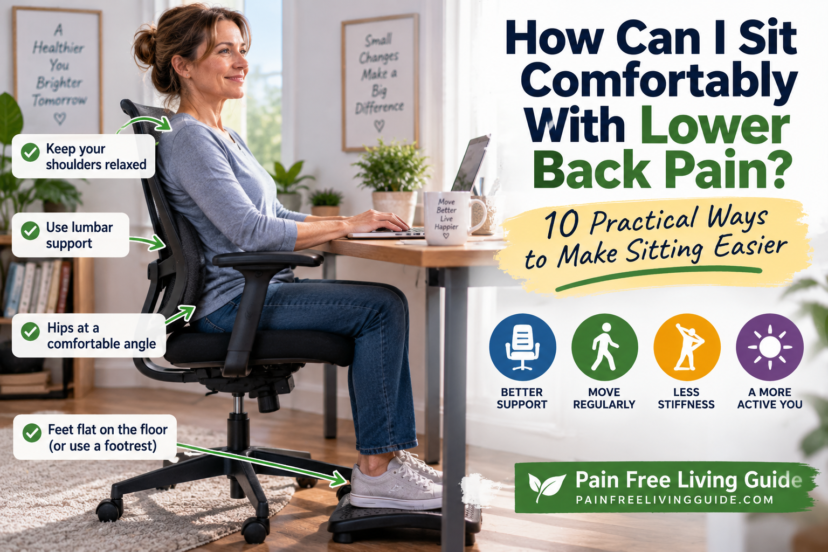
Practical Ways to Sit Easier and More Comfortably
Sitting shouldn’t feel like an endurance test. Yet when you’re living with an aching or stiff lower back, working at a desk, eating dinner, watching TV, or taking a long car ride can quickly become uncomfortable. If you’re asking, how can I sit comfortably with lower back pain, the answer usually isn’t finding one magical chair or forcing yourself to maintain “perfect” posture all day.
A better goal is practical comfort.
Small changes to your chair, back support, foot position, sitting time, and movement habits can make everyday sitting easier. Just as importantly, you don’t need to spend your life avoiding chairs because your back hurts.
By learning how to support your body, change positions regularly, and gradually improve strength and mobility, you can make necessary sitting more manageable while continuing to live an active, independent life.
How Can I Sit Comfortably With Lower Back Pain?
To sit more comfortably with lower back pain, use a supportive chair, keep your feet comfortably supported, position your hips and knees naturally, and consider a small lumbar support if it feels good. Avoid staying in one position for long periods. Change your sitting position regularly and take short standing or walking breaks. The most comfortable posture is often one that you’re able to change throughout the day.
🔍 Why Sitting Can Make Lower Back Pain Uncomfortable
Sitting isn’t automatically bad for your spine.
The bigger problem for many people is sitting in the same position for too long, especially when they’re already dealing with back pain.
Your lower back, hips, and surrounding muscles continue working while you sit. As time passes, muscle fatigue, stiffness, and sensitivity can build. A position that feels perfectly comfortable at 9 a.m. might become irritating by 11 a.m.
This is especially relevant if your day involves several forms of sitting—working at a computer, commuting, eating meals, and relaxing on the couch.
The goal isn’t to eliminate sitting. It’s to make sitting fit your body and regularly interrupt it with movement.
🪑 1. Start With A Chair That Actually Supports You
You don’t necessarily need an expensive ergonomic chair.
Start by asking whether your current chair allows you to sit comfortably with your feet supported and your back reasonably relaxed.
A practical chair generally works better when:
- Your Feet Can Rest On The Floor Or A Footrest
- Your Seat Isn’t Uncomfortably Deep
- Your Back Has Some Support
- Your Arms Can Relax Instead Of Reaching Forward
- You Can Easily Change Positions
- The Chair Isn’t So Low That Standing Up Becomes Difficult
Older adults may find very low, soft couches particularly challenging because they can be difficult to get into and out of.
A firmer chair with armrests can sometimes make everyday sitting and standing easier.
🧩 2. Experiment With Lumbar Support
If you’re wondering how can I sit comfortably with lower back pain at work, one of the simplest things to test is lumbar support.
Some office chairs have adjustable lumbar support. If yours doesn’t, you can experiment with a small lumbar cushion or rolled towel behind your lower back.
More support isn’t automatically better.
A large, firm cushion that pushes your spine aggressively forward can be just as uncomfortable as having no support.
Start small.
Position the support around the natural curve of your lower back and adjust it until you feel supported rather than forced into position.
If lumbar support makes your symptoms worse, don’t continue using it simply because it’s marketed as ergonomic.
Comfort matters.
👣 3. Give Your Feet Somewhere To Rest
Dangling feet can make comfortable sitting harder.
Ideally, your feet should rest on the floor or another stable surface. If your chair must be higher because of your desk, consider using an inexpensive footrest.
You don’t need to obsess over achieving an exact 90-degree angle at every joint.
Your body isn’t a geometry problem.
Aim for a relaxed position where your feet and legs feel supported and you can easily shift position.
Crossing your legs briefly isn’t necessarily dangerous either. The larger issue is remaining in any one position for a prolonged period when that position increases your symptoms.
💻 4. Bring Your Work Toward You
Sometimes the chair isn’t the real problem.
Your computer may be too far away.
If your keyboard, mouse, paperwork, or monitor encourages you to constantly lean and reach forward, your back and shoulder muscles have to work harder.
Move frequently used objects closer.
Keep your keyboard and mouse where your elbows can remain comfortably near your body. Position your screen so you don’t have to continually bend forward or look sharply downward.
Laptop users may benefit from a separate keyboard and mouse when working for extended periods because this allows the screen and hands to be positioned independently.
The simplest ergonomic improvement is often reducing unnecessary reaching.
🔄 5. Stop Searching For One “Perfect” Posture
Many people with chronic back pain become anxious about posture.
They repeatedly correct themselves:
“Sit straight.”
“Pull your shoulders back.”
“Don’t slouch.”
But holding yourself rigidly upright for hours can itself become tiring.
A more practical approach is posture variation.
Sit upright for a while. Lean against your backrest. Adjust your hips. Stand briefly. Walk. Then sit again.
When asking how can I sit comfortably with lower back pain, think “next comfortable position” rather than “perfect position.”
Your body is designed to move.
⏱️ 6. Change Position Before Your Back Starts Complaining
Don’t always wait for significant pain before moving.
Suppose your lower back usually becomes uncomfortable after 45 minutes of sitting. Try changing position or standing after 25–30 minutes instead.
You might:
- Stand During A Phone Call
- Walk To Refill Your Water
- Perform A Few Gentle Movements
- Work Standing Briefly
- Walk Around Your Home Or Office
- Change Your Sitting Position
You don’t necessarily need a long break.
Even brief movement breaks can interrupt prolonged sitting.
Using a phone or smartwatch reminder can be helpful if you tend to become absorbed in your work.
🚶 7. Use Gentle Movement Instead Of Complete Rest
When sitting makes your back ache, the couch can seem like the logical solution.
But several additional hours of sitting or lying down may leave some people feeling even stiffer.
Try gentle movement instead.
A short walk around the house or neighborhood can help you change position and keep your body moving without requiring a strenuous workout.
You can also experiment with comfortable mobility exercises such as:
- Pelvic Tilts
- Gentle Trunk Rotations
- Cat-Cow Movements
- Hip Flexor Stretches
- Easy Knee-To-Chest Movements
- Short, Comfortable Walks
Not every exercise suits every back problem. Stop movements that produce sharp or rapidly worsening symptoms and seek professional advice if you’re unsure what is appropriate.
💪 8. Build Strength So Sitting Requires Less Effort
Better sitting comfort isn’t only about furniture.
Your physical capacity matters too.
Your trunk, back, hips, and legs all contribute to posture, movement, and everyday function. Gradually strengthening these areas may improve your ability to tolerate normal daily activities.
Depending on your abilities, exercises may include:
Sit-To-Stands: Useful for leg strength and everyday independence.
Bridges: Can strengthen the hips and surrounding muscles.
Bird Dogs: Challenge trunk control while moving the arms and legs.
Resistance Exercises: Can build general strength and physical capacity.
Walking: Helps maintain endurance and keeps you active.
A physical therapist can help determine appropriate exercises if chronic pain, previous injuries, arthritis, or other health conditions make exercising difficult.
🌿 9. Try Simple Home Comfort Strategies
You don’t need to buy a collection of expensive back-pain products.
Start with simple strategies.
Heat
A heating pad or warm shower may temporarily ease muscle stiffness and soreness for some people.
Use heating products according to their instructions and don’t fall asleep with a heating pad.
Cushions
A small lumbar cushion, seat cushion, or folded towel can sometimes improve comfort. Test inexpensive options before investing heavily in specialized equipment.
Movement
Regular comfortable movement is one of the simplest natural strategies available.
Relaxation
Pain can cause people to tense their back, shoulders, jaw, and other muscles. Slow breathing and consciously relaxing unnecessary muscle tension can be useful additions to your routine.
These strategies aren’t cures. Their purpose is making daily life easier.
🚗 10. Adapt The Same Principles To Driving And Relaxing
The principles for sitting comfortably with lower back pain aren’t limited to office chairs.
In The Car
Move your seat close enough that you don’t need to stretch for the pedals or steering wheel. Adjust the backrest and lumbar support until your body feels comfortably supported.
On longer journeys, take safe breaks when practical to get out and move.
On The Couch
Very soft couches can allow you to sink deeply into one position.
Try a supportive cushion behind your back or choose a firmer seat when necessary.
And don’t forget that your favorite recliner can still become uncomfortable after several uninterrupted hours.
Regardless of where you’re sitting, position changes matter.
🩺 How Physical Therapy Can Make Sitting Easier
If you’ve tried adjusting your chair and still struggle with sitting, physical therapy may help identify factors that generic ergonomic advice misses.
A physical therapist can evaluate your mobility, strength, movement patterns, sitting tolerance, work setup, and activities that aggravate or relieve symptoms.
Treatment may involve strengthening, mobility work, graded exposure to sitting, activity pacing, and individualized strategies for work, driving, household tasks, and exercise.
The objective isn’t necessarily to create textbook-perfect posture.
It’s to help you function more comfortably and confidently in real life.
🚨 When To See A Doctor
Most episodes of uncomplicated lower back pain don’t indicate a dangerous condition. However, ongoing or worsening symptoms deserve attention.
Consider seeing a healthcare professional if your pain is severe, progressively worsening, repeatedly limits normal activities, persists despite reasonable self-care, or is accompanied by significant leg pain, numbness, tingling, or weakness.
Seek urgent medical attention if back pain occurs with new bowel or bladder control problems, numbness around the groin or saddle area, severe or rapidly worsening weakness, or other concerning neurological symptoms.
Back pain after significant trauma, or pain accompanied by fever or unexplained weight loss, also warrants medical evaluation.
❓ Frequently Asked Questions
What Is The Best Sitting Position For Lower Back Pain?
There is no single best position for everyone. Start with your feet supported, your back comfortable against the chair, and your work within easy reach. Most importantly, change positions regularly instead of maintaining one posture for hours.
Is It Better To Sit Or Lie Down With Lower Back Pain?
It depends on your symptoms, but prolonged time in either position may increase stiffness. Alternating sitting, standing, walking, and short periods of comfortable rest is often more practical than remaining inactive for hours.
Should I Use A Lumbar Support For Lower Back Pain?
A small lumbar cushion or rolled towel may make sitting more comfortable for some people. Adjust the size and position based on comfort rather than assuming more support is always better.
How Long Should I Sit With Lower Back Pain?
There isn’t a universal time limit. If symptoms reliably increase after a certain period, try changing position before reaching that point. Frequent short movement breaks can make long workdays easier to manage.
Why Does My Lower Back Hurt More When Sitting Than Standing?
Sitting can aggravate certain back problems because of prolonged positioning, muscle fatigue, individual spinal sensitivity, or reduced movement. A healthcare professional can help evaluate persistent position-specific pain.
Are Ergonomic Chairs Worth It For Lower Back Pain?
An adjustable chair can make it easier to create a comfortable workstation, but an expensive chair isn’t a guaranteed solution. Position changes, movement breaks, strength, and overall workstation setup also matter.
Can Walking Help Lower Back Pain From Sitting?
Gentle walking is often a practical way to interrupt prolonged sitting and reduce stiffness. Begin with a comfortable amount and gradually increase your walking if your symptoms tolerate it.
🌅 Conclusion: Make Sitting More Comfortable, Not Perfect
If you keep wondering how can I sit comfortably with lower back pain, remember that you don’t have to discover one flawless posture and maintain it all day.
Instead, create options.
Support your feet. Adjust your chair. Experiment with gentle lumbar support. Bring your computer closer. Change positions. Stand periodically. Walk when you can. Gradually strengthen your body.
Most importantly, don’t let the pursuit of perfect posture make you afraid to sit, move, work, travel, or enjoy your life.
Managing chronic back pain is often about making ordinary activities more comfortable and sustainable, not eliminating every uncomfortable sensation before you participate in them.
Start with one or two changes rather than rebuilding your entire workstation overnight. Pay attention to what genuinely helps your body, stay consistent with movement and strengthening, and gradually build your sitting tolerance.
Small improvements can add up to more comfortable workdays, easier car trips, greater mobility, and more confidence in everyday life.
Medical Disclaimer: This article is provided for general educational and informational purposes only and isn’t a substitute for professional medical advice, diagnosis, or treatment. Consult a qualified healthcare professional about persistent, severe, worsening, or unexplained back pain and before beginning a new exercise, supplement, or treatment program.
Explore more:
- How Can I Climb Stairs With Back Pain?
- Why Back Pain Feels Worse At Night
- What Are The Most Common Mobility Mistakes?



Comments are closed.