
Poor Posture Pain: How Poor Posture May Be Contributing To Everyday Pain
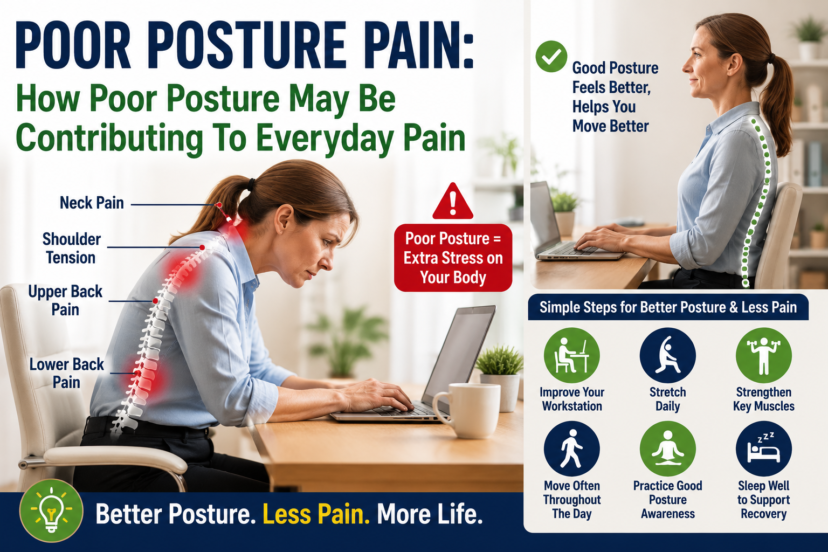
How to manage poor posture pain? Many people assume that everyday aches and pains are simply part of getting older. But in many cases, the real culprit isn’t age—it’s posture. Whether you spend hours sitting at a desk, looking down at your phone, driving, or relaxing on the couch, poor posture can gradually place extra stress on your muscles, joints, and spine. Over time, this added strain may contribute to neck pain, back pain, headaches, shoulder tension, hip discomfort, and even reduced mobility.
The good news is that poor posture pain is often manageable with simple daily habits. Improving how you sit, stand, walk, and move can reduce unnecessary stress on your body while helping you feel stronger, more comfortable, and more confident throughout the day.
You don’t need expensive equipment or complicated treatments to start feeling better. Small, consistent changes—including strengthening key muscles, stretching tight areas, improving your workspace, and staying active—can make a noticeable difference over time.
This guide explains how poor posture pain develops, the warning signs to watch for, and the practical, science-backed strategies that can help you move more comfortably and support healthy aging.
⭐ Quick Answer: Poor Posture Pain
Poor posture pain happens when poor body alignment places extra stress on muscles, ligaments, joints, and the spine. Improving posture through regular movement, strengthening exercises, stretching, ergonomic adjustments, and healthy daily habits can often reduce pain and improve mobility over time.
Key Takeaways
Most likely cause: Spending long periods sitting, looking down at devices, driving, or working in awkward positions can overload certain muscles and joints, contributing to stiffness, tension, and discomfort.
Usually serious? Usually not. Poor posture pain often improves with regular movement, better positioning, appropriate strengthening, and changes to everyday habits. Persistent or worsening pain, however, may have another underlying cause that deserves medical evaluation.
First thing to check: Notice when your discomfort appears and which daily positions make it worse. Check your desk setup, chair support, screen height, phone habits, sleeping position, and how long you remain in one position without moving.
Best solution: Focus on frequent movement rather than trying to maintain one “perfect” posture all day. Adjust your workspace for comfort, take regular movement breaks, gradually strengthen supporting muscles, and use gentle mobility exercises. Seek professional advice if pain is severe, persistent, follows an injury, or occurs with weakness, numbness, or other concerning symptoms.
🦴 Understanding Poor Posture Pain
Good posture keeps your body properly aligned, allowing muscles and joints to work efficiently with minimal strain.
Poor posture occurs when parts of your body consistently fall out of their ideal alignment.
Examples include:
- Rounded shoulders
- Forward head posture
- Slouching while sitting
- Leaning heavily to one side
- Arching the lower back excessively
- Standing with locked knees
These positions force certain muscles to work harder while others become weak or inactive.
Over weeks, months, or years, this imbalance may contribute to poor posture pain throughout the body.
💻 Common Causes Of Poor Posture Pain
Modern lifestyles make poor posture increasingly common.
Several everyday habits contribute to the problem.
Sitting For Long Periods
Office work, commuting, and watching television often involve prolonged sitting.
Remaining in one position for hours can cause:
- Tight hip flexors
- Weak glute muscles
- Rounded shoulders
- Stiff lower back
Looking Down At Devices
Constantly looking at smartphones or tablets increases strain on the neck.
This is often called “tech neck.”
Poor Workstation Setup
Improper desk height, unsupportive chairs, and poorly positioned monitors encourage unhealthy posture.
Weak Core Muscles
Your core supports the spine.
Weak abdominal and back muscles make it harder to maintain proper alignment.
Lack Of Physical Activity
Inactive muscles lose strength and endurance, making it more difficult to maintain good posture throughout the day.
😣 Symptoms Of Poor Posture Pain
Poor posture doesn’t always cause immediate discomfort.
Instead, symptoms often develop gradually.
Common signs include:
- Neck pain
- Shoulder tension
- Upper back pain
- Lower back pain
- Hip discomfort
- Frequent headaches
- Muscle fatigue
- Stiffness after sitting
- Reduced flexibility
- Difficulty standing for long periods
Many people notice symptoms improve after moving around, stretching, or changing positions.
🚶 How Poor Posture Affects Your Entire Body
Posture influences nearly every part of your musculoskeletal system.
Neck
Forward head posture increases the workload on neck muscles, sometimes leading to chronic tension.
Shoulders
Rounded shoulders tighten chest muscles while weakening upper back muscles.
Spine
Poor spinal alignment places uneven pressure on discs and joints.
Hips
Extended sitting shortens hip flexors, making standing and walking less comfortable.
Knees
Improper posture may alter leg alignment, increasing stress on knees.
Feet
Poor alignment can affect walking mechanics and overall balance.
💪 Strength Exercises That Help Reduce Poor Posture Pain
Strengthening the muscles that support good posture is one of the most effective long-term strategies.
Focus on:
Rows
Resistance band or dumbbell rows strengthen the upper back.
Wall Angels
These improve shoulder mobility and posture awareness.
Glute Bridges
Strong glutes help stabilize the pelvis.
Planks
Planks strengthen the core without excessive spinal movement.
Bird Dogs
This exercise improves balance and spinal stability.
Aim for:
- Two to three sessions each week
- Controlled movements
- Proper technique rather than heavy resistance
🧘 Stretch Tight Muscles Daily
Many posture problems involve muscles that become shortened from repetitive positions.
Helpful stretches include:
- Chest doorway stretch
- Hip flexor stretch
- Hamstring stretch
- Cat-cow stretch
- Upper trapezius stretch
- Child’s pose
Hold each stretch for:
- 20–30 seconds
- Without bouncing
- While breathing slowly
Daily stretching can gradually improve flexibility and reduce poor posture pain.
🪑 Improve Your Ergonomics
Your environment has a major impact on posture.
Consider these adjustments:
Computer Monitor
The top of your screen should be at or slightly below eye level.
Chair
Choose a chair that supports your lower back.
Keep:
- Feet flat on the floor
- Knees near 90 degrees
- Hips slightly higher than knees if comfortable
Keyboard And Mouse
Keep elbows close to your body with wrists in a neutral position.
Phone Use
Raise your phone closer to eye level instead of bending your neck downward.
Small ergonomic improvements often reduce discomfort significantly.
🚶 Keep Moving Throughout The Day
Even perfect posture becomes uncomfortable if maintained too long.
Movement is essential.
Try to:
- Stand every 30–60 minutes
- Walk during phone calls
- Stretch between meetings
- Use stairs when possible
- Perform gentle shoulder rolls regularly
Frequent movement helps reduce muscle fatigue and joint stiffness.
🥗 Nutrition Supports Healthy Muscles And Joints
Healthy eating supports tissues involved in posture and movement.
Prioritize:
Protein
Supports muscle repair and maintenance.
Examples include:
- Fish
- Chicken
- Eggs
- Greek yogurt
- Beans
Omega-3 Fatty Acids
Found in:
- Salmon
- Walnuts
- Chia seeds
These nutrients help support normal inflammatory responses.
Calcium And Vitamin D
Important for maintaining healthy bones.
Many U.S. adults benefit from discussing vitamin D testing with their healthcare provider.
Hydration
Well-hydrated muscles function more efficiently and may feel less stiff.
🌿 Natural Relief Methods For Poor Posture Pain
Many people find additional relief through conservative therapies.
These include:
- Heat therapy
- Ice packs after activity
- Massage therapy
- Foam rolling
- Yoga
- Pilates
- Walking
- Swimming
- Mindfulness meditation for stress-related muscle tension
Some individuals also discuss supplements such as magnesium, turmeric (curcumin), collagen, or glucosamine with their healthcare provider. While results vary, they may be appropriate in certain situations.
🩺 When Physical Therapy May Help
A physical therapist can evaluate posture, movement patterns, flexibility, and muscle strength.
Treatment may include:
- Personalized exercise programs
- Manual therapy
- Balance training
- Core strengthening
- Stretching routines
- Ergonomic recommendations
Physical therapy is especially valuable if poor posture pain has persisted despite home care.
🚨 When To See A Doctor
Although posture-related discomfort is common, certain symptoms require medical evaluation.
See your healthcare provider if you experience:
- Severe or worsening pain
- Numbness or tingling
- Muscle weakness
- Pain following an injury
- Loss of bladder or bowel control
- Difficulty walking
- Persistent pain lasting several weeks despite self-care
- Fever, unexplained weight loss, or night pain
Early diagnosis can help identify conditions that require specific treatment.
❓ Frequently Asked Questions
Can poor posture really cause pain?
Yes. Poor posture can place extra stress on muscles, joints, ligaments, and spinal structures, contributing to pain over time.
How long does it take to improve posture?
Many people notice small improvements within two to four weeks, while more lasting changes often develop after several months of consistent practice.
Can correcting posture eliminate back pain?
It may reduce posture-related back pain, although pain can also have other causes that require medical evaluation.
Does sitting all day cause poor posture pain?
Yes. Long periods of sitting often contribute to tight hips, weak core muscles, rounded shoulders, and neck discomfort.
Is walking good for posture?
Yes. Walking encourages healthy movement, strengthens muscles, improves circulation, and helps reduce stiffness.
What is the best sleeping position for posture?
Sleeping on your back or side with proper pillow support generally helps maintain spinal alignment for many people.
Should older adults work on posture?
Absolutely. Exercise can improve posture, which can help support mobility, balance, comfort, and independence as we age.
🎯 Final Thoughts On Poor Posture Pain
Living with poor posture pain doesn’t have to become your new normal. While posture isn’t the only cause of everyday aches and stiffness, improving your alignment can significantly reduce unnecessary stress on your muscles and joints. Combined with regular movement, strength training, stretching, healthy nutrition, and ergonomic improvements, better posture can help you move more comfortably and enjoy daily activities with greater confidence.
Remember that posture isn’t about sitting all day perfectly—it’s about moving often, building strength, and developing healthier habits over time. Small changes practiced consistently can lead to meaningful improvements in comfort, mobility, and overall quality of life.
Medical Disclaimer
This article is for educational and informational purposes only and should not be considered medical advice. Always consult your physician or another qualified healthcare professional before starting a new exercise program, making significant lifestyle changes, or taking supplements, especially if you have a chronic medical condition, recent injury, or persistent pain. Seek prompt medical attention if you experience severe pain, sudden weakness, numbness, loss of bladder or bowel control, or other concerning symptoms.
 Explore more:




Comments are closed.