Feet Hurt As You Get Older: Why It Happens And What You Can Do About It
Why do feet hurt as you get older? Our feet carry us through thousands of steps every day, yet they’re often one of the most overlooked parts of the body until they begin to hurt. If you’ve noticed that walking feels less comfortable, standing for long periods causes aching, or your feet seem stiffer than they used to be, you’re not alone. Many adults discover that their feet hurt as you get older, making everyday activities more challenging.
The good news is that sore feet aren’t simply something you have to accept with age. While natural changes in your muscles, joints, tendons, and fat pads can contribute to discomfort, many of the factors behind foot pain can be improved through healthy habits, supportive footwear, regular exercise, and proper foot care.
In this guide, you’ll learn why feet hurt as you get older, the most common causes, and practical, science-backed strategies to reduce discomfort, improve mobility, and stay active for years to come.
⭐ Quick Answer: Feet Hurt As You Get Older
Many people’s feet hurt as you get older because of natural changes in the joints, muscles, tendons, ligaments, and protective fat pads of the feet. Conditions such as arthritis, plantar fasciitis, reduced flexibility, poor footwear, and muscle weakness can also contribute. Supportive shoes, strengthening exercises, stretching, weight management, and regular movement often help improve comfort and mobility.
Key Takeaways
- Most likely cause: Feet hurt as you get older because of natural age-related changes, including joint wear, thinning fat pads, reduced flexibility, muscle weakness, and common conditions such as arthritis or plantar fasciitis.
- Usually serious? Most cases are not serious and can be managed with lifestyle changes. However, persistent, severe, or worsening foot pain—especially with swelling, numbness, or wounds that won’t heal—should be evaluated by a healthcare professional.
- First thing to check: Examine your footwear for proper support and cushioning, identify where the pain occurs, and look for signs of swelling, changes in foot shape, or areas of tenderness.
- Best solution: Wear supportive shoes, perform regular foot and calf stretches, strengthen your feet and ankles, maintain a healthy weight, and stay physically active to improve comfort, mobility, and long-term foot health.
👣 Why Feet Hurt As You Get Older
Your feet contain:
- 26 bones
- 33 joints
- More than 100 muscles, tendons, and ligaments
These structures absorb tremendous forces every day.
Over time, years of walking, standing, and everyday activity naturally create wear and tear.
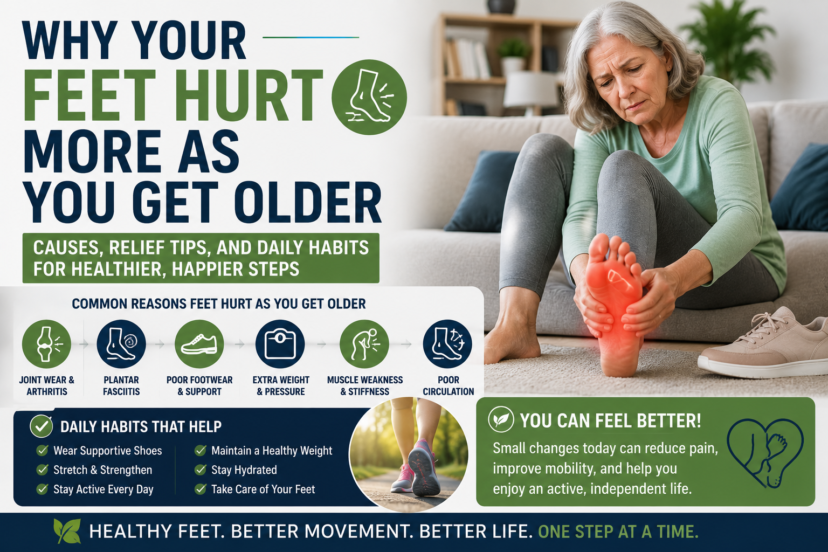
Common reasons feet hurt as you get older include:
- Loss of cushioning beneath the heel
- Reduced joint flexibility
- Muscle weakness
- Tendon changes
- Cartilage wear
- Poor circulation
- Previous injuries
Although aging contributes, many of these changes can be managed successfully.
🦴 Natural Changes That Affect Your Feet
As we age, several normal changes occur.
These include:
Thinning Fat Pads
The protective cushioning beneath your heels gradually becomes thinner.
This may increase pressure while walking.
Reduced Flexibility
Tendons and ligaments become less elastic.
This contributes to stiffness after sitting or sleeping.
Muscle Loss
Natural age-related muscle loss reduces support for the arches and ankles.
Maintaining strength becomes increasingly important.
🔥 Arthritis Is A Common Cause
Arthritis frequently affects the feet.
Common symptoms include:
- Morning stiffness
- Swollen joints
- Pain during walking
- Tenderness
- Reduced flexibility
Both osteoarthritis and inflammatory arthritis may contribute to foot discomfort.
Fortunately, staying active often helps reduce stiffness.
🦶 Plantar Fasciitis
One of the leading reasons feet hurt as you get older is plantar fasciitis.
This condition involves irritation of the thick band of tissue supporting the arch.
Symptoms include:
- Sharp heel pain
- Pain with first morning steps
- Discomfort after long periods of sitting
- Improvement after gentle movement
Stretching and supportive footwear often help.
👟 Wearing The Wrong Shoes
Many people continue wearing shoes that no longer support their changing feet.
Poor footwear may contribute to:
- Heel pain
- Bunions
- Arch pain
- Toe discomfort
- Balance problems
Choose shoes with:
- Good arch support
- Cushioned soles
- Wide toe box
- Stable heel
- Proper fit
Replace worn shoes regularly.
⚖️ Body Weight Affects Foot Comfort
Your feet absorb several times your body weight during walking.
Even modest weight gain increases stress on:
- Heels
- Ankles
- Toes
- Arches
Maintaining a healthy weight helps reduce pressure while supporting long-term joint health.
💪 Weak Foot And Leg Muscles
Strong muscles help absorb impact.
Weakness in the:
- Feet
- Ankles
- Calves
- Hips
May change walking mechanics and increase strain on your feet.
Strengthening these muscles improves stability and balance.
🤸 Best Stretches For Foot Pain
Gentle stretching improves flexibility and reduces stiffness.
Helpful stretches include:
Calf Stretch
Tight calves increase stress on the feet.
Plantar Fascia Stretch
Stretch the sole of your foot before getting out of bed.
Toe Stretch
Improve flexibility by gently spreading and stretching your toes.
Achilles Stretch
Helps reduce tension around the heel.
Stretch slowly without forcing painful movements.
🏋️ Strengthening Exercises For Healthier Feet
Exercise supports healthier movement.
Try:
Toe Curls
Use a towel to strengthen small foot muscles.
Heel Raises
Strengthen calves and improve ankle stability.
Marble Pickups
Improve foot muscle strength and coordination.
Single-Leg Balance
Enhances stability and reduces fall risk.
Practice consistently for the best results.
🚶 Stay Active Without Overloading Your Feet
Movement remains essential for healthy aging.
Excellent low-impact activities include:
- Walking
- Swimming
- Water aerobics
- Cycling
- Tai Chi
- Yoga
If walking becomes uncomfortable, try shorter sessions more frequently rather than one long walk.
🌿 Home Remedies For Foot Pain
Many simple home treatments may help.
Consider:
- Ice packs after activity
- Warm foot soaks
- Foot massage
- Foam rolling the calves
- Gentle stretching
- Compression socks if recommended
- Elevating your feet after prolonged standing
These strategies often improve comfort alongside regular exercise.
🩺 Physical Therapy Can Improve Foot Function
A physical therapist can evaluate:
- Walking mechanics
- Foot posture
- Muscle weakness
- Flexibility
- Balance
- Joint mobility
Treatment often includes:
- Strengthening exercises
- Stretching
- Gait training
- Balance exercises
- Manual therapy
- Home exercise plans
Physical therapy helps address the underlying causes rather than simply masking symptoms.
🥗 Nutrition Supports Healthy Feet
Healthy eating benefits every joint and muscle.
Focus on:
- Fruits
- Vegetables
- Lean protein
- Whole grains
- Healthy fats
- Nuts
- Fish rich in omega-3 fatty acids
Some adults discuss supplements with their healthcare provider, including:
- Vitamin D
- Calcium
- Magnesium
- Omega-3 fatty acids
- Collagen peptides
Stay hydrated to support healthy muscles and connective tissues.
🏡 Everyday Habits That Protect Your Feet
Small habits make a big difference.
Try to:
- Wear supportive shoes indoors and outdoors.
- Avoid prolonged standing without breaks.
- Stretch daily.
- Inspect your feet regularly.
- Trim toenails carefully.
- Replace worn footwear.
- Keep skin moisturized.
These habits support long-term foot health.
🌟 Healthy Lifestyle Habits For Better Mobility
If your feet hurt as you get older, focus on long-term consistency rather than quick fixes.
Helpful habits include:
- Daily movement
- Strength training
- Healthy weight management
- Stretching
- Good posture
- Quality sleep
- Stress management
- Proper hydration
Healthy feet support healthy aging.
⚕️ When To See A Doctor
Seek medical evaluation if you experience:
- Severe foot pain
- Pain after an injury
- Swelling that doesn’t improve
- Redness or warmth
- Open sores
- Numbness
- Difficulty walking
- Pain lasting several weeks despite home treatment
Prompt treatment helps prevent further complications.
❓ FAQs: Feet Hurt As You Get Older
1. Why do feet hurt as you get older?
Natural changes such as thinning fat pads, arthritis, muscle weakness, reduced flexibility, and years of wear and tear commonly contribute.
2. Is foot pain a normal part of aging?
Mild changes are common, but ongoing or severe foot pain should not be ignored because many causes can be treated.
3. What shoes are best for aging feet?
Supportive walking shoes with good cushioning, arch support, a wide toe box, and stable soles are often recommended.
4. Can stretching reduce foot pain?
Yes. Stretching the calves, plantar fascia, Achilles tendon, and toes may improve flexibility and reduce discomfort.
5. Does losing weight help foot pain?
Yes. Even modest weight loss may reduce pressure placed on the feet during daily activities.
6. Can physical therapy help foot pain?
Absolutely. Physical therapists can improve strength, flexibility, balance, and walking mechanics to reduce discomfort.
7. When should foot pain be evaluated?
Persistent pain, swelling, numbness, difficulty walking, or symptoms following an injury should be evaluated by a healthcare provider.
📌 Conclusion: Feet Hurt As You Get Older
If your feet hurt as you get older, remember that discomfort doesn’t have to become a permanent part of everyday life. While aging naturally changes your muscles, joints, and connective tissues, many of the most common causes of foot pain respond well to simple lifestyle improvements.
Supportive footwear, regular stretching, strengthening exercises, healthy weight management, proper foot care, and staying active all work together to protect your feet and improve mobility. These small daily habits may not produce overnight results, but they often lead to meaningful improvements over time.
Your feet support every step you take. Taking care of them today can help you stay active, independent, and comfortable for years to come.
Medical Disclaimer
This article is for educational and informational purposes only and should not be considered medical advice. Always consult a qualified healthcare professional before beginning a new exercise program, treatment, or supplement, especially if you have chronic foot pain, diabetes, circulation problems, or other medical conditions. Seek immediate medical attention if you experience severe pain, sudden swelling, inability to bear weight, open wounds, fever, or signs of infection.
 Explore more: