Pain And Weather Changes: Is There Really A Connection?
Have you ever noticed your knees aching before a rainstorm or your back feeling stiffer on a cold morning? If so, you’re certainly not alone. Millions of people believe that pain and weather changes go hand in hand, especially those living with arthritis, old injuries, or chronic joint and muscle conditions. While scientists continue to study the exact reasons behind this connection, many healthcare professionals agree that weather can influence how some people experience pain—even if it doesn’t directly cause it.
Changes in temperature, humidity, air pressure, and even physical activity levels during different seasons may affect how your muscles and joints feel. For some, symptoms are mild and occasional. For others, weather-related discomfort can make everyday activities like walking, climbing stairs, gardening, or exercising more difficult.
The good news is that you don’t have to let the forecast control your quality of life. By understanding how pain and weather changes may be connected and adopting simple daily habits, you can often reduce stiffness, stay active, and move more comfortably throughout the year.
This guide explains the science behind weather-related pain, who is most affected, and practical, evidence-based strategies to help you stay mobile regardless of the season.
⭐ Quick Answer: Pain And Weather Changes
Research suggests that pain and weather changes may be linked for some people, particularly those with arthritis, previous injuries, or chronic pain conditions. Changes in barometric pressure, temperature, humidity, and activity levels may influence how joints and muscles feel. Staying active, keeping warm, stretching regularly, and maintaining healthy habits can often help reduce weather-related discomfort.
Key Takeaways
Most likely cause: Changes in barometric pressure, temperature, humidity, and daily activity may influence joint stiffness, muscle tension, and pain sensitivity, particularly in people with arthritis, previous injuries, or ongoing musculoskeletal discomfort.
Usually serious? Usually not. The connection between pain and weather changes varies from person to person, and weather-related flare-ups don’t necessarily mean that your underlying condition is getting worse.
First thing to check: Notice when your symptoms appear and whether they correspond with colder temperatures, changing weather, reduced physical activity, or other factors such as poor sleep and prolonged sitting. A simple symptom diary can help reveal patterns.
Best solution: Keep your body moving with regular low-impact activity, gentle stretching, and mobility exercises. Staying warm, maintaining good sleep and hydration habits, and gradually adjusting activity during weather changes may also help reduce stiffness and keep you comfortable throughout the year.
🌦️ Understanding Pain And Weather Changes
Many people report increased pain before storms or during colder weather.
Although research findings have been mixed, studies suggest that weather may affect pain perception in certain individuals rather than directly cause joint damage.
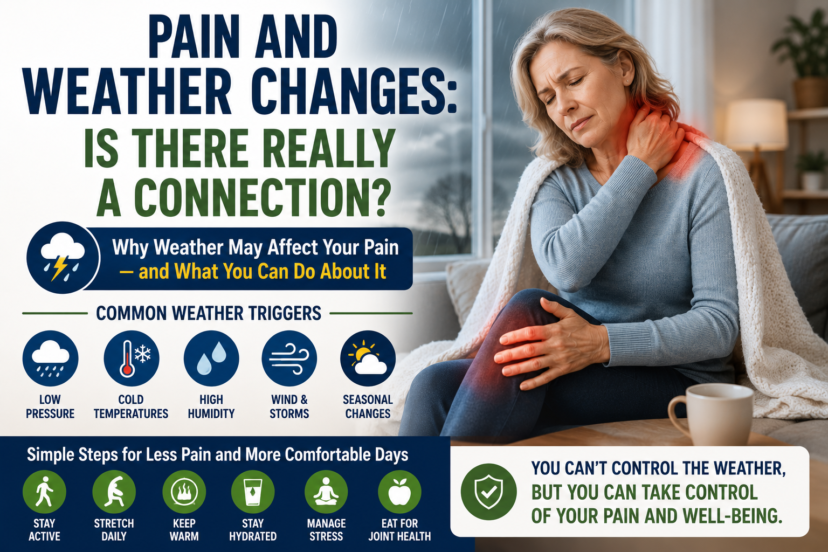
Potential weather factors include:
- Falling barometric pressure
- Cold temperatures
- High humidity
- Rapid weather changes
- Reduced sunlight
- Seasonal inactivity
Not everyone experiences these effects, but many adults with chronic musculoskeletal conditions notice predictable patterns.
🌡️ How Weather May Affect Your Body
Several theories explain why pain and weather changes might occur.
Changes In Barometric Pressure
Barometric pressure refers to the weight of the air around us.
When pressure drops before storms, tissues surrounding joints may expand slightly.
In sensitive individuals, this may increase pressure on nerves and contribute to discomfort.
Cold Temperatures
Cold weather can:
- Tighten muscles
- Reduce flexibility
- Increase joint stiffness
- Slow circulation
- Encourage less physical activity
These factors together may make existing pain feel worse.
Humidity
High humidity may contribute to discomfort for some people, although evidence remains mixed.
Many individuals report increased stiffness during humid conditions.
🦴 Who Is Most Likely To Notice Pain And Weather Changes?
Weather sensitivity appears more common among people with certain conditions.
These include:
- Osteoarthritis
- Rheumatoid arthritis
- Fibromyalgia
- Chronic back pain
- Previous fractures
- Old sports injuries
- Tendon problems
- Neck pain
Older adults may also notice weather-related stiffness more often because of natural age-related joint changes.
🚶 Why Staying Active Matters
When the weather turns cold or rainy, many people move less.
Unfortunately, inactivity often makes stiffness worse.
Regular movement helps:
- Lubricate joints
- Improve circulation
- Maintain flexibility
- Strengthen muscles
- Reduce stiffness
- Improve mood
Even short walks around the house or gentle stretching sessions can help on poor weather days.
🧘 Stretching Helps Reduce Weather-Related Stiffness
Daily stretching helps keep muscles and joints moving comfortably.
Focus on:
Neck
Gentle side bends and rotations.
Shoulders
Shoulder rolls and doorway stretches.
Lower Back
Cat-cow stretches and pelvic tilts.
Hips
Hip flexor stretches.
Hamstrings
Gentle seated or standing stretches.
Calves
Important for comfortable walking.
Hold each stretch:
- 20–30 seconds
- Without bouncing
- While breathing slowly
Stretching is particularly helpful after warming up.
🔥 Keep Your Body Warm
Cold muscles tend to feel tighter.
Simple strategies include:
- Dress in layers
- Wear warm socks
- Use heating pads
- Take warm showers
- Drink warm beverages
- Use heated blankets safely
Applying heat before activity often helps improve flexibility and reduce stiffness.
💪 Strength Training Supports Healthy Joints
Strong muscles help reduce stress on joints.
Helpful exercises include:
- Chair squats
- Wall push-ups
- Resistance band rows
- Glute bridges
- Step-ups
- Bird dogs
Aim for:
- Two to three strength sessions weekly
- Proper form
- Gradual progression
Building muscle helps improve joint stability regardless of the weather.
🪑 Improve Posture And Ergonomics
Poor posture may increase muscle tension and joint stress.
Maintain healthy posture by:
- Sitting upright
- Supporting your lower back
- Keeping shoulders relaxed
- Positioning screens at eye level
- Standing regularly during long periods of sitting
Good posture may reduce strain on sensitive joints and muscles.
🥗 Nutrition May Support Joint Comfort
Although food cannot control the weather, healthy nutrition supports overall joint health.
Consider including:
Omega-3 Fatty Acids
Found in:
- Salmon
- Sardines
- Walnuts
- Flaxseed
Lean Protein
Supports muscle maintenance.
Examples include:
- Chicken
- Fish
- Eggs
- Greek yogurt
- Beans
Vitamin D
Many U.S. adults have low vitamin D levels, especially during winter months.
Discuss testing or supplementation with your healthcare provider if appropriate.
Hydration
Staying well hydrated supports healthy muscle and joint function throughout the year.
🌿 Natural Relief Methods
Many people find additional relief through conservative approaches.
These include:
- Heat therapy
- Warm baths
- Gentle massage
- Foam rolling
- Tai Chi
- Yoga
- Walking
- Water exercise
- Mindfulness meditation
- Deep breathing
Some individuals also discuss supplements such as turmeric (curcumin), glucosamine, chondroitin, collagen, or omega-3 supplements with their healthcare provider.
🩺 When Physical Therapy May Help
If weather-related discomfort limits daily activities, physical therapy may help.
A physical therapist can develop a personalized program that includes:
- Stretching
- Strengthening
- Balance training
- Mobility exercises
- Posture correction
- Home exercise routines
Physical therapy can improve long-term movement and reduce pain regardless of weather conditions.
🚨 When To See A Doctor
Although pain and weather changes are common, certain symptoms require medical evaluation.
Contact your healthcare provider if you experience:
- Severe or worsening pain
- Joint swelling
- Redness or warmth
- Fever
- Difficulty walking
- Numbness or weakness
- Pain after an injury
- Persistent symptoms lasting several weeks
- Unexplained weight loss
- Loss of bladder or bowel control
These symptoms may indicate conditions unrelated to weather.
❓ FAQs: Pain And Weather Changes
Can weather really make pain worse?
For some people, yes. Changes in barometric pressure, temperature, and humidity may influence how joints and muscles feel, although research is still ongoing.
Why do my joints hurt before it rains?
Falling air pressure before storms may slightly affect tissues around joints, potentially increasing discomfort in sensitive individuals.
Does cold weather cause arthritis?
No. Cold weather does not cause arthritis, but it may increase stiffness and make existing symptoms feel more noticeable.
What weather is worst for joint pain?
Many people report increased discomfort during cold, damp, or rapidly changing weather, though experiences vary widely.
Is exercise safe during pain flare-ups?
Gentle movement is often beneficial, but intense exercise may need to be modified during severe flare-ups. Consult your healthcare provider if you’re unsure.
Can heat help weather-related pain?
Yes. Warm showers, heating pads, and warm clothing often help reduce muscle tightness and joint stiffness.
Should I move to a warmer climate?
Some people report feeling better in warmer, drier climates, but research doesn’t consistently show that relocation eliminates chronic pain.
🎯 Final Thoughts On Pain And Weather Changes
Although scientists continue studying the relationship between pain and weather changes, many people genuinely notice their symptoms fluctuate with changing conditions. Rather than focusing on the forecast, focus on habits you can control—regular movement, strength training, stretching, healthy nutrition, good posture, and staying warm when temperatures drop.
These consistent daily practices can help reduce stiffness, improve mobility, and keep you active throughout the year. Even if the weather changes, your commitment to caring for your body can make a meaningful difference in how you feel.
Medical Disclaimer
This article is intended for educational and informational purposes only and should not be considered medical advice. Always consult your physician or another qualified healthcare professional before beginning a new exercise program, taking supplements, or making significant lifestyle changes, especially if you have chronic pain, arthritis, or other medical conditions. Seek prompt medical attention if you experience severe pain, sudden weakness, numbness, fever, or other concerning symptoms.
 Explore more: