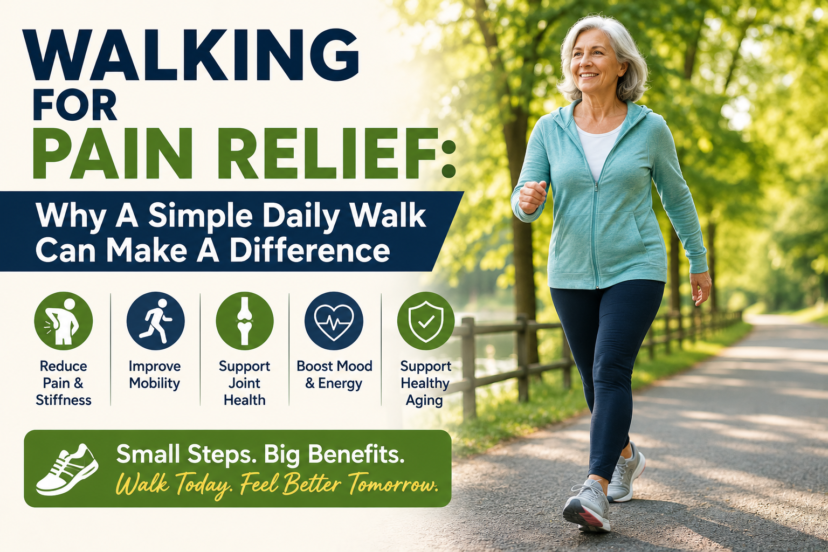
Walking For Pain Relief: Why A Simple Daily Walk Can Make A Difference
Many adults living with aches, stiffness, or chronic discomfort worry that exercise might make their symptoms worse. As a result, they often become less active, which can actually increase muscle weakness, reduce mobility, and contribute to even more discomfort over time. The good news is that one of the simplest and most effective forms of movement doesn’t require a gym membership, expensive equipment, or intense workouts. For many people, walking for pain relief can be a safe and practical way to support joint health, improve circulation, and maintain an active lifestyle.
Whether you’re dealing with mild back pain, stiff knees, sore hips, or general age-related discomfort, a daily walk may help you move more comfortably and enjoy greater independence.
⭐ Quick Answer: Walking For Pain Relief
Walking for pain relief may help reduce stiffness, improve circulation, strengthen muscles, support joint health, and enhance overall mobility. Even short daily walks can provide physical and mental health benefits when performed consistently.
Key Takeaways
Most likely cause: Many people benefit from walking for pain relief because gentle movement helps reduce stiffness, improve circulation, strengthen supporting muscles, and keep joints mobile.
Usually serious? No. Mild aches and stiffness often improve with regular, low-impact activity, but severe, sudden, or persistent pain should be evaluated by a healthcare professional.
First thing to check: Pay attention to when your pain occurs, whether walking eases or worsens it, and make sure you’re wearing supportive footwear and maintaining good walking posture.
Best solution: Start with short, comfortable walks, gradually increase your distance and pace, combine walking with gentle stretching and strength exercises, and stay consistent to support long-term mobility and pain management.
🚶 Why Walking For Pain Relief Works
Walking is considered a low-impact exercise that gently activates multiple systems throughout the body.
Benefits may include:
- Improved blood flow
- Better joint lubrication
- Increased flexibility
- Stronger muscles
- Enhanced balance
- Better mood
- Reduced stress
Unlike high-impact activities, walking places relatively little stress on the joints, making it suitable for many adults over 50.
🚶 Walking For Pain Relief And Healthy Aging
As we age, several natural changes occur:
- Muscle loss
- Reduced flexibility
- Slower recovery
- Joint wear and tear
- Lower activity levels
These changes can contribute to:
- Stiffness
- Reduced mobility
- Back pain
- Knee discomfort
- Hip pain
Regular walking may help counter many of these changes and support healthy aging.
Many healthcare professionals encourage older adults to remain active because movement is often one of the most effective long-term wellness strategies.
🚶 Walking For Pain Relief May Help Reduce Stiffness
One of the most common complaints among adults is morning stiffness.
After sitting or sleeping for extended periods, joints and muscles can become tight.
Walking may help:
- Increase circulation
- Warm up muscles
- Improve flexibility
- Encourage joint movement
Many people notice that they feel better after moving rather than remaining inactive.
🚶 Walking Supports Joint Health
Healthy joints rely on movement.
Unlike muscles, cartilage receives nutrients through joint motion.
Walking may help:
- Maintain range of motion
- Support healthy cartilage function
- Improve stability
- Strengthen surrounding muscles
Weight-bearing exercise may also help support bone health.
🚶 Walking For Back Pain Relief
Lower back discomfort affects millions of Americans.
Walking may help support:
Better Posture
Walking encourages upright positioning and helps activate core muscles.
Improved Flexibility
Regular movement may reduce tightness in the hips and lower back.
Stronger Supporting Muscles
Walking activates:
- Glutes
- Core muscles
- Hip stabilizers
- Leg muscles
These muscle groups help support the spine.
🚶 Walking For Knee Pain Relief
Many adults avoid walking because they fear worsening knee pain.
However, inactivity often leads to:
- Muscle weakness
- Increased stiffness
- Reduced stability
Walking may help strengthen the muscles surrounding the knees and improve joint function.
Choosing supportive walking shoes and avoiding excessive intensity can make walking more comfortable.
🚶 Walking May Improve Mental Health
Pain affects more than just the body.
Chronic discomfort can contribute to:
- Stress
- Anxiety
- Frustration
- Poor sleep
Walking may help increase endorphins, often referred to as the body’s natural feel-good chemicals.
Many people find that regular walks improve:
- Mood
- Energy levels
- Stress management
- Overall quality of life
🚶 How Much Walking Is Enough?
You don’t need to walk for hours to experience benefits.
A good starting point:
Beginners
- 10–15 minutes daily
Intermediate Walkers
- 20–30 minutes daily
Experienced Walkers
- 30–45 minutes most days of the week
Consistency matters more than speed.
Small daily efforts often provide greater long-term benefits than occasional intense workouts.
🚶 Walking Tips For Adults Over 50
To make walking safer and more enjoyable:
Wear Supportive Shoes
Proper footwear may help reduce stress on joints.
Popular walking shoe brands in the U.S. include:
- Brooks
- New Balance
- HOKA
- ASICS
- Skechers
Start Slowly
Gradually increase distance and pace over time.
Walk On Flat Surfaces
Sidewalks, tracks, and parks are often easier on the body than uneven terrain.
Maintain Good Posture
- Keep shoulders relaxed
- Look forward
- Swing arms naturally
- Avoid slouching
🚶 Stretching Complements Walking For Pain Relief
Stretching may help improve flexibility and mobility.
Helpful stretches include:
- Hamstring stretches
- Calf stretches
- Hip flexor stretches
- Chest stretches
- Lower back stretches
Gentle stretching after walking may help reduce tightness.
🚶 Physical Therapy And Walking Programs
Physical therapists often recommend walking as part of rehabilitation programs.
Physical therapy may help with:
- Balance improvement
- Gait training
- Strengthening exercises
- Posture correction
- Injury prevention
Individuals recovering from surgery or injuries should consult their healthcare provider before starting a new exercise program.
🚶 Natural Ways To Support Pain Relief
Walking works even better when combined with healthy habits.
Prioritize Sleep
Good sleep supports recovery and overall wellness.
Stay Hydrated
Water supports healthy muscle and joint function.
Maintain A Healthy Weight
Reducing excess weight may decrease stress on the knees, hips, and spine.
Eat Anti-Inflammatory Foods
Many Americans include:
- Salmon
- Berries
- Leafy greens
- Nuts
- Olive oil
- Beans
in their healthy eating plans.
🚶 Common Mistakes To Avoid
Avoid these common walking mistakes:
- Doing too much too quickly
- Wearing unsupportive shoes
- Ignoring severe pain
- Walking with poor posture
- Skipping recovery days
- Staying completely inactive after minor soreness
Progress should be gradual.
🚶 When To See A Doctor
While walking is generally safe for most people, seek medical attention if you experience:
- Severe pain during walking
- Sudden swelling
- Chest pain
- Shortness of breath
- Dizziness
- Loss of balance
- Pain that continues worsening
People with chronic medical conditions should discuss exercise plans with their healthcare provider.
FAQs: Walking For Pain Relief
Is walking good for pain relief?
Yes. Walking may help improve circulation, flexibility, and muscle strength while supporting overall mobility.
How much should I walk for pain relief?
Many adults begin with 10–15 minutes daily and gradually increase duration as tolerated.
Can walking help lower back pain?
Walking may strengthen supporting muscles and improve flexibility, which can support spinal health.
Does walking help with knee pain?
For many individuals, regular walking may improve joint function and reduce stiffness.
What is the best time of day to walk?
The best time is whenever you can remain consistent. Some people prefer morning walks, while others feel better walking later in the day.
Should I walk if I have arthritis?
Many healthcare professionals encourage low-impact activities like walking for individuals with arthritis, although personalized guidance is always recommended.
What shoes are best for walking?
Supportive walking shoes from brands like Brooks, HOKA, New Balance, ASICS, and Skechers are popular choices among U.S. adults.
📌 Final Thoughts
When it comes to improving mobility and supporting healthy aging, few habits are as simple and accessible as walking.
Walking for pain relief isn’t about pushing through pain or trying to achieve perfection. It’s about creating a sustainable routine that supports your body over time.
Start small.
Even a short daily walk can become the foundation for better mobility, improved confidence, and greater overall well-being. Stay patient, remain consistent, and remember that small daily actions often lead to meaningful long-term results.
Medical Disclaimer
This article is for educational purposes only and is not intended to diagnose, treat, cure, or prevent any disease. Always consult a qualified healthcare professional regarding medical concerns, symptoms, or treatment decisions. Never ignore professional medical advice or delay seeking care because of information found on this website.
 Explore more: