Tight Hips Causes: Why Your Hips Feel Tight All The Time And What You Can Do About It
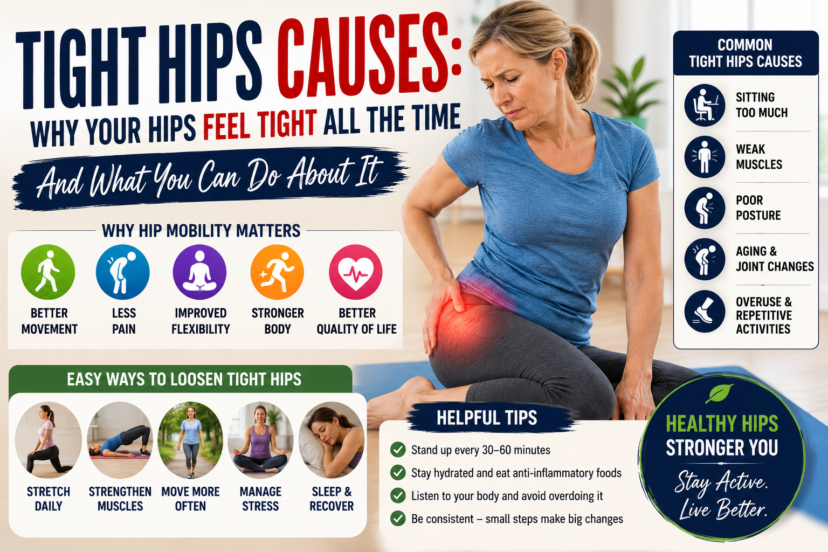
What are the most common tight hips causes? Do your hips feel stiff when you stand up after sitting? Do you struggle with discomfort during walking, climbing stairs, or getting out of bed in the morning?
You’re not alone.
Tight hips are one of the most common complaints among adults, especially those who spend long hours sitting, work at a desk, or are experiencing the natural effects of aging. Many people assume hip tightness is simply something they have to live with, but that isn’t always true.
Understanding the most common causes of tight hips can help you identify what’s happening and take simple steps to improve flexibility, reduce discomfort, and maintain an active lifestyle.
The good news is that many causes of hip tightness respond well to regular movement, strengthening exercises, posture improvements, and healthy daily habits.
⭐ Quick Answer: Tight Hips Causes
The most common tight hips causes include prolonged sitting, muscle weakness, poor posture, lack of stretching, aging, arthritis, and overuse. Gentle exercise, strengthening routines, stretching, and physical therapy may help improve flexibility and reduce discomfort.
Key Takeaways
Most likely cause: Tight hips commonly include prolonged sitting, muscle weakness, poor posture, reduced flexibility, aging, arthritis, and repetitive overuse of the hip muscles and joints.
Usually serious? No. Hip tightness is often related to lifestyle habits and muscle stiffness, but persistent pain, significant swelling, or difficulty bearing weight should be evaluated by a healthcare professional.
First thing to check: Consider how much time you spend sitting each day, whether you stretch regularly, and if your hip discomfort improves after gentle movement or exercise.
Best solution: Stay active with regular walking, strengthen your core and hip muscles, stretch the hip flexors and surrounding muscles consistently, improve posture, and avoid sitting for long periods without movement.
🔹 Understanding Tight Hips Causes
The hip joint is one of the largest and most important joints in the body.
Your hips help with:
- Walking
- Standing
- Climbing stairs
- Maintaining balance
- Supporting the spine
Because the hips work constantly, tightness can affect many other areas of the body, including:
- Lower back
- Knees
- Groin muscles
- Hamstrings
- Glutes
Many tight hips causes develop gradually over time rather than suddenly.
🪑 Tight Hips Causes: Sitting Too Much
One of the biggest tight hips causes is prolonged sitting.
When you sit for hours:
- Hip flexors shorten.
- Glute muscles weaken.
- Blood circulation decreases.
- Mobility becomes limited.
This is why many people feel stiff after:
- Long workdays
- Car rides
- Watching television
- Working from home
Simple Solution
Stand and move every 30 to 60 minutes whenever possible.
Even brief walks can help maintain hip mobility.
💪 Tight Hips Causes: Weak Muscles
Muscle weakness often contributes to hip tightness.
Weak areas may include:
- Glutes
- Core muscles
- Hamstrings
When supporting muscles are weak, the hips may compensate by becoming tight and overworked.
Strengthening Exercises May Help
Examples include:
- Glute bridges
- Chair squats
- Step-ups
- Resistance band exercises
Building strength often improves overall hip function.
🚶 Lack Of Movement Is Another Common Cause
Many adults become less active as they age.
Unfortunately, inactivity may lead to:
- Stiff joints
- Reduced flexibility
- Loss of mobility
- Muscle tightness
Movement helps lubricate joints and maintain healthy tissues.
Activities That Support Hip Health
- Walking
- Swimming
- Cycling
- Yoga
- Tai Chi
- Water aerobics
The CDC recommends at least 150 minutes of moderate activity weekly for most adults.
🧍 Poor Posture Can Affect Hip Mobility
Posture affects the entire body.
Poor posture may contribute to:
- Tight hip flexors
- Lower back pain
- Muscle imbalances
Common Postural Problems
- Slouching
- Forward head posture
- Sitting with crossed legs
- Excessive arching of the lower back
Improving posture often helps reduce stress on the hips.
🦴 Tight Hips Causes Related To Aging
Flexibility naturally declines with age.
Age-related changes may include:
- Reduced muscle mass
- Less elastic connective tissue
- Joint wear and tear
- Reduced activity levels
These changes don’t mean discomfort is inevitable, but they do make healthy habits increasingly important.
🩺 Arthritis And Joint Changes
Arthritis is another potential contributor to tight hips causes.
Osteoarthritis can lead to:
- Stiffness
- Reduced range of motion
- Pain with movement
- Difficulty walking
According to the CDC, arthritis affects millions of American adults.
Early management often helps preserve mobility.
🏃 Overuse And Repetitive Activities
Athletes and active adults may also develop tight hips.
Common triggers include:
- Running
- Cycling
- Heavy lifting
- Sports participation
Overworked muscles may become tight when recovery is inadequate.
Recovery Matters
Include:
- Stretching
- Rest days
- Proper hydration
- Strength training
Balanced routines often help prevent chronic tightness.
🧘 Best Stretches For Tight Hips
Gentle stretching may help improve flexibility.
Hip Flexor Stretch
This stretch targets muscles shortened by prolonged sitting.
Figure Four Stretch
May help loosen the outer hip muscles.
Butterfly Stretch
Can improve groin flexibility.
Child’s Pose
A gentle yoga stretch that promotes relaxation.
Seated Hamstring Stretch
Tight hamstrings often affect hip movement.
Stretch slowly and avoid forcing movements.
💪 Strength Training Supports Healthy Hips
Many people focus only on stretching, but strengthening is equally important.
Strong muscles support:
- Joint stability
- Better posture
- Improved balance
- Reduced injury risk
Exercises that may help include:
- Glute bridges
- Side leg raises
- Wall squats
- Resistance band walks
Strength and flexibility work best together.
🌿 Natural Relief Methods For Hip Tightness
Simple home remedies may provide relief.
Heat Therapy
Warm baths and heating pads may help relax muscles.
Massage
Massage may reduce muscle tension.
Foam Rolling
Foam rollers may help improve circulation and flexibility.
Walking
Gentle walking encourages healthy movement.
Staying Hydrated
Hydration supports muscle function and recovery.
🩺 Physical Therapy Options For Tight Hips Causes
Physical therapy can be extremely beneficial for persistent hip tightness.
A physical therapist may provide:
- Personalized stretching routines
- Strength exercises
- Mobility training
- Posture correction
- Balance exercises
Physical therapy addresses the underlying causes rather than simply treating symptoms.
🍎 Nutrition And Supplements For Joint Support
Healthy nutrition helps support overall mobility.
Foods that may support a healthy inflammatory response include:
- Salmon
- Berries
- Olive oil
- Leafy greens
- Nuts
- Beans
Many Americans discuss supplements with healthcare providers, including:
- Omega-3 fish oil
- Vitamin D
- Magnesium
- Turmeric (curcumin)
Always consult your physician before taking supplements.
😴 Sleep And Recovery Matter
Recovery happens during sleep.
Poor sleep may increase:
- Muscle tension
- Pain sensitivity
- Fatigue
Adults generally benefit from seven to nine hours of quality sleep each night.
⭐ Daily Habits That Support Hip Mobility
Simple habits often produce the biggest improvements.
Try to:
- Move frequently throughout the day.
- Stretch gently.
- Strength train regularly.
- Maintain good posture.
- Stay hydrated.
- Avoid sitting too long.
- Prioritize sleep.
Consistency matters more than intensity.
🚨 When To See A Doctor
Seek medical attention if:
- Hip pain becomes severe.
- Walking becomes difficult.
- Symptoms worsen over time.
- You experience numbness or weakness.
- Swelling develops.
- Pain interferes with daily activities.
- Symptoms persist for several weeks.
Persistent symptoms may indicate arthritis, injuries, or other conditions requiring professional evaluation.
❓ FAQs: Tight Hips Causes
What Are The Most Common Tight Hips Causes?
Sitting too much, muscle weakness, poor posture, aging, and arthritis are among the most common causes.
Can Sitting All Day Cause Tight Hips?
Yes. Prolonged sitting shortens hip flexor muscles and may contribute to stiffness.
Are Tight Hips Related To Lower Back Pain?
Yes. Hip tightness often affects spinal alignment and may contribute to lower back discomfort.
Is Walking Good For Tight Hips?
Walking improves circulation and helps maintain joint mobility.
Should I Stretch Tight Hips Every Day?
Gentle daily stretching may help improve flexibility for many adults.
Can Physical Therapy Help Tight Hips?
Yes. Physical therapists can identify movement problems and create personalized treatment plans.
Does Aging Cause Tight Hips?
Flexibility naturally decreases with age, but regular activity can help maintain mobility.
🎯 Final Thoughts
Experiencing hip tightness doesn’t necessarily mean something is seriously wrong.
Many tight hips causes are linked to everyday habits that can be improved over time. Regular movement, strength training, stretching, better posture, and healthy recovery habits often make a meaningful difference.
Don’t expect overnight results.
Focus on small, consistent changes and give your body time to adapt. Those daily efforts can help you move better, stay active longer, and enjoy life with greater comfort and confidence.
Medical Disclaimer: This article is for informational and educational purposes only and should not replace professional medical advice. Always consult your physician or qualified healthcare provider regarding persistent pain, injuries, or before beginning any exercise or treatment program.
 Explore more: