Sleeping Positions For Joint Comfort: Best Sleeping Positions For Back, Hip, And Joint Comfort
How to find better sleeping positions for joint comfort? Getting a good night’s sleep should leave you feeling refreshed and ready for the day. But for many adults, mornings begin with stiff hips, aching backs, sore shoulders, or painful joints. In some cases, the problem may not be the amount of sleep you’re getting—it may be the position you’re sleeping in.
The way your body is supported throughout the night can affect pressure on your joints, muscle tension, spinal alignment, and overall comfort. Small changes to your sleeping posture may help you wake up feeling less stiff and more mobile.
The good news is that finding better sleeping Positions for joint comfort doesn’t require expensive treatments. A few practical adjustments may support healthier sleep and improve overall quality of life.
⭐ Quick Answer: Sleeping Positions For Joint Comfort
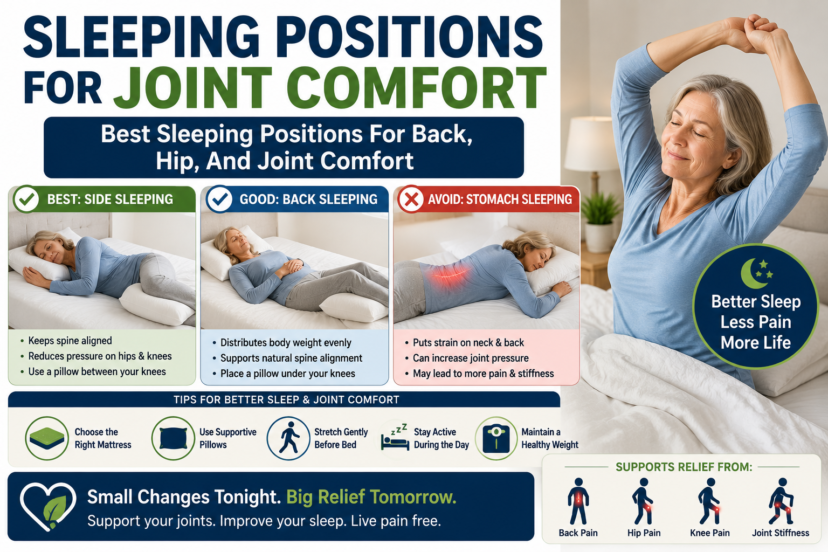
Sleeping positions for joint comfort generally include side sleeping with a pillow between the knees, back sleeping with a pillow under the knees, and avoiding stomach sleeping whenever possible. Proper mattress support and pillow placement may help reduce pressure on the spine, hips, and joints.
Key Takeaways
Most likely cause: Poor sleeping positions for joint comfort, inadequate pillow support, and improper spinal alignment can place extra stress on the hips, shoulders, knees, and back during the night.
Usually serious? No. Sleep-related joint discomfort is often improved with better sleeping posture and supportive bedding, although persistent or severe pain should be evaluated by a healthcare professional.
First thing to check: Review your usual sleep position, mattress condition, pillow height, and whether you wake up with pain in the same areas each morning.
Best solution: Sleep on your side with a pillow between your knees or on your back with a pillow under your knees, use a supportive mattress and pillow, and avoid stomach sleeping whenever possible to reduce pressure on your joints.
🌙 Why Sleeping Positions Matter For Joint Comfort
During sleep, your body remains in one position for several hours.
Poor positioning may contribute to:
- Increased pressure on joints
- Muscle tightness
- Reduced circulation
- Morning stiffness
- Neck and back discomfort
Good sleep posture may help:
- Support spinal alignment
- Reduce joint stress
- Improve sleep quality
- Promote healthy aging
- Increase mobility during the day
🌙 Sleeping Positions For Joint Comfort And Back Pain
Many adults experience lower back discomfort that feels worse in the morning.
Side Sleeping
Side sleeping is often recommended because it helps maintain spinal alignment.
Helpful tips:
- Place a pillow between your knees.
- Keep your hips aligned.
- Use a supportive pillow for your neck.
Back Sleeping
Back sleeping may help distribute body weight evenly.
Many people find additional comfort by:
- Placing a pillow beneath the knees.
- Using medium-firm mattress support.
- Keeping the neck in a neutral position.
🌙 Sleeping Positions For Joint Comfort And Hip Pain
Hip discomfort may become worse when pressure is concentrated on one side.
Helpful strategies include:
- Using a body pillow
- Switching sides occasionally
- Adding a mattress topper if necessary
Side sleepers often benefit from keeping their knees slightly bent.
🌙 Why Stomach Sleeping May Increase Joint Stress
Although some people prefer sleeping on their stomach, this position may:
- Increase neck strain
- Flatten the spine’s natural curve
- Create shoulder pressure
- Increase lower back stress
Transitioning gradually to side sleeping may help many people feel better.
🌙 Pillows Can Improve Sleeping Positions For Joint Comfort
Proper pillow support matters.
For Side Sleepers
- Use a thicker pillow.
- Keep the head aligned with the spine.
For Back Sleepers
- Use a medium-height pillow.
- Avoid pushing the head too far forward.
Body Pillows
Body pillows may help:
- Reduce hip pressure
- Improve alignment
- Increase comfort
🌙 Mattress Support Matters
An old mattress may contribute to discomfort.
Signs it may need replacement:
- Sagging areas
- Worsening pain
- Age greater than 7–10 years
Popular U.S. mattress brands include:
- Saatva
- Tempur-Pedic
- Purple
- Nectar
- Casper
🌙 Morning Stiffness And Sleep Position
Poor positioning overnight may contribute to:
- Tight muscles
- Joint stiffness
- Reduced flexibility
Gentle movement after waking up may help improve circulation and mobility.
🌙 Stretching Before Bed May Help
Simple bedtime stretches may help relax muscles.
Examples include:
- Hamstring stretches
- Hip flexor stretches
- Shoulder stretches
- Cat-cow stretches
Stretch slowly and comfortably.
🌙 Healthy Habits That Support Better Sleep
Good sleep involves more than posture.
Helpful habits include:
- Maintaining consistent bedtimes
- Limiting screen time before bed
- Avoiding caffeine late in the evening
- Keeping bedrooms cool and dark
🌙 Physical Therapy And Joint Comfort
Physical therapists often help individuals improve:
- Posture
- Flexibility
- Strength
- Movement patterns
Personalized exercises may support better sleep comfort and daytime mobility.
🌙 Natural Relief Methods
Many adults combine healthy sleep positions with:
- Heat therapy
- Massage
- Walking
- Yoga
- Anti-inflammatory nutrition
- Strength training
These habits may support long-term wellness.
🚨 When To See A Doctor
Seek medical attention if:
- Pain wakes you frequently.
- Symptoms continue worsening.
- You experience numbness or weakness.
- Morning stiffness lasts longer than one hour.
- Sleep problems affect daily activities.
❓ FAQs: Sleeping Positions For Joint Comfort
What is the best sleeping position for joint pain?
Side sleeping with a pillow between the knees is often considered one of the best options.
Is sleeping on your back good for joint comfort?
Yes. Many people benefit from placing a pillow beneath their knees for added support.
Why do my hips hurt when I sleep?
Pressure on one side, mattress quality, and inflammation may all contribute.
Can a mattress cause joint pain?
Yes. Poor support or an aging mattress may worsen discomfort.
Should side sleepers use a pillow between their knees?
Yes. It may help improve spinal alignment and reduce hip pressure.
Is sleeping on your stomach bad for your back?
For many people, sleeping on their stomachs increases neck and lower back stress.
Can stretching before bed help?
Gentle stretching may help relax muscles and support better mobility.
📌 Final Thoughts On Sleeping Positions For Joint Comfort
Finding better sleeping positions for joint comfort may seem like a small change, but small habits often create meaningful long-term results.
Improving sleep posture, using proper pillow support, staying active, and practicing healthy lifestyle habits may help you wake up with less stiffness and greater comfort.
Be patient with the process. Small adjustments made consistently can help support better sleep, improved mobility, and a healthier, more active life.
Medical Disclaimer
This article is for informational purposes only and is not intended to diagnose, treat, cure, or prevent any disease. Always consult a qualified healthcare professional regarding symptoms or treatment decisions.
 Explore more: