
What Are The Best Healthy Habits For Mobility? 12 Daily Habits That Help You Move Better And Stay Active

The best healthy habits for mobility include walking regularly, strength training at least several times each week, moving frequently during sedentary periods, maintaining joint flexibility, practicing balance, eating enough protein, sleeping well, and avoiding sudden increases in activity. The most effective routine combines movement, strength, balance, recovery, and healthy body-weight management rather than relying on stretching alone.
Small Choices Repeated Every Day
Stiff hips when you get out of bed, aching knees after sitting, tight shoulders at the end of the day, or feeling less steady on your feet can make everyday life more frustrating than it needs to be. If you’ve been wondering what are the best healthy habits for mobility, the good news is that improving how you move usually doesn’t require an extreme fitness program or expensive equipment.
Mobility depends on several things working together, including joint movement, muscle strength, balance, flexibility, coordination, and cardiovascular fitness. These abilities can change with age, inactivity, previous injuries, arthritis, or chronic pain, but they can also respond positively to consistent healthy habits.
Small choices repeated every day often matter more than occasional intense workouts. Walking more often, maintaining muscle strength, improving posture habits, sleeping well, and moving stiff joints gently can all support better function. The goal isn’t perfect flexibility. It’s maintaining enough comfortable, confident movement to keep doing the things you enjoy.
Key Takeaways
Most likely cause: Everyday mobility problems commonly develop from inactivity, muscle weakness, prolonged sitting, reduced joint motion, poor movement habits, or a combination of these factors.
Usually serious? Mild stiffness and gradual mobility changes are common, but sudden weakness, major balance changes, severe pain, or rapidly worsening mobility should be medically evaluated.
First thing to check: Look at how much you move during a typical day, including how long you sit, how often you walk, and whether you regularly perform strengthening and balance activities.
Best solution: When asking what are the best healthy habits for mobility, focus on consistent daily movement, progressive strength training, comfortable flexibility work, good recovery, and addressing persistent pain early.
🚶 Why Daily Habits Matter For Healthy Mobility
Mobility often changes gradually.
You may first notice that getting out of a low chair feels harder. Later, stairs become more tiring, your walking pace slows, or bending to pick something up becomes uncomfortable.
These changes aren’t always caused by aging alone.
Muscle strength can decrease when muscles aren’t challenged regularly. Joints may feel stiffer when you spend long periods in one position. Balance can decline when it isn’t practiced, and discomfort may cause you to move less, which can create a cycle of weakness and reduced confidence.
That is why healthy mobility should be treated as an everyday habit rather than an occasional project.
The best approach is usually simple: move often, maintain strength, practice balance, recover well, and stay within a level of activity your body can tolerate.
🏃 1. Walk Every Day You Comfortably Can
Walking is one of the easiest ways to maintain everyday movement.
It works your legs, challenges cardiovascular fitness, encourages joint motion, and helps maintain the endurance needed for shopping, traveling, household chores, and recreational activities.
You don’t need to immediately aim for a specific step target.
If you’re currently inactive, a five- or ten-minute walk may be a reasonable starting point. You can gradually increase the duration or add another short walk later in the day.
For people with arthritis or chronic discomfort, several shorter walks may feel better than one long session.
Comfortable walking is one of the most practical answers to what are the best healthy habits for mobility because it requires little equipment and fits naturally into everyday life.
💪 2. Build And Maintain Muscle Strength
Mobility isn’t only about being flexible.
You need enough strength to control your body through daily movements. Stronger legs make it easier to stand from a chair, climb stairs, and recover from small changes in balance. Core and upper-body strength help with carrying groceries, household tasks, and getting up from the floor.
Useful beginner exercises may include:
- Chair Sit-To-Stands.
- Wall Or Countertop Push-Ups.
- Calf Raises.
- Step-Ups.
- Resistance-Band Rows.
- Light Dumbbell Exercises.
Progress gradually. When an exercise becomes easy, increase resistance, repetitions, or difficulty in small amounts rather than making dramatic jumps.
For adults with chronic pain, osteoporosis, major arthritis, or recent surgery, a physical therapist can help identify appropriate strengthening exercises.
🪑 3. Break Up Long Periods Of Sitting
A workout in the morning doesn’t completely offset spending the rest of the day almost motionless.
Long periods of sitting can leave the hips, knees, back, and shoulders feeling stiff. The simple solution is movement variety.
Stand periodically during desk work. Walk around while talking on the phone. Stretch your legs during television commercials. Take a short walk after meals.
You don’t need a complicated schedule.
The goal is simply to avoid staying in one position for hours at a time.
A useful reminder is to associate movement with activities you already perform. Every time you refill your water, answer a long phone call, or finish a television episode, get up and move for a few minutes.
🤸 4. Move Your Joints Through Comfortable Ranges
Flexibility can support easier movement, but mobility exercises shouldn’t feel like a competition.
Aggressively forcing a stiff joint rarely produces better results.
Instead, move slowly through comfortable ranges. Gentle shoulder circles, ankle movements, hip rotations, knee bending and straightening, and controlled trunk movements may help reduce the feeling of stiffness after prolonged inactivity.
Static stretching can also be useful when performed gently.
A stretch should usually create mild tension rather than sharp pain.
Consistency matters much more than pushing as far as possible.
⚖️ 5. Practice Your Balance Before You Lose It
Balance is an often-forgotten part of healthy aging.
Good balance helps you walk on uneven surfaces, step over obstacles, navigate stairs, and react when you stumble.
Simple balance practice may include standing with your feet closer together, heel-to-toe walking, or briefly standing on one leg while keeping a sturdy countertop nearby.
Tai chi can also provide gentle balance and coordination practice.
If you’ve already fallen, frequently feel unsteady, or need furniture for support while walking, don’t begin challenging balance exercises alone. A healthcare professional or physical therapist can evaluate your fall risk and recommend safer exercises.
🧍 6. Improve Posture Without Trying To Sit Perfectly
Posture matters, but maintaining one rigid “perfect posture” all day isn’t realistic or necessary.
A better goal is variety.
If you work at a computer, position your monitor so you don’t constantly crane your neck forward. Keep frequently used items within easy reach and choose a chair that supports a comfortable position.
Then change positions regularly.
Stand, walk, shift your sitting position, or perform a few gentle shoulder and hip movements.
One of the most useful healthy habits for mobility is remembering that your body generally prefers regular position changes over remaining perfectly still.
💧 7. Stay Hydrated Throughout The Day
Hydration affects many aspects of health, including physical performance.
Mild dehydration can contribute to fatigue and make exercise feel more difficult. Drinking regularly throughout the day is especially important during exercise, hot weather, or physically demanding activities.
Water is appropriate for most everyday hydration needs.
People with heart failure, kidney disease, or other conditions requiring fluid restriction should follow the hydration recommendations provided by their healthcare team rather than increasing fluid intake automatically.
🥗 8. Eat Enough Protein To Support Muscle
Healthy mobility depends heavily on muscle.
Protein provides amino acids your body uses to maintain and repair muscle tissue. Getting adequate protein becomes particularly important as adults age and preserving muscle mass becomes more challenging.
Practical protein sources include eggs, fish, chicken, Greek yogurt, cottage cheese, beans, lentils, tofu, soy foods, and lean meats.
Try spreading protein-rich foods across meals rather than relying on one large serving at dinner.
Some people use protein powders for convenience, but supplements aren’t required if your diet already provides adequate nutrition.
Adults with kidney disease or other medical conditions affecting protein needs should discuss intake with a healthcare professional.
😴 9. Protect Your Sleep And Recovery
Exercise challenges your body. Recovery helps it adapt.
Consistently poor sleep can affect energy, exercise performance, pain perception, and motivation. For many adults, improving sleep habits makes it easier to remain physically active.
Try maintaining regular sleep and wake times, reducing excessive late-night screen exposure, and keeping your bedroom comfortable, quiet, and dark.
You should also give heavily worked muscle groups time to recover.
Feeling mildly sore after unfamiliar activity can occur, but persistent or worsening pain isn’t something you should continually exercise through.
🌡️ 10. Use Heat Or Cold Sensibly For Everyday Discomfort
Simple home remedies can make movement more comfortable for some people.
Warm showers or heating pads may temporarily relax tight muscles or ease stiffness. Cold packs can sometimes help following minor exercise-related irritation or swelling.
Protect your skin by placing fabric between it and hot or cold packs, and follow manufacturer instructions.
These treatments may reduce symptoms temporarily, but they don’t replace appropriate exercise or treatment of an underlying injury.
If discomfort repeatedly returns, identifying why it occurs is more valuable than continually masking it.
👟 11. Wear Shoes That Match Your Activity
Foot comfort can influence how confidently you move.
Shoes that are badly worn, unstable, or poorly fitting may make walking uncomfortable. Replace footwear when the soles or cushioning become significantly worn, and select shoes appropriate for your activity.
The most expensive shoe isn’t automatically the best.
Fit, comfort, stability, and suitability for your individual needs matter more than branding.
People with diabetes-related foot problems, significant deformities, persistent heel pain, or major walking changes may benefit from evaluation by a podiatrist or other qualified healthcare professional.
📈 12. Increase Activity Gradually
One of the easiest ways to disrupt a healthy mobility routine is trying to change everything in one weekend.
If you’ve been inactive for months, suddenly walking several miles, performing dozens of squats, and stretching aggressively can cause considerable soreness.
Increase your activity progressively.
You might begin by walking ten minutes each day, doing a few basic strength exercises twice weekly, and adding short movement breaks during sedentary periods.
Once that feels manageable, build gradually.
When considering what are the best healthy habits for mobility, consistency should almost always take priority over intensity.
🛠️ A Simple Daily Mobility Routine
A useful routine doesn’t need to take an hour.
Start your morning with several minutes of comfortable joint movement. Walk whenever practical throughout the day and interrupt prolonged sitting regularly.
On several days each week, add basic strengthening exercises that challenge your legs, hips, back, core, and upper body.
Include short balance exercises when they are safe for you.
A simple routine might look like this:
- Morning: Five Minutes Of Gentle Mobility.
- Midday: A 10- To 20-Minute Walk.
- Afternoon: Short Movement Breaks During Sitting.
- Several Days Weekly: Basic Strength Training.
- Evening: Gentle Stretching Or A Relaxed Walk.
The exact routine matters less than whether you can realistically maintain it.
👨⚕️ How Physical Therapy Can Improve Mobility
Physical therapy can be valuable when pain, weakness, balance issues, or previous injuries are making movement difficult.
A physical therapist can assess joint range of motion, muscle strength, walking mechanics, balance, posture, and functional activities such as stairs or standing from a chair.
Treatment may include targeted strengthening, stretching, balance exercises, gait training, manual techniques, and a personalized home exercise program.
Physical therapy can also help you distinguish between movements that are safe to gradually work through and symptoms that require modification or further medical evaluation.
That can prevent months of trial and error with random exercises found online.
🌿 Natural Ways To Support Comfortable Movement
Many effective mobility strategies are remarkably inexpensive.
Regular walking, resistance exercise, healthy eating, good sleep, weight management when appropriate, and stress reduction can all support overall physical function.
People with joint discomfort may find lower-impact activities such as swimming, water aerobics, cycling, or elliptical exercise easier to tolerate.
Some adults ask about supplements such as vitamin D, calcium, glucosamine, or omega-3 products.
Supplements shouldn’t automatically be treated as mobility treatments. Whether you need a particular supplement depends on your diet, medical history, medications, and sometimes laboratory testing. Discuss supplements with your healthcare provider, especially if you take prescription medications.
👨⚕️ When To See A Doctor About Mobility Problems
Occasional stiffness after sitting may improve with simple movement, but certain mobility changes deserve professional evaluation.
Schedule an appointment if pain or stiffness continues for several weeks, keeps returning, limits normal activities, or is gradually getting worse.
Also seek professional advice if you experience recurring falls, progressive weakness, persistent numbness, significant joint swelling, unexplained changes in walking, or pain that repeatedly wakes you at night.
Seek urgent medical attention for sudden severe weakness, inability to walk or bear weight after an injury, or rapidly developing neurological symptoms.
Sudden facial drooping, one-sided weakness or numbness, difficulty speaking, confusion, severe dizziness, or loss of coordination can indicate a stroke and requires immediate emergency care.
❓ FAQs About Healthy Habits For Mobility
1. What Is The Best Daily Habit For Improving Mobility?
Regular movement is one of the best starting points. Walking, changing positions frequently, and moving major joints throughout comfortable ranges can prevent long periods of inactivity while supporting strength and endurance.
2. How Can I Improve Mobility As I Get Older?
Combine regular walking or aerobic activity with strength training, balance exercises, flexibility work, nutritious food, and adequate recovery. Improving several areas together is generally more effective than stretching alone.
3. Can Walking Improve Joint Mobility?
Walking encourages repeated movement of the hips, knees, and ankles and strengthens muscles used for everyday activity. However, people with significant joint disease or pain may need modifications or alternative low-impact exercises.
4. How Often Should I Work On Mobility?
Some form of comfortable movement can be performed every day. Strength, balance, flexibility, and aerobic exercise can be distributed throughout the week according to your ability, health status, and recovery needs.
5. Is Stretching Enough To Maintain Mobility?
No. Stretching can improve flexibility, but good mobility also requires muscle strength, balance, coordination, and movement control. A well-rounded program includes more than stretching.
6. What Foods Help Support Mobility?
A balanced diet rich in protein, fruits, vegetables, whole grains, healthy fats, and appropriate sources of calcium and vitamin D supports overall muscle and bone health. No single food can restore lost mobility by itself.
7. Can You Regain Mobility After Being Inactive?
Often, yes. Strength, endurance, flexibility, and balance can improve with progressive activity even after long periods of inactivity. Start gradually and seek professional guidance if pain, weakness, or medical conditions make exercise difficult.
🏡 Final Thoughts: Small Habits Create Better Movement
If you’re wondering what are the best healthy habits for mobility, there isn’t one secret stretch, supplement, or exercise machine that solves everything.
The strongest approach is usually much simpler.
Walk regularly. Strengthen your muscles. Break up long periods of sitting. Practice balance. Move stiff joints gently. Eat well. Sleep enough. Increase activity gradually and pay attention when symptoms don’t behave like ordinary stiffness.
You don’t need to transform your routine overnight.
Choose one or two habits you can realistically maintain and build from there. A ten-minute walk performed consistently is often more useful than an ambitious exercise plan that disappears after a week.
Mobility responds to repetition. Strength develops gradually. Confidence improves through practice.
Give your body time, stay consistent, and focus on progress rather than perfection. The goal is not simply exercising more—it’s preserving your ability to walk, travel, garden, work, play with family, and enjoy everyday life with greater comfort and independence.
Medical Disclaimer: This article is intended for general educational and informational purposes only. It does not provide medical diagnosis or individualized treatment and should not replace advice from a physician, physical therapist, registered dietitian, or other qualified healthcare professional. Consult your healthcare provider before beginning a new exercise, supplement, or mobility program, particularly if you have chronic pain, osteoporosis, arthritis, cardiovascular disease, balance problems, recent surgery, or another medical condition. Seek immediate medical care for sudden weakness, severe pain, significant injury, or other emergency symptoms.
Explore more:
- How Can I Climb Stairs With Back Pain?
- Why Back Pain Feels Worse At Night
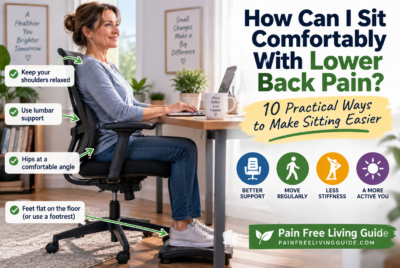
- How Can I Sit Comfortably With Lower Back Pain?


Comments are closed.