Difficulty Climbing Stairs: Why Climbing Stairs Feels Harder Than It Used To
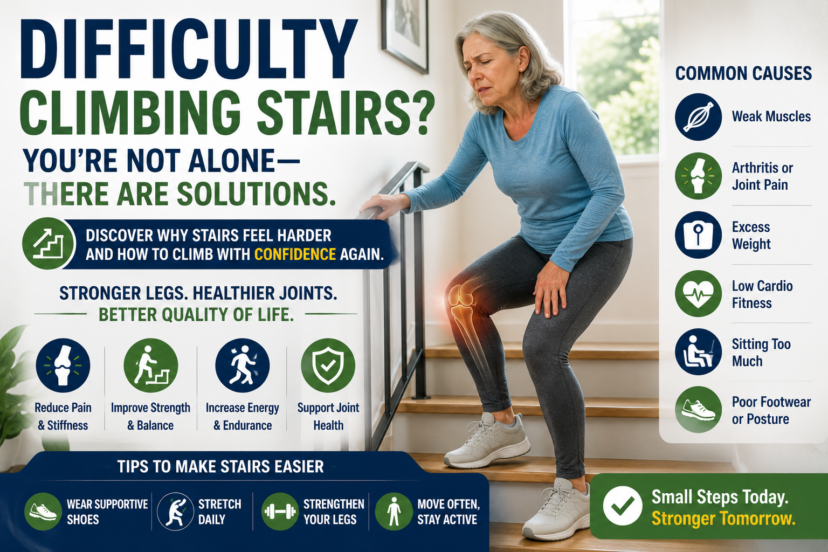
Have you noticed that climbing a flight of stairs leaves you more winded or uncomfortable than it used to? Maybe your knees ache, your legs feel weak, or you need to hold onto the handrail more often. If so, you’re not alone. Difficulty climbing stairs is a common concern among adults, especially as they get older. While some changes in physical ability are a natural part of aging, many of the factors that make stairs more challenging can be improved with the right habits and exercises.
Climbing stairs requires much more than strong legs. It also depends on healthy joints, flexible muscles, good balance, cardiovascular fitness, and proper movement patterns. Weak muscles, joint stiffness, inactivity, poor posture, excess body weight, or certain medical conditions can all contribute to making stairs feel harder.
The encouraging news is that small, consistent lifestyle changes can often improve your ability to climb stairs with greater confidence and less discomfort. By strengthening key muscles, improving flexibility, staying active, and using proper techniques, many people notice meaningful improvements over time.
This guide explains the most common causes of difficulty climbing stairs, practical ways to improve mobility, and evidence-based strategies to help you stay active and independent.
⭐ Quick Answer: Difficulty Climbing Stairs
Difficulty climbing stairs is commonly caused by weak leg muscles, reduced balance, stiff joints, arthritis, poor cardiovascular fitness, excess body weight, or inactivity. Regular strength training, stretching, walking, balance exercises, and maintaining a healthy weight can often improve stair-climbing ability and reduce discomfort.
Key Takeaways
- Most likely cause: Weak leg muscles, stiff or painful joints, reduced balance, inactivity, and lower cardiovascular fitness are common reasons stairs become more challenging.
- Usually serious? Usually not, especially when changes develop gradually. However, sudden or worsening mobility problems, severe pain, dizziness, chest pain, or unusual shortness of breath should be evaluated by a healthcare professional.
- First thing to check: If you’re experiencing difficulty climbing stairs, notice whether the main problem is leg weakness, knee or hip discomfort, poor balance, or becoming unusually winded.
- Best solution: Build stair-climbing ability gradually with regular walking, leg-strengthening exercises, balance work, gentle stretching, and safe stair habits such as using the handrail when needed.
🚶 Why Climbing Stairs Becomes More Difficult
Stair climbing places greater demands on your body than walking on level ground.
Each step requires your:
- Knees
- Hips
- Ankles
- Core muscles
- Glutes
- Quadriceps
- Calves
- Balance system
If any of these areas become weaker or less flexible, climbing stairs may become noticeably more difficult.
Fortunately, many of these changes respond well to regular exercise and healthy daily habits.
💪 Weak Leg Muscles
One of the most common causes of difficulty climbing stairs is reduced muscle strength.
The quadriceps, glutes, and calves generate the force needed to lift your body upward.
Muscle weakness often develops due to:
- Aging
- Physical inactivity
- Recovery after injury
- Extended bed rest
What Helps
Strength-building exercises include:
- Chair squats
- Step-ups
- Wall sits
- Glute bridges
- Calf raises
- Resistance band exercises
Aim for two to three strength-training sessions each week.
🦴 Joint Stiffness And Arthritis
Healthy joints should move smoothly.
Conditions such as osteoarthritis can cause:
- Knee pain
- Hip stiffness
- Swelling
- Reduced range of motion
These symptoms often become more noticeable while climbing stairs because each step places additional force through the joints.
What Helps
- Gentle stretching
- Low-impact exercise
- Weight management
- Physical therapy
- Heat before activity
Many adults find that regular movement actually reduces stiffness over time.
⚖️ Reduced Balance
Balance naturally changes with age.
Poor balance may cause people to feel less confident using stairs, especially without a handrail.
Balance can decline due to:
- Muscle weakness
- Reduced activity
- Inner ear problems
- Certain medications
- Vision changes
Balance Exercises
Try:
- Standing on one foot
- Heel-to-toe walking
- Tai Chi
- Gentle yoga
- Heel raises
Practice for five to ten minutes daily.
❤️ Lower Cardiovascular Fitness
If climbing stairs leaves you short of breath, reduced cardiovascular endurance may play a role.
Regular aerobic activity helps strengthen your heart and lungs.
Excellent options include:
- Walking
- Cycling
- Swimming
- Water aerobics
Aim for at least 150 minutes of moderate exercise each week if your healthcare provider approves.
🪑 Sitting Too Much
Long periods of sitting contribute to:
- Tight hips
- Weak glutes
- Reduced flexibility
- Poor posture
- Muscle stiffness
These changes can make stair climbing feel more difficult.
Move More Often
Try to:
- Stand every 30–60 minutes
- Walk during phone calls
- Stretch throughout the day
- Take short walking breaks
🧘 Tight Muscles
Limited flexibility reduces your ability to move efficiently.
Focus on stretching:
- Hip flexors
- Hamstrings
- Calves
- Quadriceps
- Lower back
Hold stretches for:
- 20–30 seconds
- Without bouncing
- While breathing slowly
Daily stretching improves mobility and may make stairs feel easier.
🪜 Use Better Stair-Climbing Technique
Proper technique reduces unnecessary joint stress.
Helpful tips include:
- Hold the handrail if needed
- Stand tall
- Engage your core
- Step with your whole foot
- Avoid rushing
- Wear supportive shoes
If one knee is painful, your healthcare provider or physical therapist may recommend specific strategies depending on the cause.
🥗 Nutrition Supports Muscle And Joint Health
Healthy nutrition supports better movement.
Prioritize:
Lean Protein
Examples:
- Fish
- Chicken
- Eggs
- Greek yogurt
- Beans
Supports muscle repair.
Omega-3 Fatty Acids
Found in:
- Salmon
- Walnuts
- Flaxseed
Support normal inflammatory responses.
Calcium And Vitamin D
Important for healthy bones and muscles.
Many U.S. adults benefit from discussing vitamin D testing with their healthcare provider.
Hydration
Drink water regularly to support healthy muscle function.
🌿 Natural Relief Methods
Many adults benefit from conservative approaches including:
- Warm showers
- Heating pads
- Ice after activity
- Massage
- Foam rolling
- Walking
- Swimming
- Water exercise
- Gentle yoga
Some individuals also discuss supplements such as turmeric (curcumin), collagen, glucosamine, chondroitin, or omega-3 fish oil with their healthcare provider.
🩺 When Physical Therapy Can Help
Physical therapy may be helpful if difficulty climbing stairs continues despite home exercises.
A physical therapist can assess:
- Strength
- Balance
- Walking mechanics
- Joint mobility
- Flexibility
- Posture
Treatment often includes individualized strengthening and mobility exercises designed to improve stair-climbing ability safely.
🚨 When To See A Doctor
Occasional muscle fatigue is normal, but certain symptoms require medical evaluation.
See your healthcare provider if you experience:
- Severe knee or hip pain
- Sudden weakness
- Joint swelling
- Frequent falls
- Numbness or tingling
- Chest pain
- Shortness of breath unrelated to exertion
- Difficulty climbing stairs that worsens rapidly
- Pain following an injury
Early evaluation can help identify underlying conditions before they become more serious.
❓ FAQs: Difficulty Climbing Stairs
Why am I suddenly having difficulty climbing stairs?
Possible causes include muscle weakness, arthritis, reduced fitness, joint pain, balance problems, or certain medical conditions.
Does climbing stairs strengthen your legs?
Yes. Stair climbing helps strengthen the quadriceps, glutes, calves, and cardiovascular system when performed safely.
Is knee pain common when climbing stairs?
Yes. Stair climbing places greater forces on the knees than level walking, making knee pain more noticeable in some individuals.
Can losing weight make stairs easier?
Yes. Reducing excess body weight decreases stress on weight-bearing joints, especially the knees and hips.
What exercises help with climbing stairs?
Exercises like Chair squats, step-ups, glute bridges, calf raises, wall sits, and balance exercises are excellent options.
Should older adults avoid stairs?
Not necessarily. For many people, stairs remain a healthy form of exercise when used safely and with appropriate support if needed.
When should I worry about difficulty climbing stairs?
Seek medical evaluation if symptoms develop suddenly, worsen quickly, involve chest pain or severe weakness, or interfere significantly with daily activities.
📌 Final Thoughts On Difficulty Climbing Stairs
Experiencing difficulty climbing stairs doesn’t automatically mean you’re losing your independence. In many cases, improving strength, flexibility, balance, and cardiovascular fitness can make a noticeable difference. Small daily habits—walking more, stretching regularly, strengthening your legs, maintaining a healthy weight, and practicing good posture—can help you move with greater confidence and comfort.
Progress may happen gradually, but consistency matters. Every step you take toward better mobility supports healthier joints, stronger muscles, and a more active future.
Medical Disclaimer
This article is intended for educational and informational purposes only and should not replace professional medical advice, diagnosis, or treatment. Always consult your physician or another qualified healthcare provider before beginning a new exercise program, taking supplements, or making significant lifestyle changes, especially if you have chronic pain, heart disease, arthritis, or another medical condition. Seek immediate medical attention if you experience severe pain, sudden weakness, chest pain, shortness of breath, or other concerning symptoms.
 Explore more: