
Signs Your Body Needs More Movement: 7 Warning Signs You Shouldn’t Ignore
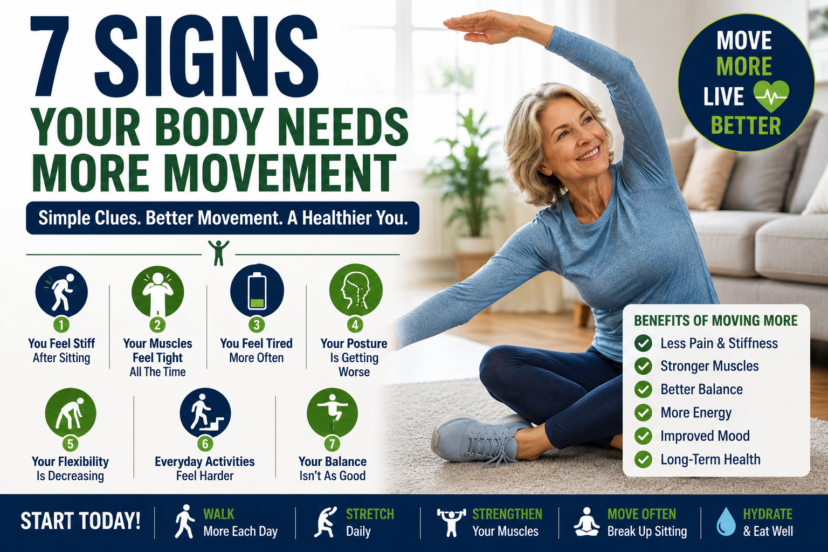
Have you ever stood up after sitting for a while and felt stiff all over? Maybe your back aches after working at your desk, your hips feel tight when you walk, or you simply don’t have the energy you used to. These may not just be signs of getting older—they could be signs your body needs more movement.
Modern life makes it easy to spend hours sitting at work, driving, watching television, or using electronic devices. While occasional rest is important, too much inactivity can gradually affect your muscles, joints, circulation, flexibility, and overall health. Even people who exercise a few times each week can experience the effects of prolonged sitting if they don’t move regularly throughout the day.
The good news is that your body often responds remarkably well to simple daily movement. Walking, stretching, strength training, and improving your posture can reduce stiffness, support healthy joints, increase energy, and help you stay active for years to come.
In this guide, you’ll discover seven common signs your body needs more movement, why they happen, and practical, science-backed strategies to help you move more comfortably and improve your quality of life.
⭐ Quick Answer: Signs Your Body Needs More Movement
Some of the most common signs your body needs more movement include frequent stiffness, low energy, tight muscles, poor posture, reduced flexibility, aching joints, and declining balance. Regular walking, stretching, strength training, and breaking up long periods of sitting can help improve mobility and overall health.
Key Takeaways
Most likely cause: Spending long periods sitting or being inactive can contribute to muscle stiffness, tightness, lower energy, reduced flexibility, and declining strength over time.
Usually serious? Not necessarily. Occasional stiffness or low energy is common, but persistent pain, weakness, balance problems, or sudden changes in mobility may deserve medical attention.
First thing to check: Pay attention to how many hours you spend sitting each day and whether you regularly experience stiffness, tight muscles, poor posture, aching joints, or difficulty moving comfortably after being inactive.
Best solution: If you’re noticing signs your body needs more movement, gradually add more walking, gentle stretching, strength exercises, and short movement breaks throughout the day while avoiding sudden increases that cause pain or excessive fatigue.
🚶 Why Regular Movement Matters
Your body is designed to move.
Movement helps:
- Keep joints lubricated
- Maintain muscle strength
- Improve circulation
- Support healthy bones
- Boost energy
- Enhance balance
- Improve flexibility
- Reduce stiffness
When movement decreases, muscles weaken, joints stiffen, and everyday activities often become more difficult.
Recognizing the early warning signs allows you to take action before discomfort becomes a larger problem.
⚠️ Sign #1: You Feel Stiff After Sitting
One of the biggest signs your body needs more movement is stiffness after sitting for long periods.
You may notice:
- Tight hips
- Stiff knees
- Lower back discomfort
- Difficulty standing upright
This happens because prolonged sitting reduces circulation and allows muscles to tighten.
What Helps
- Stand every 30–60 minutes
- Walk for a few minutes
- Stretch your hips and hamstrings
- Perform gentle spinal movements
Small movement breaks throughout the day can make a noticeable difference.
💪 Sign #2: Your Muscles Feel Tight All The Time
If your neck, shoulders, calves, or lower back constantly feel tight, inactivity may be contributing.
When muscles aren’t used regularly, they often become both weak and tight.
Common causes include:
- Desk work
- Poor posture
- Stress
- Limited exercise
What Helps
- Daily stretching
- Walking
- Foam rolling
- Gentle yoga
- Strength training
Improving muscle balance helps reduce ongoing tightness.
😴 Sign #3: You Feel Tired More Often
Many people assume they need more rest.
Sometimes they actually need more movement.
Regular physical activity:
- Improves circulation
- Supports better sleep
- Boosts energy production
- Enhances mood
Even a 10–15 minute walk can help increase alertness.
🪑 Sign #4: Your Posture Is Getting Worse
Poor posture often develops gradually.
Signs include:
- Rounded shoulders
- Forward head posture
- Slouching
- Difficulty standing tall
Weak core and upper back muscles commonly contribute.
What Helps
Strengthen:
- Core muscles
- Glutes
- Upper back
- Shoulders
Improve your workstation by keeping your monitor at eye level and your feet flat on the floor.
🤸 Sign #5: Your Flexibility Is Decreasing
Can you still comfortably:
- Touch your toes?
- Reach overhead?
- Turn your head fully?
- Put on shoes easily?
If these movements become harder, your body may need more regular mobility work.
Daily Stretching Routine
Focus on:
- Neck
- Chest
- Shoulders
- Hip flexors
- Hamstrings
- Calves
Hold each stretch for:
- 20–30 seconds
- Without bouncing
- While breathing slowly
🚶 Sign #6: Everyday Activities Feel Harder
Simple tasks should not gradually become difficult without explanation.
Examples include:
- Climbing stairs
- Carrying groceries
- Walking long distances
- Getting out of chairs
- Playing with grandchildren
Reduced strength and endurance often develop slowly with inactivity.
What Helps
Strength training two to three times weekly helps maintain independence and mobility.
Excellent beginner exercises include:
- Chair squats
- Wall push-ups
- Glute bridges
- Resistance band rows
- Step-ups
⚖️ Sign #7: Your Balance Isn’t As Good As It Used To Be
Balance naturally changes with age, but inactivity speeds this process.
Poor balance increases fall risk.
Practice:
- Standing on one foot
- Heel-to-toe walking
- Tai Chi
- Gentle yoga
- Heel raises
Even five to ten minutes daily helps improve stability.
🌿 Simple Daily Habits To Move More
Fortunately, you don’t need a gym membership to improve mobility.
Easy ideas include:
- Walk after meals
- Park farther away
- Take the stairs
- Stretch while watching television
- Stand during phone calls
- Garden
- Play with pets
- Do household chores
Every bit of movement counts.
🥗 Nutrition Supports Healthy Movement
Movement works best alongside healthy nutrition.
Focus on:
Lean Protein
Supports muscle repair.
Examples include:
- Fish
- Chicken
- Eggs
- Greek yogurt
- Beans
Omega-3 Fatty Acids
Found in:
- Salmon
- Walnuts
- Flaxseed
These support normal inflammatory responses.
Calcium And Vitamin D
Important for bone health.
Many U.S. adults benefit from discussing vitamin D testing with their healthcare provider.
Hydration
Drink water consistently throughout the day.
Even mild dehydration can contribute to fatigue and muscle stiffness.
🩺 When Physical Therapy May Help
If you struggle with chronic stiffness or movement limitations, physical therapy may provide additional guidance.
A physical therapist can evaluate:
- Flexibility
- Strength
- Balance
- Walking mechanics
- Joint mobility
- Posture
Treatment often includes personalized exercises that improve movement safely.
🚨 When To See A Doctor
Although inactivity commonly contributes to stiffness and discomfort, certain symptoms require medical attention.
Contact your healthcare provider if you experience:
- Severe pain
- Joint swelling
- Sudden weakness
- Numbness or tingling
- Difficulty walking
- Frequent falls
- Pain after an injury
- Fever
- Unexplained weight loss
- Symptoms lasting several weeks despite increased activity
Early evaluation helps identify conditions that require specific treatment.
❓ Frequently Asked Questions
How do I know if my body needs more movement?
Common signs include stiffness, tight muscles, low energy, poor posture, reduced flexibility, aching joints, and declining balance.
Is walking enough exercise?
Walking provides many health benefits, but combining it with strength training and stretching offers the greatest improvements in mobility.
How often should I move during the day?
Aim to stand and move every 30–60 minutes if you spend much of your day sitting.
Can too much sitting cause pain?
Yes. Long periods of sitting may contribute to back pain, neck pain, hip tightness, and muscle stiffness.
What’s the best exercise for beginners?
Walking, chair exercises, resistance bands, swimming, and gentle yoga are excellent options for many adults.
Can movement reduce joint stiffness?
Yes. Gentle movement helps lubricate joints, improve circulation, and reduce stiffness in many people.
Is it ever too late to become more active?
No. Adults of nearly any age can benefit from increasing physical activity safely and gradually.
📌 Conclusion: Signs Your Body Needs More Movement
Recognizing the signs your body needs more movement is the first step toward feeling stronger, more comfortable, and more confident in your daily life. The encouraging news is that your body responds well to consistent, manageable changes. Walking a little more, stretching every day, strengthening your muscles, and reducing long periods of sitting can all improve how you move and feel.
Don’t focus on doing everything perfectly. Instead, aim for steady progress. Small daily habits practiced consistently can lead to better mobility, healthier joints, improved energy, and a higher quality of life for years to come.
Medical Disclaimer
This article is intended for educational and informational purposes only and should not be considered medical advice. Always consult your physician or another qualified healthcare professional before beginning a new exercise program, taking supplements, or making significant lifestyle changes, especially if you have chronic pain, recent injuries, or underlying medical conditions. Seek immediate medical attention if you experience severe pain, sudden weakness, numbness, loss of balance, or other concerning symptoms.
 Explore more:



Comments are closed.