Stretching Mistakes: 7 Simple Stretching Mistakes Most People Make
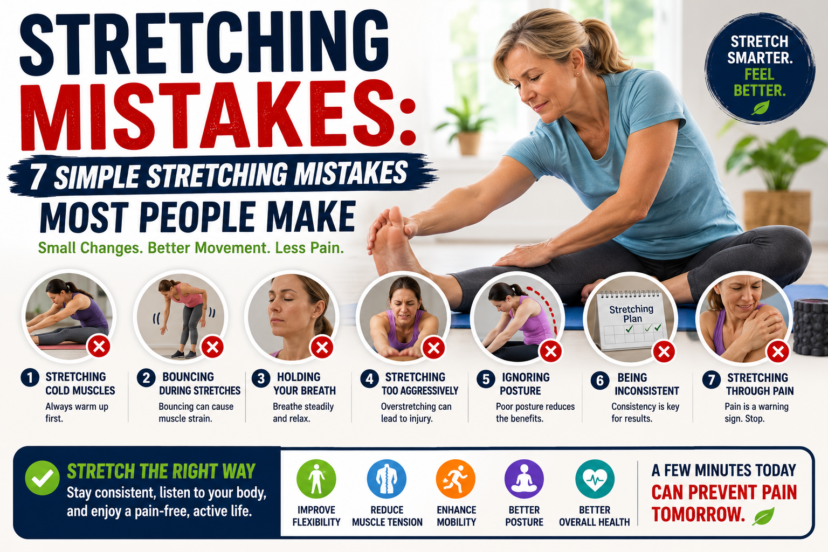
How to avoid those common stretching mistakes? Stretching is one of the simplest ways to improve flexibility, reduce stiffness, and support healthy aging. Yet many adults spend time stretching without seeing the results they hoped for—or worse, they accidentally make their discomfort worse.
If you’ve ever wondered why you still feel tight despite stretching regularly, the problem may not be a lack of effort. Instead, a few common stretching mistakes could be preventing your body from getting the full benefits.
The good news is that stretching doesn’t have to be complicated. Small adjustments can help you move more comfortably, improve mobility, and support long-term joint and muscle health.
Whether you’re dealing with everyday aches, recovering from long hours of sitting, or simply trying to stay active as you age, understanding these stretching mistakes can help you build a smarter routine.
💡 Quick Answer: Stretching Mistakes
Common stretching mistakes include stretching cold muscles, bouncing during stretches, holding your breath, overstretching, ignoring posture, skipping consistency, and stretching through pain. Correcting these habits may improve flexibility, reduce discomfort, and help support healthy aging.
Key Takeaways
Most likely cause: Stretching mistakes such as stretching cold muscles, bouncing, using poor technique, holding your breath, or pushing through pain can reduce flexibility gains and increase the risk of discomfort.
Usually serious? No. Most stretching mistakes are easy to correct, although overstretching or forcing painful movements can sometimes lead to muscle or joint strain.
First thing to check: Review your stretching routine to make sure you warm up first, use slow and controlled movements, maintain good posture, and avoid stretching beyond a comfortable range.
Best solution: Stretch consistently after light activity or exercise, breathe normally, hold each stretch gently without bouncing, and focus on proper form to improve flexibility, mobility, and long-term joint health.
🔹 Why Proper Stretching Matters
Stretching helps maintain mobility and supports healthy movement.
Benefits of proper stretching may include:
- Improved flexibility
- Better posture
- Reduced muscle tightness
- Increased circulation
- Enhanced mobility
- Better balance
- Reduced risk of injury
However, stretching mistakes can limit these benefits and may even increase muscle strain.
🚨 Stretching Mistake #1: Stretching Cold Muscles
One of the most common stretching mistakes is beginning without warming up.
Cold muscles are less flexible and more vulnerable to injury.
Better Approach
Spend five to ten minutes warming up first with:
- Walking
- Marching in place
- Light cycling
- Gentle arm circles
A warm body responds better to stretching.
🚨 Stretching Mistake #2: Bouncing During Stretches
Many people bounce while stretching because they think it increases flexibility.
Unfortunately, bouncing may:
- Trigger muscle tightening
- Increase injury risk
- Cause small muscle strains
Better Approach
Instead:
- Move slowly.
- Stretch gently.
- Hold each stretch steadily.
Static stretching is generally safer for most adults.
🚨 Stretching Mistake #3: Holding Your Breath
Breathing plays an important role during stretching.
Holding your breath may create unnecessary muscle tension.
Better Approach
Practice:
- Slow breathing
- Relaxed exhalations
- Deep diaphragmatic breathing
Relaxed breathing helps muscles release tension naturally.
🚨 Stretching Mistake #4: Stretching Too Aggressively
More is not always better.
One of the biggest stretching mistakes is forcing the body beyond its limits.
Overstretching may cause:
- Muscle strains
- Joint irritation
- Increased soreness
Better Approach
You should feel:
- Mild tension
- Gentle pulling
You should not feel:
- Sharp pain
- Burning sensations
- Severe discomfort
Stretching should feel comfortable—not painful.
🚨 Stretching Mistake #5: Ignoring Posture
Poor posture affects how muscles and joints move.
Even during stretching, posture matters.
Common Problems
- Rounded shoulders
- Slouching
- Forward head posture
Better Approach
Maintain:
- Neutral spine alignment
- Relaxed shoulders
- Engaged core muscles
Proper posture helps target the intended muscles more effectively.
🚨 Stretching Mistake #6: Being Inconsistent
Stretching once a week rarely produces lasting results.
Consistency matters far more than intensity.
Better Approach
Aim for:
- Five to ten minutes daily
- Stretching after exercise
- Stretching after long periods of sitting
Regular stretching often produces gradual improvements over time.
🚨 Stretching Mistake #7: Stretching Through Pain
Pain is not a sign of progress.
Stretching through pain is one of the most dangerous stretching mistakes.
Pain may indicate:
- Muscle strain
- Joint irritation
- Underlying injuries
Better Approach
Stop immediately if you experience:
- Sharp pain
- Tingling
- Numbness
- Sudden discomfort
Listen to your body and modify exercises when necessary.
🧘 Best Areas To Stretch For Everyday Comfort
Many adults experience tightness in specific areas.
Focus on:
Hamstrings
Tight hamstrings may contribute to lower back pain.
Hip Flexors
Long hours of sitting often shorten hip muscles.
Chest Muscles
Stretching the chest may improve posture.
Neck Muscles
Gentle neck stretches may help reduce tension.
Calves
Flexible calves support balance and walking.
🚶 Stretching And Healthy Aging
Flexibility naturally decreases with age.
Regular stretching may help:
- Maintain independence
- Improve mobility
- Reduce stiffness
- Support balance
- Lower fall risk
Stretching works best when combined with:
- Walking
- Strength training
- Good nutrition
- Quality sleep
Healthy aging depends on overall lifestyle—not stretching alone.
💪 Physical Therapy Can Help Correct Stretching Mistakes
If chronic tightness persists, physical therapy may help.
A physical therapist can:
- Identify muscle imbalances
- Create personalized programs
- Improve posture
- Address pain sources
- Teach proper stretching techniques
Physical therapy often helps people stretch more effectively and safely.
🌿 Natural Ways To Support Flexibility
Stretching works even better when combined with healthy habits.
Stay Hydrated
Water supports muscle function and recovery.
Use Heat Therapy
Warm showers and heating pads may help relax muscles before stretching.
Walk Daily
Walking promotes circulation and mobility.
Maintain Good Posture
Posture affects how muscles move throughout the day.
Prioritize Sleep
Recovery and tissue repair occur during sleep.
Adults generally need seven to nine hours of sleep nightly.
🍎 Nutrition Supports Muscle Health
Healthy nutrition helps support flexibility and recovery.
Foods that may support a healthy inflammatory response include:
- Salmon
- Berries
- Leafy greens
- Nuts
- Olive oil
- Whole grains
Many Americans discuss supplements with healthcare providers, including:
- Magnesium
- Vitamin D
- Omega-3 fish oil
- Turmeric (curcumin)
Always consult your physician before starting supplements.
⭐ Simple Stretching Tips For Better Results
Follow these simple guidelines:
- Warm up first.
- Stretch gently.
- Breathe normally.
- Avoid bouncing.
- Maintain good posture.
- Stay consistent.
- Never stretch through pain.
Small improvements performed consistently often provide the greatest long-term benefits.
🚨 When To See A Doctor
Seek medical advice if:
- Stretching causes severe pain.
- Symptoms continue worsening.
- You experience numbness or tingling.
- Joint swelling develops.
- Pain limits daily activities.
- Symptoms persist for several weeks.
Persistent tightness or discomfort may indicate underlying medical conditions that require evaluation.
❓ FAQs: Stretching Mistakes
What Is The Biggest Stretching Mistake?
Stretching cold muscles is one of the most common mistakes because it may increase injury risk.
Should Stretching Hurt?
No. Stretching should create mild tension but not sharp or severe pain.
How Long Should I Hold A Stretch?
Most experts recommend holding static stretches for about 15 to 30 seconds.
Is It Better To Stretch Before Or After Exercise?
Light dynamic stretching works well before exercise, while static stretching is often better afterward.
Can Stretching Reduce Back Pain?
In some cases, stretching tight muscles may help improve flexibility and reduce discomfort.
How Often Should Adults Stretch?
Daily stretching or at least several times per week is generally recommended.
Can Physical Therapy Improve Flexibility?
Yes. Physical therapists can create individualized programs that help improve mobility safely.
🎯 Final Thoughts
Stretching should help your body feel better—not create additional discomfort.
Many stretching mistakes are easy to fix once you recognize them. By warming up properly, stretching gently, breathing normally, and staying consistent, you can help support flexibility, mobility, and long-term comfort.
Progress takes time.
Focus on small daily improvements rather than trying to force results. Over time, those simple habits can help you move better, stay active longer, and enjoy a healthier, more comfortable life.
Medical Disclaimer: This article is for educational purposes only and does not replace professional medical advice. Always consult your physician or qualified healthcare provider regarding persistent pain, injuries, or before beginning any exercise or stretching program.
 Explore more: