Chronic Pain And Stress: How Your Mind And Body Affect Each Other
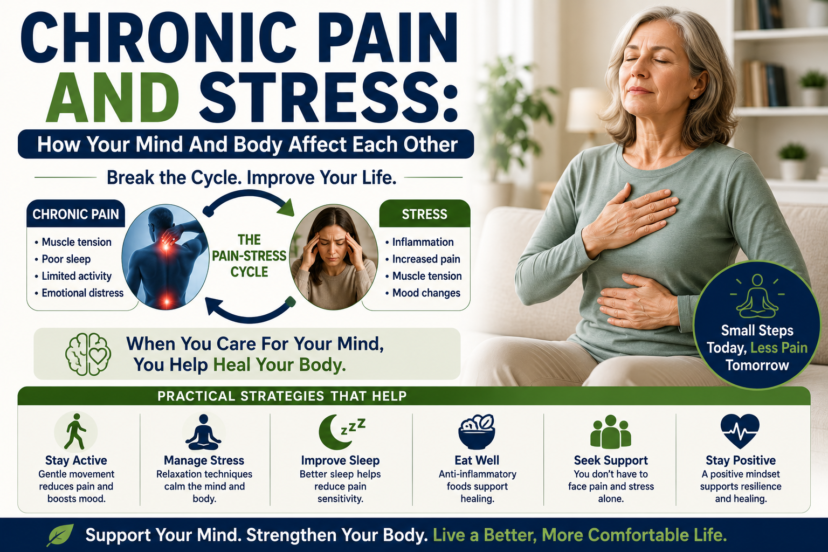
What is the connection between chronic pain and stress? Living with chronic pain can affect far more than your muscles and joints. Many adults dealing with persistent discomfort also experience frustration, worry, fatigue, poor sleep, and increased stress. At the same time, stress itself may make pain feel even worse.
This creates a cycle that many people don’t recognize. Physical pain can increase emotional stress, and emotional stress can increase physical discomfort.
The encouraging news is that understanding the connection between chronic pain and stress can help you make practical lifestyle changes that support both your body and your mind. Small daily habits may help improve mobility, reduce tension, and enhance your quality of life.
⭐ Quick Answer: Chronic Pain And Stress
Chronic pain and stress are closely connected. Long-term pain can increase emotional stress, while stress may contribute to muscle tension, poor sleep, inflammation, and increased pain sensitivity. Managing both physical and emotional health may help improve overall well-being.
Key Takeaways
Most likely cause: Chronic pain and stress often reinforce each other, creating a cycle where ongoing discomfort increases emotional stress, while stress contributes to muscle tension, poor sleep, and greater pain sensitivity.
Usually serious? Not usually. This cycle is common among people living with persistent pain, but pain that is severe, worsening, or significantly affects daily life should be evaluated by a healthcare professional.
First thing to check: Consider whether poor sleep, high stress levels, muscle tension, anxiety, or daily habits may be making your pain feel worse.
Best solution: Combine regular physical activity, relaxation techniques, quality sleep, stress management, and healthy lifestyle habits to support both physical comfort and emotional well-being over the long term.
🧠 Why Chronic Pain And Stress Affect Each Other
Pain is not experienced only in the body.
The brain plays a major role in how discomfort is processed and perceived.
When stress levels rise, the body releases hormones such as:
- Cortisol
- Adrenaline
These hormones are helpful during short-term emergencies, but chronic stress may contribute to:
- Muscle tension
- Poor sleep
- Increased inflammation
- Heightened pain sensitivity
This creates a cycle where pain increases stress and stress increases pain.
🧠 Common Sources Of Stress In People Living With Chronic Pain
Living with ongoing discomfort can affect many parts of life.
Stress may come from:
- Reduced mobility
- Sleep problems
- Financial concerns
- Family responsibilities
- Fear of worsening symptoms
- Loss of independence
- Difficulty exercising
These challenges are common and understandable.
🧠 Symptoms Linked To Chronic Pain And Stress
People experiencing both physical discomfort and stress may notice:
- Muscle tightness
- Fatigue
- Poor concentration
- Irritability
- Headaches
- Sleep disturbances
- Increased pain flare-ups
Recognizing these symptoms is often the first step toward improving them.
🧠 How Stress Can Increase Pain
Stress may affect pain in several ways.
Increased Muscle Tension
Stress often causes muscles to tighten.
Common areas include:
- Neck
- Shoulders
- Lower back
- Jaw
Reduced Sleep Quality
Poor sleep may increase pain sensitivity.
Reduced Physical Activity
Stress and discomfort may lead to inactivity, which can contribute to stiffness and muscle weakness.
Increased Inflammation
Chronic stress may influence the body’s inflammatory response.
🧠 How Chronic Pain Can Affect Mental Health
Living with pain can sometimes contribute to:
- Anxiety
- Frustration
- Isolation
- Sadness
- Reduced motivation
Seeking support is not a sign of weakness. Emotional health is an important part of overall wellness.
🚶 Movement May Help Break The Cycle
Regular movement is one of the most effective lifestyle habits for supporting both physical and emotional health.
Low-impact activities include:
- Walking
- Swimming
- Cycling
- Yoga
- Tai Chi
- Water aerobics
Benefits may include:
- Better mobility
- Improved mood
- Reduced stiffness
- Increased circulation
Consistency matters more than intensity.
🧘 Relaxation Techniques For Chronic Pain And Stress
Simple stress-management strategies may help support overall comfort.
Deep Breathing
Slow breathing may help calm the nervous system.
Meditation
Many people find meditation helpful for managing stress.
Prayer Or Spiritual Practices
These activities may provide emotional support and relaxation.
Journaling
Writing thoughts down may help reduce mental stress.
Spending Time Outdoors
Nature and sunlight may support mood and relaxation.
💤 Sleep Plays A Major Role
Poor sleep and pain often affect each other.
Healthy sleep habits include:
- Maintaining a consistent bedtime
- Limiting screen exposure before bed
- Keeping the room cool and dark
- Avoiding caffeine late in the day
Improving sleep may help support recovery and pain management.
💪 Strength Training Supports Physical And Mental Health
Muscle strength helps support joints and mobility.
Simple exercises may include:
- Resistance bands
- Chair exercises
- Light dumbbells
- Bodyweight movements
Physical activity may also help improve mood and confidence.
🥗 Nutrition And Chronic Pain And Stress
Healthy eating supports the entire body.
Foods commonly included in anti-inflammatory eating plans include:
- Salmon
- Blueberries
- Spinach
- Olive oil
- Nuts
- Beans
Important nutrients include:
- Protein
- Vitamin D
- Magnesium
- Omega-3 fatty acids
Some adults discuss supplements with their healthcare providers.
🌿 Home Remedies That May Help
Simple self-care practices may provide comfort.
Heat Therapy
Warm showers and heating pads may relax muscles.
Massage
Massage may help reduce tension.
Gentle Stretching
Stretching may improve flexibility and mobility.
Foam Rolling
May help reduce tight muscles.
🏥 Physical Therapy For Chronic Pain
Physical therapists may help improve:
- Posture
- Strength
- Balance
- Flexibility
- Movement patterns
A personalized program may help increase confidence and reduce fear of movement.
🤝 Social Support Matters
Strong relationships can positively influence emotional well-being.
Helpful sources of support include:
- Family members
- Friends
- Support groups
- Faith communities
- Healthcare professionals
You do not have to manage chronic pain alone.
🚨 When To See A Doctor
Seek medical attention if:
- Pain suddenly becomes severe.
- Symptoms continue worsening.
- Pain interferes with daily life.
- You experience depression or anxiety symptoms.
- Sleep problems become severe.
- You notice unexplained weight loss or weakness.
A professional evaluation may help identify underlying causes.
❓ FAQs: Chronic Pain And Stress
Can stress make chronic pain worse?
Yes. Stress may increase muscle tension and pain sensitivity.
Does chronic pain affect mental health?
Chronic pain may influence mood, stress levels, and emotional well-being.
Can exercise help with chronic pain and stress?
Low-impact activities such as walking and yoga may support both physical and mental health.
Why do pain flare-ups happen during stressful times?
Stress hormones may contribute to increased tension and inflammation.
Can poor sleep worsen pain?
Yes. Sleep and pain influence each other closely.
Does meditation help with chronic pain?
Many people use meditation and relaxation techniques as part of their wellness routine.
Should I talk to my doctor about stress?
Absolutely. Emotional health is an important part of overall health.
📌 Final Thoughts
The relationship between chronic pain and stress is powerful, but understanding this connection can help you regain a sense of control.
Small daily habits—such as regular movement, stress management, better sleep, healthy nutrition, and social support—may help break the cycle and improve quality of life.
Remember that progress takes time.
Focus on consistency rather than perfection, and celebrate small improvements along the way. Supporting both your body and your mind can help you move better, feel stronger, and enjoy life with greater confidence.
Medical Disclaimer
This article is for informational purposes only and is not intended to diagnose, treat, cure, or prevent any disease. Always consult a qualified healthcare professional regarding symptoms, treatment decisions, supplements, or medical concerns. Never ignore professional medical advice or delay seeking care because of information found on this website.
 Explore more: