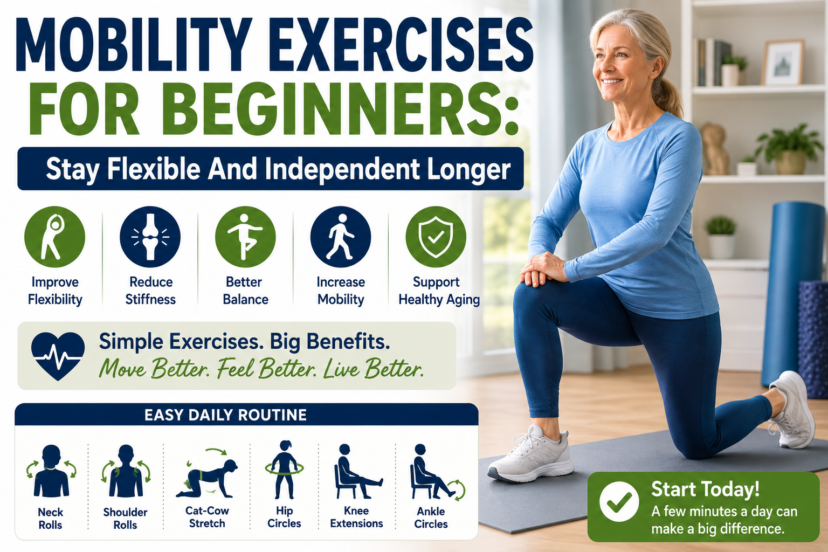
Mobility Exercises For Beginners: Stay Flexible And Independent Longer
What are the best mobility exercises for beginners? Getting older doesn’t mean giving up the activities you enjoy. Yet many adults begin noticing changes in flexibility, balance, and mobility as they age. Simple tasks like bending down, reaching overhead, climbing stairs, or getting out of a chair may start feeling more difficult than they once did.
The good news is that loss of mobility is not always inevitable. In many cases, regular movement and simple exercises can help support flexibility, reduce stiffness, and improve overall quality of life.
If you’re looking for a safe and practical way to stay active, mobility exercises for beginners may help you move more comfortably and maintain your independence for years to come.
⭐ Quick Answer: Mobility Exercises For Beginners
Mobility exercises for beginners are gentle movements designed to improve flexibility, joint function, balance, and range of motion. Regular mobility exercises may help reduce stiffness, support healthy aging, and make everyday activities easier.
Key Takeaways
Most likely cause: Reduced flexibility, muscle weakness, prolonged sitting, and normal age-related changes are common reasons people benefit from mobility exercises for beginners.
Usually serious? No. Gradual loss of mobility is common with aging, but sudden, severe, or rapidly worsening movement problems should be evaluated by a healthcare professional.
First thing to check: Notice which everyday movements feel difficult, such as bending, reaching, standing up, or climbing stairs, and identify any joints that feel especially stiff.
Best solution: Begin with gentle, low-impact mobility exercises, perform them consistently, progress at a comfortable pace, and combine them with regular walking and light strength training to support long-term flexibility and independence.
🚶 Why Mobility Matters As You Age
Mobility affects nearly every part of daily life.
Good mobility helps you:
- Walk comfortably
- Climb stairs safely
- Maintain balance
- Reduce stiffness
- Stay independent
- Lower the risk of falls
Without regular movement, muscles and joints may become tighter over time.
🚶 Common Causes Of Reduced Mobility
Several factors may contribute to loss of flexibility and movement.
Aging
Natural changes include:
- Muscle loss
- Reduced flexibility
- Joint wear and tear
- Slower recovery
Physical Inactivity
Sitting for long periods may lead to:
- Tight muscles
- Poor posture
- Reduced circulation
Previous Injuries
Old injuries may affect movement years later.
Arthritis
Joint discomfort and inflammation may reduce range of motion.
🚶 Benefits Of Mobility Exercises For Beginners
Regular mobility training may help:
- Improve flexibility
- Increase balance
- Support joint health
- Reduce stiffness
- Improve posture
- Increase confidence
- Support healthy aging
Small improvements often add up over time.
🚶 How Often Should Beginners Perform Mobility Exercises?
Many physical therapists recommend:
- 5–10 minutes daily
- 3–7 days per week
- Slow, controlled movements
Consistency matters more than intensity.
🚶 Mobility Exercises For Beginners: Neck Rolls
Neck mobility may help reduce tension caused by:
- Desk work
- Phone use
- Poor posture
How To Perform
- Sit or stand comfortably.
- Slowly rotate your head in gentle circles.
- Repeat several times.
Avoid forcing the movement.
🚶 Mobility Exercises For Beginners: Shoulder Rolls
Shoulder mobility helps support posture and upper-body movement.
Steps
- Lift shoulders toward your ears.
- Roll backward slowly.
- Repeat 10 times.
🚶 Mobility Exercises For Beginners: Cat-Cow Stretch
This exercise promotes spinal mobility.
Instructions
- Begin on hands and knees.
- Arch your back upward.
- Slowly lower your stomach toward the floor.
- Repeat gently.
🚶 Mobility Exercises For Beginners: Hip Circles
Healthy hips are important for walking and balance.
How To Do It
- Stand while holding a chair for support.
- Slowly rotate one leg in circles.
- Switch sides.
🚶 Mobility Exercises For Beginners: Knee Extensions
This movement helps strengthen muscles around the knees.
Instructions
- Sit in a chair.
- Extend one leg forward.
- Hold briefly.
- Return slowly.
Repeat on both sides.
🚶 Mobility Exercises For Beginners: Ankle Circles
Ankle mobility supports walking stability.
Steps
- Lift one foot slightly.
- Rotate the ankle slowly.
- Switch directions.
- Repeat with the opposite foot.
🚶 Mobility Exercises For Beginners: Chair Squats
Chair squats help improve lower-body strength.
Instructions
- Sit in a sturdy chair.
- Stand up slowly.
- Sit back down with control.
- Repeat several times.
🚶 Walking Complements Mobility Training
Walking is one of the easiest forms of exercise.
Walking may help:
- Improve circulation
- Maintain flexibility
- Support cardiovascular health
- Increase endurance
Many adults start with:
- 10 minutes daily
- Comfortable shoes
- Flat surfaces
🚶 Stretching And Mobility Work Together
Stretching may improve:
- Flexibility
- Muscle recovery
- Range of motion
Helpful stretches include:
- Hamstring stretches
- Calf stretches
- Hip flexor stretches
- Chest stretches
Move slowly and comfortably.
🚶 Posture Tips For Better Mobility
Poor posture may limit movement.
Helpful habits include:
- Sitting upright
- Keeping screens at eye level
- Taking movement breaks
- Avoiding prolonged sitting
Small changes can make daily activities easier.
🚶 Physical Therapy For Mobility Problems
Physical therapy may help improve:
- Balance
- Strength
- Flexibility
- Movement patterns
A physical therapist can design exercises based on individual needs and limitations.
🚶 Nutrition Supports Healthy Movement
Healthy eating supports muscles, bones, and joints.
Important nutrients include:
- Protein
- Calcium
- Vitamin D
- Magnesium
- Omega-3 fatty acids
Many Americans obtain these nutrients through foods such as:
- Salmon
- Yogurt
- Eggs
- Nuts
- Leafy greens
🚶 Home Remedies That Support Mobility
Simple habits may help support comfortable movement.
Warm Showers
Heat may help loosen stiff muscles.
Foam Rolling
May help reduce muscle tightness.
Massage
Can promote relaxation and flexibility.
Proper Hydration
Water supports normal muscle function.
🚶 Fall Prevention And Mobility
Improving mobility may help reduce fall risk.
Helpful habits include:
- Wearing supportive shoes
- Keeping walkways clear
- Using handrails
- Staying physically active
Maintaining balance becomes increasingly important with age.
🚨 When To See A Doctor
Seek medical advice if you experience:
- Sudden loss of mobility
- Severe pain
- Significant swelling
- Frequent falls
- Dizziness
- Weakness
- Symptoms that continue worsening
A professional evaluation may help identify underlying conditions.
❓ FAQs: Mobility Exercises For Beginners
What are mobility exercises?
Mobility exercises are movements designed to improve flexibility, joint function, and range of motion.
Are mobility exercises good for seniors?
Yes. Many seniors benefit from gentle mobility exercises that support balance and independence.
How often should beginners perform mobility exercises?
Many experts recommend daily practice or at least several times per week.
Can mobility exercises reduce stiffness?
Regular movement may help improve flexibility and reduce stiffness.
Are mobility exercises the same as stretching?
Not exactly. Mobility exercises involve active movement, while stretching focuses on lengthening muscles.
Is walking considered a mobility exercise?
Walking complements mobility training and supports overall movement.
Can physical therapy improve mobility?
Yes. Physical therapists often help individuals improve strength, balance, and flexibility.
📌 Final Thoughts
Staying active doesn’t require intense workouts or expensive equipment. Simple mobility exercises for beginners may help you move better, stay flexible, and maintain your independence as you age.
The secret is consistency.
Small daily movements performed regularly can support healthier joints, better balance, and greater confidence in everyday life.
Start slowly, stay patient, and remember that every step you take today helps build a healthier future.
Medical Disclaimer
This article is for informational purposes only and is not intended to diagnose, treat, cure, or prevent any disease. Always consult a qualified healthcare professional regarding symptoms, medical concerns, or treatment decisions. Never ignore professional medical advice or delay seeking care because of information found on this website.
 Explore more: