
Stress And Physical Pain: The Hidden Connection That May Be Making You Hurt More
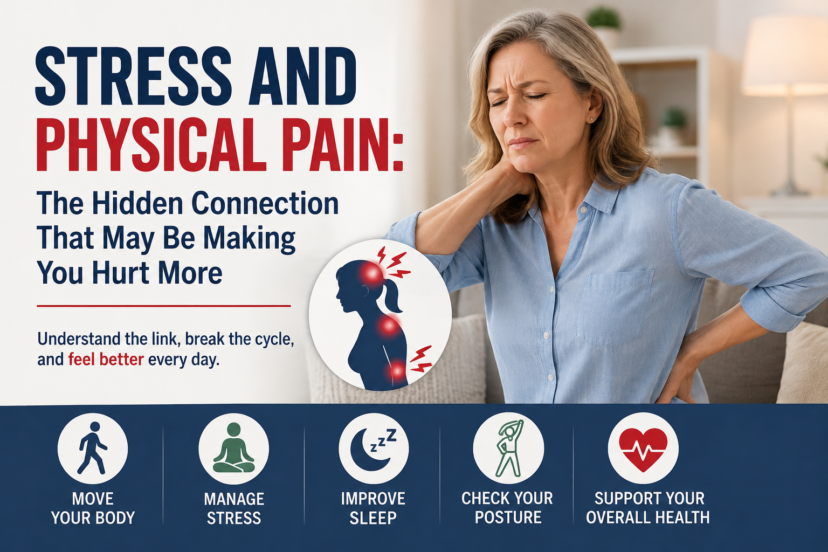
Have you noticed that your neck feels tighter, your back aches more, or your entire body seems stiffer during stressful weeks? The connection between stress and physical pain is stronger than many people realize. Stress doesn’t mean discomfort is imaginary. Instead, the body’s stress response can influence muscle tension, sleep, movement, inflammation, and how strongly the nervous system processes pain signals.
This can become especially frustrating as we get older. Everyday stiffness, old injuries, arthritis, poor posture, and reduced activity may already affect comfort and mobility. Add ongoing stress, and those problems can sometimes feel much worse.
Fortunately, you don’t have to eliminate every source of stress to feel better. Simple changes involving movement, breathing, sleep, posture, relaxation, and professional support can help calm your nervous system and make daily activity more comfortable.
Here’s how to recognize the stress-pain connection and what you can do about it.
⭐ Quick Answer: Stress And Physical Pain
Stress and physical pain can reinforce each other. Stress may increase muscle tension, disrupt sleep, reduce activity, and make the nervous system more sensitive to discomfort. Pain can then create additional worry and stress, forming a difficult cycle. Regular movement, relaxation techniques, better sleep, improved posture, and appropriate medical or physical therapy care can help interrupt this cycle and improve everyday comfort.
Key Takeaways
Most likely cause: Ongoing stress may increase muscle tension, interfere with restorative sleep, and make the nervous system more sensitive to existing aches and discomfort.
Usually serious? Usually not by itself, but persistent or worsening pain deserves attention because stress is not the only possible cause of physical discomfort.
First thing to check: Notice whether your stress and physical pain tend to increase together, particularly during poor sleep, long workdays, emotional strain, or periods of inactivity.
Best solution: Combine gentle daily movement, stress-management techniques, good sleep habits, ergonomic improvements, and professional care when symptoms persist.
🧠 Why Stress Can Make Physical Pain Feel Worse
Stress is a normal biological response. When your brain senses a threat or challenge, the body releases stress hormones and prepares you to respond.
For a short period, this response can be useful. Your heart rate may increase, muscles become ready for action, and attention becomes sharper.
Problems can develop when stress becomes frequent or chronic.
Your body may spend too much time in a heightened state of alertness. Muscles can remain tense, sleep may suffer, and your nervous system may become more attentive to uncomfortable sensations.
This helps explain why stress and physical pain often seem to appear together.
You might notice:
- Tight Shoulders And Neck
- Tension Headaches
- Jaw Clenching
- Lower Back Discomfort
- General Muscle Soreness
- Increased Joint Stiffness
- Digestive Discomfort
- Difficulty Sleeping
- Fatigue And Reduced Motivation
Stress may not be the original cause of an injury or medical condition, but it can change how your body experiences and responds to discomfort.
💪 5 Ways Stress Can Affect Your Physical Comfort
Understanding what’s happening inside your body makes it easier to choose practical solutions.
1. Stress Can Increase Muscle Tension
One of the most noticeable physical effects of stress is muscle tension.
Think about what happens when you’re frustrated at work or stuck in traffic. Your shoulders may rise toward your ears. You might tighten your jaw or brace your abdominal and back muscles without realizing it.
Occasional tension usually resolves once you relax.
With chronic stress, however, certain muscles may remain partially contracted for long periods. This can contribute to soreness, stiffness, headaches, and reduced mobility.
Neck, shoulder, jaw, and back muscles are particularly common areas for stress-related tension.
2. Stress Can Disrupt Sleep
Sleep is one of the body’s most important recovery processes.
Unfortunately, stress can make falling asleep or staying asleep difficult. Racing thoughts and heightened alertness may keep the nervous system activated when your body should be winding down.
Poor sleep can then make discomfort harder to tolerate the following day.
This creates a common cycle:
Stress → Poor sleep → Greater discomfort → More stress → Worse sleep
Breaking that cycle can be an important part of managing stress and physical pain.
3. Stress May Change Pain Sensitivity
Pain isn’t simply a signal coming from a sore muscle or joint. The brain and nervous system play major roles in how those signals are interpreted.
During prolonged periods of stress, the nervous system may become more reactive to sensations that normally wouldn’t bother you as much.
This doesn’t mean the pain isn’t real.
It means pain is influenced by several biological and psychological factors, including sleep, previous injuries, mood, stress levels, activity, and expectations.
Reducing stress can therefore be one useful part of a broader pain-management strategy.
4. Stress Can Make You Move Less
When you’re overwhelmed or exhausted, exercise is often one of the first healthy habits to disappear.
You may spend more time sitting on the couch, working at a computer, or scrolling on your phone.
Less movement can lead to:
- Greater Muscle Stiffness
- Reduced Flexibility
- Weaker Supporting Muscles
- Lower Cardiovascular Fitness
- Reduced Joint Mobility
The result can be even more discomfort.
You don’t necessarily need an intense workout to reverse this pattern. Even several short walks or movement breaks throughout the day can help.
5. Stress Can Affect Everyday Habits
Periods of stress can also change how you eat, sleep, sit, and recover.
Some people rely on more alcohol, highly processed foods, or excessive caffeine. Others stay up late, skip exercise, or spend hours in one position.
Each individual habit may seem minor, but together they can make maintaining physical comfort more difficult.
🚶 How To Break The Stress And Pain Cycle Naturally
The smartest approach isn’t to search for one miracle treatment. Instead, work on several small factors that influence both your nervous system and physical health.
Start With Gentle Daily Movement
Movement is one of the simplest tools available for supporting mobility and reducing stiffness.
For many adults, walking is an excellent starting point.
Try a comfortable 10–20 minute walk and gradually increase your activity as your body adapts.
Other gentle options include:
- Swimming
- Water Aerobics
- Stationary Cycling
- Tai Chi
- Chair Yoga
- Light Resistance Training
- Mobility Exercises
If 20 minutes feels overwhelming, start with five.
Consistency matters more than intensity.
🧘 Use Slow Breathing To Reduce Physical Tension
Slow breathing exercises can encourage your body to shift away from a heightened stress response.
Try this simple technique:
- Sit comfortably with your shoulders relaxed.
- Breathe slowly through your nose.
- Allow your abdomen to gently expand.
- Exhale slowly without forcing the breath.
- Continue for about 3–5 minutes.
Some people find it helpful to make their exhalation slightly longer than their inhalation.
Practice once or twice daily rather than waiting until you’re extremely stressed.
Over time, relaxation becomes a skill your body recognizes more easily.
🪑 Check Your Posture And Workstation
Stress-related discomfort can become worse when combined with poor ergonomics.
If you spend hours at a desk, look at your environment.
Your monitor should generally be positioned so you aren’t constantly looking downward. Keep frequently used items within comfortable reach, and choose a chair that supports your lower back.
More importantly, avoid searching for one “perfect” posture.
Even excellent posture becomes uncomfortable when held for hours.
A better rule is:
Your next posture is often your best posture.
Stand up, stretch gently, or walk for a few minutes every 30–60 minutes when possible.
Frequent position changes can be more useful than rigidly holding yourself upright all day.
🌙 Make Sleep Part Of Your Pain-Relief Strategy
When stress and physical pain are occurring together, sleep deserves serious attention.
Create a simple evening routine that tells your nervous system the day is ending.
Consider:
- Keeping A Consistent Bedtime And Wake Time
- Dimming Lights Before Bed
- Reducing Late-Night Screen Use
- Avoiding Large Amounts Of Caffeine Late In The Day
- Keeping Your Bedroom Cool And Comfortable
- Using Gentle Relaxation Or Breathing Before Sleep
Adults generally need around seven or more hours of sleep, although individual needs vary.
If pain repeatedly wakes you or insomnia continues for weeks, talk with a healthcare professional rather than simply accepting poor sleep as part of aging.
🏋️ Physical Therapy Can Help Restore Comfortable Movement
Physical therapy can be especially valuable when discomfort causes you to avoid certain movements.
A physical therapist can assess your mobility, strength, balance, movement patterns, and daily activities.
Depending on the cause of your symptoms, treatment may include:
- Mobility Exercises
- Progressive Strengthening
- Balance Training
- Posture Education
- Activity Modification
- Gradual Return To Exercise
Physical therapy can also help reduce fear around movement.
This matters because avoiding activity for too long can sometimes lead to weakness and stiffness, making everyday activities feel increasingly difficult.
🌿 Natural Relief Methods Worth Trying
Simple non-drug approaches may provide additional comfort, depending on what’s causing your symptoms.
Heat
A heating pad, warm shower, or warm bath can temporarily relax tense muscles and make gentle movement easier.
Avoid sleeping on a heating pad and follow manufacturer safety instructions.
Gentle Stretching
Stretching may help when muscles feel tight, but aggressive stretching isn’t necessarily better.
Move slowly and stop if you experience sharp, shooting, or worsening pain.
Massage
Massage may temporarily reduce muscle tension and promote relaxation for some people.
Self-massage with your hands or a massage ball can also be useful for easily accessible muscles, provided it doesn’t aggravate symptoms.
Mindfulness And Meditation
Mindfulness doesn’t require pretending pain doesn’t exist.
The goal is to reduce the constant state of alertness that sometimes develops around discomfort.
Even five or ten minutes of quiet breathing, guided meditation, or progressive muscle relaxation may be worth adding to your daily routine.
🥗 Support Your Body With Healthy Everyday Habits
There isn’t a single food or supplement that eliminates stress-related discomfort.
Your overall eating pattern matters more.
Build meals around foods such as vegetables, fruit, beans, whole grains, nuts, seeds, fish, and other lean protein sources.
Staying hydrated is also important, particularly if you’re physically active.
Be cautious with supplements marketed specifically for pain or stress. Products such as magnesium, turmeric/curcumin, and vitamin D are widely available in the U.S., but “natural” doesn’t automatically mean appropriate for everyone.
Supplements can interact with medications or be unsuitable for certain medical conditions.
Discuss supplements with your physician or pharmacist before taking them regularly.
❤️ Don’t Let Fear Of Pain Stop All Activity
One of the biggest challenges with recurring discomfort is the temptation to protect yourself by barely moving.
Rest can be appropriate for certain acute injuries, but prolonged inactivity often isn’t the best long-term strategy for everyday aches and chronic pain.
Start with movements you tolerate comfortably.
Perhaps that’s walking to the mailbox, doing five minutes of mobility exercises, or standing up during television commercials.
Gradually build from there.
The goal isn’t to push through severe pain. It’s to teach your body that safe movement can remain part of everyday life.
🩺 When To See A Doctor About Stress And Physical Pain
Never assume new or persistent pain is caused entirely by stress.
Consider making an appointment with your doctor if discomfort lasts several weeks, repeatedly returns, limits normal activities, disrupts sleep, or continues getting worse.
Seek prompt medical attention for symptoms such as:
- Severe Or Sudden Unexplained Pain
- Chest Pain Or Pressure
- Shortness Of Breath
- New Weakness Or Numbness
- Loss Of Bladder Or Bowel Control
- Significant Swelling Or Redness
- Fever With Significant Pain
- Pain Following A Serious Injury
- Unexplained Weight Loss
A physician can look for underlying medical causes and determine whether treatment, testing, physical therapy, or another specialist is appropriate.
❓ FAQs: Stress And Physical Pain
Can Stress Really Cause Physical Pain?
Yes. Stress can contribute to muscle tension, headaches, sleep disruption, changes in activity, and increased pain sensitivity. However, persistent pain should not automatically be attributed to stress because medical conditions and injuries can cause similar symptoms.
Where Does Stress-Related Pain Usually Occur?
Stress-related muscle tension commonly affects the neck, shoulders, jaw, head, and back. Some people experience more widespread aches or worsening of existing discomfort.
How Do I Know If My Pain Is From Stress?
Look for patterns. If discomfort becomes worse during stressful periods and improves with relaxation, sleep, movement, or time away from stressful situations, stress may be contributing. A healthcare professional can help rule out other causes.
Can Anxiety Make Existing Pain Feel Worse?
It can. Anxiety may increase muscle tension and attention toward uncomfortable sensations while also interfering with sleep and activity. These factors can make existing pain feel more intense.
What Is The Fastest Way To Relax Tense Muscles From Stress?
Slow breathing combined with gentle movement, heat, or a comfortable walk may provide temporary relief. Persistent muscle tension may require physical therapy or medical evaluation.
Does Exercise Help Stress And Physical Pain?
Appropriate exercise can help many people manage stress while maintaining strength, mobility, and function. Walking, swimming, cycling, tai chi, and resistance training are common options. Exercise should be adapted to your abilities and health conditions.
Can Chronic Stress Make Joint Pain Worse?
Stress doesn’t necessarily cause joint disease, but poor sleep, muscle tension, inactivity, and changes in pain sensitivity associated with chronic stress may make existing joint discomfort harder to manage. New or worsening joint pain should be medically evaluated.
🌟 Final Thoughts: Small Changes Can Make A Big Difference
The connection between stress and physical pain shows why lasting comfort often requires looking beyond the exact spot that hurts.
Your sleep, stress levels, movement habits, posture, strength, and daily routines all influence how you feel.
You don’t need to change everything at once.
Start with one manageable habit. Take a short walk each day. Practice five minutes of slow breathing. Improve your workstation. Protect your sleep. Gradually rebuild strength.
Most importantly, give your body time.
Healthy aging and better mobility aren’t about avoiding every ache. They’re about building the strength, confidence, and habits that allow you to keep doing the activities that matter to you.
Consistency and patience can turn small improvements into a healthier, more active, and more comfortable life.
Medical Disclaimer: This article is for educational and informational purposes only and is not intended to diagnose, treat, cure, or prevent any medical condition. It does not replace personalized medical advice from a physician, physical therapist, or other qualified healthcare professional. Always consult an appropriate healthcare provider about persistent or worsening pain, new symptoms, medical conditions, medications, supplements, or changes to your exercise program.
 Explore more:



Comments are closed.