Muscles Feel Tight: Why Your Muscles Feel Tight Even When You Rest
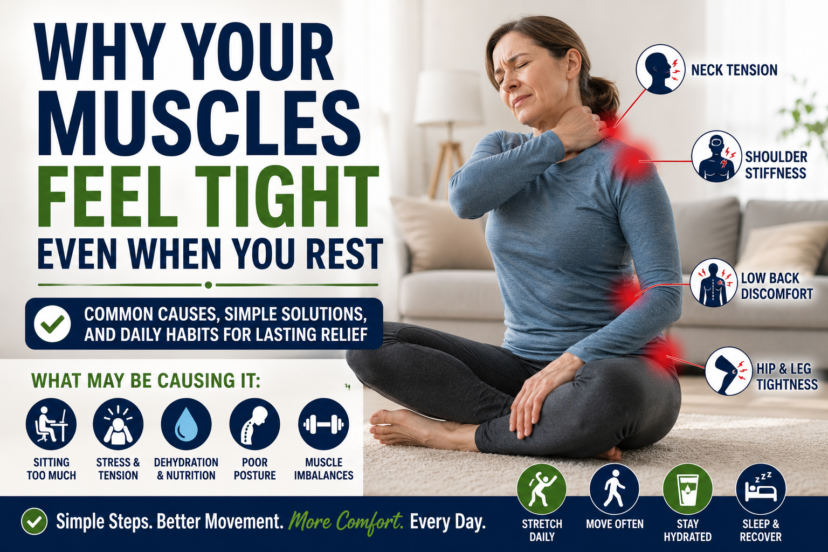
Have you ever woken up feeling stiff even after a full night’s sleep? Or noticed that your shoulders, neck, calves, or back feel tense despite taking it easy all day? If your muscles feel tight, you’re not alone. Many adults experience persistent muscle tightness that seems to linger whether they’re active or resting.
While it’s normal to feel sore after intense exercise, ongoing muscle tightness can have many other causes. Poor posture, stress, dehydration, inactivity, muscle imbalances, and even certain medical conditions may all contribute. Tight muscles can make simple activities like walking, bending, reaching, or getting out of bed feel more difficult than they should.
The encouraging news is that most cases of muscle tightness respond well to consistent lifestyle changes. Gentle movement, stretching, strength training, hydration, stress management, and better daily habits can help your muscles relax and function more efficiently.
This guide explains why muscles feel tight, what may be causing the problem, and practical, evidence-based ways to improve flexibility, reduce discomfort, and support healthier movement for years to come.
⭐ Quick Answer: Muscles Feel Tight
If your muscles feel tight even when you rest, common causes include inactivity, poor posture, stress, dehydration, muscle imbalances, aging, overuse, or certain health conditions. Regular stretching, gentle exercise, proper hydration, good sleep, and strengthening exercises often help improve flexibility and reduce muscle tension.
Key Takeaways
Most likely cause: Persistent muscle tightness is commonly linked to inactivity, prolonged sitting, poor posture, stress, overuse, dehydration, or muscle imbalances rather than one specific problem.
Usually serious? Usually not. If your muscles feel tight without severe pain or other concerning symptoms, everyday habits and muscle tension are often contributing factors. Persistent or unexplained tightness, especially with weakness, swelling, numbness, or significant pain, deserves medical evaluation.
First thing to check: Look at your daily movement, sitting time, posture, hydration, recent exercise, sleep, and stress levels to identify patterns that may be keeping your muscles tense.
Best solution: Combine regular gentle movement with appropriate stretching, progressive strength training, adequate hydration, good sleep, and frequent breaks from prolonged sitting. If symptoms continue despite these changes, consider speaking with a healthcare professional or physical therapist.
🦴 Why Muscles Feel Tight Even Without Exercise
Many people assume muscle tightness only happens after a workout. In reality, muscles can become tight for many different reasons.
Muscles work together with tendons, joints, ligaments, and nerves to produce smooth movement. When one part of this system isn’t functioning optimally, muscles often compensate by becoming tense.
Over time, persistent tightness may reduce flexibility, limit movement, and contribute to everyday aches and pains.
Fortunately, identifying the underlying cause is the first step toward lasting relief.
💻 Common Reasons Muscles Feel Tight
Several everyday habits and health factors can contribute to ongoing muscle tightness.
Sitting Too Much
Long periods of sitting shorten certain muscles while weakening others.
Commonly affected areas include:
- Hip flexors
- Hamstrings
- Lower back
- Neck
- Shoulders
Even if you exercise regularly, sitting for hours at a time may still contribute to muscle stiffness.
Poor Posture
Slouching or holding your head forward places constant stress on muscles.
This often causes:
- Tight neck muscles
- Shoulder tension
- Upper back stiffness
- Lower back discomfort
Muscle Imbalances
Some muscles become overly tight while opposing muscles become weak.
Examples include:
- Tight hip flexors with weak glutes
- Tight chest muscles with weak upper back muscles
- Tight calves with weak shin muscles
Correcting these imbalances often improves movement significantly.
Stress And Anxiety
Mental stress has physical effects.
When you’re stressed, muscles naturally contract as part of the body’s protective response.
Chronic stress can lead to:
- Neck tightness
- Jaw tension
- Shoulder pain
- Back stiffness
Dehydration
Muscles need adequate fluids and electrolytes to function properly.
Even mild dehydration may contribute to:
- Muscle cramps
- Fatigue
- Reduced flexibility
- Increased muscle tension
🚶 How Aging Affects Muscle Tightness
As we grow older, several natural changes occur.
These include:
- Reduced muscle mass
- Less elastic connective tissue
- Stiffer joints
- Lower activity levels
- Slower recovery
These changes can make muscles feel tighter than they did years earlier.
The good news is that regular movement can slow many age-related changes.
😣 Symptoms That Often Accompany Tight Muscles
When muscles feel tight, you may also notice:
- Morning stiffness
- Reduced flexibility
- Muscle soreness
- Limited range of motion
- Difficulty bending
- Aching after sitting
- Muscle fatigue
- Tenderness
- Poor posture
- Balance difficulties
These symptoms often improve temporarily after gentle movement.
🧘 Daily Stretching Helps Muscles Feel Tight Less Often
Stretching improves flexibility while helping muscles relax.
Focus on the areas most likely to become tight.
Neck Stretch
Gently tilt your head toward each shoulder.
Chest Stretch
Use a doorway stretch to open tight chest muscles.
Hip Flexor Stretch
This helps reverse prolonged sitting.
Hamstring Stretch
Flexible hamstrings reduce stress on the lower back.
Calf Stretch
Important for walking comfort and balance.
Hold each stretch:
- 20–30 seconds
- Without bouncing
- While breathing slowly
Stretch daily for the best results.
💪 Strength Training Reduces Muscle Tightness
It may seem surprising, but weak muscles often become tight because they work harder than they should.
Strength training helps improve muscle balance.
Excellent exercises include:
- Glute bridges
- Wall push-ups
- Resistance band rows
- Bird dogs
- Chair squats
- Side leg raises
Aim for:
- Two to three sessions weekly
- Controlled movements
- Proper form
Stronger muscles support healthier movement and reduce unnecessary tension.
🚶 Keep Your Body Moving Throughout The Day
Movement is one of the most effective ways to reduce stiffness.
Simple ideas include:
- Walking after meals
- Standing every 30–60 minutes
- Taking stretch breaks
- Parking farther away
- Using stairs
- Gardening
- Light household chores
Frequent movement keeps muscles warm and joints lubricated.
🪑 Improve Your Posture
Poor posture places constant stress on muscles.
Helpful posture habits include:
- Keep shoulders relaxed
- Look straight ahead
- Sit with both feet flat
- Support your lower back
- Avoid crossing legs for long periods
- Raise screens to eye level
Even small posture improvements can reduce muscle tension throughout the day.
🥗 Nutrition Supports Healthy Muscles
Healthy muscles require proper nutrition.
Prioritize:
Lean Protein
Supports muscle repair.
Examples:
- Chicken
- Fish
- Eggs
- Greek yogurt
- Beans
Magnesium
Magnesium supports normal muscle and nerve function.
Foods include:
- Pumpkin seeds
- Almonds
- Spinach
- Black beans
Some adults may benefit from supplements after discussing them with their healthcare provider.
Potassium
Supports healthy muscle contractions.
Sources include:
- Bananas
- Sweet potatoes
- Avocados
Omega-3 Fatty Acids
Found in:
- Salmon
- Walnuts
- Flaxseed
These healthy fats help support normal inflammatory responses.
Water
Hydration is one of the simplest ways to support healthy muscle function.
🌿 Natural Relief Methods
Many adults find additional comfort through conservative therapies.
Options include:
- Warm showers
- Heating pads
- Foam rolling
- Massage therapy
- Gentle yoga
- Tai Chi
- Swimming
- Walking
- Deep breathing exercises
- Mindfulness meditation
Using heat before activity may help loosen muscles, while gentle stretching afterward may improve flexibility.
🩺 When Physical Therapy May Help
If muscles feel tight for weeks despite home care, physical therapy may be beneficial.
A physical therapist can evaluate:
- Muscle strength
- Flexibility
- Joint mobility
- Posture
- Walking mechanics
- Movement patterns
Treatment may include:
- Individualized stretching
- Strengthening exercises
- Manual therapy
- Balance training
- Home exercise programs
🚨 When To See A Doctor
Although muscle tightness is often harmless, certain symptoms require medical evaluation.
See your healthcare provider if you experience:
- Severe or worsening pain
- Muscle weakness
- Numbness or tingling
- Swelling
- Redness or warmth
- Fever
- Unexplained weight loss
- Persistent stiffness lasting several weeks
- Difficulty walking
- Tightness following an injury
Prompt evaluation helps rule out underlying medical conditions.
❓ FAQs: Muscles Feel Tight
Why do my muscles feel tight all the time?
Common causes include poor posture, inactivity, dehydration, stress, muscle imbalances, aging, overuse, or certain medical conditions.
Can dehydration make muscles feel tight?
Yes. Inadequate hydration may contribute to muscle cramps, stiffness, and reduced flexibility.
Is walking good for tight muscles?
Yes. Gentle walking increases circulation, warms muscles, and often reduces stiffness.
Does stress cause muscle tightness?
Yes. Chronic stress commonly causes tension in the neck, shoulders, jaw, and back.
Should I stretch every day?
For most people, daily stretching helps improve flexibility and reduce recurring muscle tightness.
Can vitamin deficiencies cause tight muscles?
Low levels of nutrients such as magnesium or vitamin D may contribute to muscle discomfort in some individuals. Discuss testing with your healthcare provider if symptoms persist.
When should I worry about muscle tightness?
Seek medical attention if muscle tightness is severe, persistent, associated with weakness, numbness, swelling, fever, or follows an injury.
🎯 Final Thoughts On Muscles Feel Tight
If your muscles feel tight even while resting, your body may be telling you it needs better movement, improved posture, more strength, or healthier recovery habits. Rather than relying on quick fixes, focus on consistent daily actions like stretching, staying active, drinking enough water, eating a balanced diet, and managing stress. These small changes often lead to meaningful improvements over time.
Remember, flexibility and comfort aren’t built overnight. With patience, regular movement, and smart lifestyle choices, you can reduce muscle tightness, improve mobility, and enjoy a healthier, more active life.
Medical Disclaimer
This article is intended for educational and informational purposes only and should not replace professional medical advice, diagnosis, or treatment. Always consult your physician or another qualified healthcare provider before starting a new exercise program, taking supplements, or making significant lifestyle changes, especially if you have persistent pain, a chronic medical condition, or recent injury. Seek immediate medical attention if you experience severe pain, sudden weakness, numbness, difficulty walking, or other concerning symptoms.
 Explore more: