Recovery Takes Longer With Age: 9 Reasons Your Body Needs More Time To Bounce Back
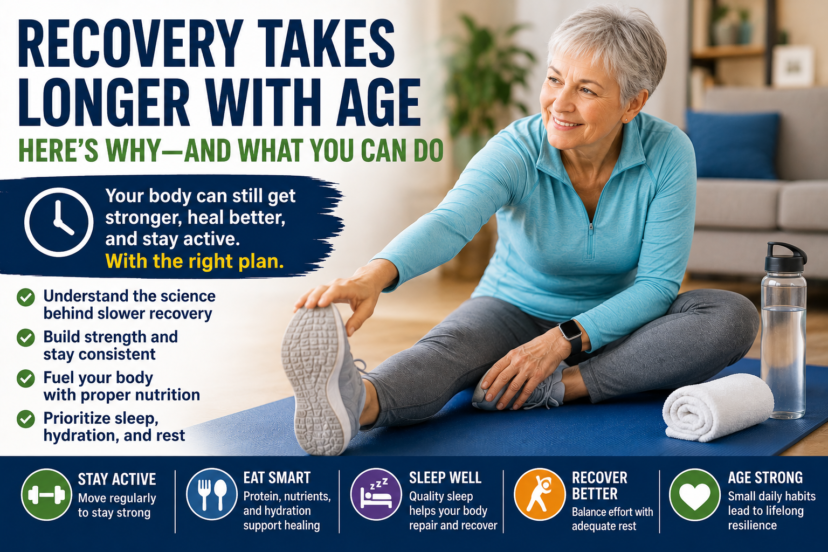
Remember when you could spend an entire weekend hiking, working in the yard, or exercising and feel almost normal the next morning? As the years pass, you may notice that soreness hangs around longer and minor strains seem to require more patience. It’s true that recovery takes longer with age for many people, but that doesn’t mean discomfort, weakness, and inactivity are inevitable.
Aging can affect muscle mass, tissue repair, sleep, circulation, joint health, and how quickly your body adapts to physical stress. At the same time, lifestyle factors such as inactivity, poor nutrition, inadequate recovery, and doing too much too quickly can make the difference even more noticeable.
The encouraging part is that you can influence many of these factors. Regular strength training, adequate protein, good sleep, gradual exercise progression, and active recovery can help you stay resilient, mobile, and capable well into later life.
⭐ Quick Answer: Why Recovery Takes Longer With Age
Recovery takes longer with age partly because aging can affect muscle protein synthesis, tissue repair, muscle mass, sleep, and the body’s ability to adapt to physical stress. Older adults may therefore need more recovery between demanding activities. However, regular resistance training, adequate nutrition, sufficient sleep, hydration, and gradual increases in activity can support recovery and help maintain strength and mobility.
Key Takeaways
Most likely cause: Normal age-related changes in muscle, connective tissue, sleep, and physical conditioning can make soreness and fatigue last longer after demanding activity.
Usually serious? Usually not, but recovery that suddenly becomes much slower or is accompanied by severe pain, weakness, swelling, or unexplained fatigue deserves medical attention.
First thing to check: If your recovery takes longer with age, look at whether you’ve recently increased your exercise, changed activities, slept poorly, become less active, or aren’t allowing enough recovery between demanding days.
Best solution: Stay consistently active, strengthen your muscles, increase activity gradually, prioritize sleep and nutrition, and adjust your recovery schedule to what your body can comfortably tolerate today.
🧬 Why Recovery Changes As You Get Older
Recovery is much more complicated than simply waiting for soreness to disappear.
Every challenging workout, long walk, gardening session, or physically demanding day places stress on muscles and other tissues. Your body responds by repairing and adapting to that stress.
Age can influence this process.
Changes in muscle mass, hormones, connective tissues, sleep quality, and physical activity levels can affect how quickly you feel ready for another demanding session.
But chronological age isn’t the only factor.
A physically active 65-year-old who regularly strength trains may tolerate certain activities better than a sedentary person decades younger.
That’s why healthy aging should focus less on avoiding physical stress and more on building your body’s capacity to handle it.
💪 1. Muscle Mass And Strength Can Decline With Age
One major reason recovery takes longer with age involves changes in skeletal muscle.
Adults can gradually lose muscle mass and strength as they get older, particularly when they’re physically inactive. This age-related loss is often referred to as sarcopenia when it becomes clinically significant.
Less muscle can make the same task relatively more demanding.
For example, carrying groceries may represent only a small percentage of your maximum strength when you’re highly conditioned. If you’ve lost significant strength, the exact same bags require much more effort.
The solution isn’t avoiding resistance.
Appropriate strength training becomes increasingly valuable with age.
Exercises such as sit-to-stands, resistance-band rows, wall push-ups, step-ups, and progressively heavier resistance can help preserve muscle and everyday function.
🥩 2. Muscle Protein Response Changes
Protein provides amino acids your body uses for maintaining and repairing muscle tissue.
As people age, skeletal muscle may become somewhat less responsive to the muscle-building signals from smaller amounts of dietary protein—a concept sometimes called anabolic resistance.
This makes overall nutrition particularly important.
Include quality protein sources throughout the day, such as:
- Eggs
- Fish
- Poultry
- Greek Yogurt
- Cottage Cheese
- Beans And Lentils
- Tofu And Soy Foods
- Lean Meat
Protein requirements vary with body size, activity level, kidney health, and medical conditions.
Older adults who are very active or trying to preserve muscle may benefit from discussing their individual protein needs with a physician or registered dietitian.
🦵 3. Connective Tissues Also Need Recovery
Muscles aren’t the only tissues affected by exercise.
Tendons connect muscles to bones, while ligaments, cartilage, and other connective tissues contribute to joint function.
These tissues respond to loading differently than muscles.
A common mistake is increasing exercise because your cardiovascular fitness feels ready while your joints and tendons haven’t adapted to the new workload yet.
This can happen when someone suddenly begins:
- Walking Several Miles Per Day
- Hiking Steep Trails
- Playing Pickleball
- Running
- Lifting Weights
- Doing Extensive Yard Work
When recovery takes longer with age, smaller increases in workload may help prevent repeated flare-ups.
😴 4. Sleep May Become Less Restorative
Sleep plays an important role in physical and mental recovery.
Unfortunately, sleep patterns often change with age. Some adults experience more nighttime awakenings or spend less time in certain stages of sleep.
Pain itself can also interfere with sleep.
That can create a frustrating cycle:
Pain → Poor Sleep → Greater Fatigue And Pain Sensitivity → Less Activity → More Discomfort
Protecting your sleep is therefore part of your recovery strategy.
Try to maintain a consistent wake time, keep your bedroom cool and dark, reduce late-evening caffeine and alcohol, and create a calming routine before bed.
If pain, snoring, breathing problems, or insomnia repeatedly disrupt your sleep, discuss it with your healthcare provider.
🏃 5. You May Be Less Conditioned Than You Realize
Sometimes age gets blamed for something that’s actually deconditioning.
Maybe you used to walk five miles every weekend but haven’t done so for six months.
Your first long walk back may leave you surprisingly sore.
That’s not necessarily because your body has suddenly become fragile.
It may simply no longer be conditioned for that workload.
Rebuild gradually.
If you haven’t exercised recently, begin with a duration you can comfortably tolerate and slowly increase from there.
Your body retains the ability to adapt at older ages—it simply needs appropriate training and enough recovery.
🔥 6. Inflammation And Health Conditions Can Affect Recovery
Inflammation is a normal part of the body’s response to physical stress and injury.
However, aging and certain chronic health conditions may influence inflammatory processes and recovery.
Conditions such as arthritis, diabetes, cardiovascular disease, and some autoimmune disorders can also affect how you feel after activity.
Medications may play a role as well.
This is one reason you shouldn’t automatically assume every new ache or slow recovery period is “just aging.”
If your recovery has changed significantly without an obvious explanation, talk with your doctor.
💧 7. Hydration Can Be Easier To Overlook
Your sense of thirst may become less reliable with age, making it easier to become inadequately hydrated.
Hydration supports normal physical performance and temperature regulation.
You don’t need to force enormous amounts of water to eliminate muscle soreness, but you should drink regularly throughout the day and pay particular attention during exercise and hot weather.
Water needs vary according to body size, climate, activity, medications, and medical conditions.
People with heart or kidney conditions may need individualized guidance regarding fluid intake.
🏋️ 8. “Weekend Warrior” Exercise Becomes Harder To Tolerate
Doing almost nothing Monday through Friday and then exercising intensely for several hours Saturday can be challenging at any age.
It may become particularly noticeable when recovery takes longer with age.
Your body generally responds better to consistent, manageable physical activity.
Instead of one exhausting weekly session, consider distributing movement throughout the week.
For example:
Monday: 20–30 minute walk
Tuesday: Strength training
Wednesday: Easy movement or recovery
Thursday: Strength training
Friday: Comfortable walk
Saturday: Recreational activity
Sunday: Light movement or recovery
Your exact routine should match your health, abilities, and goals.
📈 9. You May Be Increasing Exercise Too Quickly
Feeling good during a workout doesn’t necessarily mean your body is ready for a dramatic increase in workload.
Some soreness doesn’t appear until later.
Instead of simultaneously increasing your walking distance, speed, hills, and strength training, change one variable at a time.
For example, if you normally walk 20 minutes comfortably, try adding several minutes rather than suddenly walking for an hour.
Observe how you feel later that day and the following morning.
Your recovery response provides valuable information about whether the workload was appropriate.
🌿 How To Recover Faster And More Comfortably
You can’t stop biological aging, but you can create better conditions for recovery.
Use Active Recovery
Complete bed rest usually isn’t necessary for ordinary post-exercise soreness.
Gentle movement can often feel better.
Try:
- Easy Walking
- Gentle Cycling
- Comfortable Mobility Exercises
- Light Household Activity
- Easy Stretching
Active recovery shouldn’t feel like another demanding workout.
Use Heat For Stiffness
A warm shower, bath, or heating pad may temporarily help stiff muscles feel more comfortable.
Follow manufacturer instructions and avoid sleeping on a heating pad.
Try Cold When Appropriate
Some people prefer a wrapped cold pack for short-term relief after certain injuries or painful activities.
Never apply ice directly to the skin.
Neither heat nor cold replaces medical evaluation when an injury is significant.
🧘 Stretch, But Don’t Force Your Body
Gentle stretching can help you maintain comfortable mobility, particularly after prolonged sitting.
However, stretching harder doesn’t necessarily make recovery faster.
Avoid bouncing or aggressively pushing into pain.
Use slow movements and comfortable ranges.
If a muscle or joint is extremely painful, stretching it forcefully can make matters worse.
Mobility work is most effective when combined with strengthening and regular activity rather than treated as the only solution.
💪 Strength Training May Be Your Best Long-Term Investment
If you want your body to remain resilient with age, maintaining muscle is one of the most valuable goals.
Adults generally benefit from muscle-strengthening activity at least two days per week, although the appropriate starting point depends on individual health and fitness.
You don’t need a bodybuilding program.
Resistance bands, machines, dumbbells, and body-weight movements can all work.
Focus on major movement patterns involving your legs, hips, back, chest, shoulders, and arms.
Progress gradually.
Stronger muscles can make everyday tasks represent a smaller percentage of your physical capacity—and therefore feel less exhausting.
🧍 Pay Attention To Posture And Movement Habits
Recovery isn’t only about workouts.
Spending eight hours sitting in one position can contribute to stiffness even on a “rest day.”
Change positions regularly.
Stand during phone calls.
Walk around your home.
Perform a few gentle shoulder or ankle movements.
If you work at a desk, arrange your monitor, keyboard, and chair comfortably, but don’t obsess over maintaining one perfect posture.
Frequent movement is usually more practical than rigid posture.
💊 Do Recovery Supplements Help?
Protein powders, creatine, magnesium, turmeric, collagen, and other products are heavily marketed for exercise recovery and healthy aging in the U.S.
Some supplements have evidence supporting specific uses, while others have limited or inconsistent evidence.
Creatine, for example, has been studied extensively in connection with muscle performance and resistance training, including in older adults. But that doesn’t mean every supplement is appropriate for every person.
Supplements can interact with medications or be inappropriate for certain medical conditions.
Before using supplements regularly, discuss them with your physician, pharmacist, or registered dietitian.
🩺 How Physical Therapy Can Improve Recovery
If pain repeatedly prevents you from exercising, a physical therapist can help identify why.
They can evaluate:
- Strength
- Joint Mobility
- Balance
- Walking Mechanics
- Movement Patterns
- Exercise Tolerance
- Previous Injuries
A physical therapist can then build a progressive program that challenges your body without repeatedly overwhelming it.
This can be particularly useful after injury, surgery, prolonged inactivity, or when arthritis and chronic pain make exercise difficult.
🚨 When To See A Doctor About Slow Recovery
Some additional recovery time can be normal as you age, but don’t dismiss every symptom as getting older.
Talk with your healthcare provider if soreness or fatigue is becoming progressively worse, lasts much longer than expected, or interferes significantly with normal activities.
Seek prompt medical attention for:
- Severe Or Sudden Pain
- Significant Swelling
- Inability To Bear Weight
- New Weakness Or Numbness
- Chest Pain
- Unusual Shortness Of Breath
- Fever With Significant Pain
- A Hot, Red, Swollen Joint
- Pain After A Serious Injury
- Unexplained Weight Loss Or Fatigue
Persistent symptoms deserve an explanation rather than an assumption.
❓ FAQs About Recovery Takes Longer With Age
Why Does Recovery Take Longer As You Get Older?
Age-related changes in muscle mass, protein metabolism, connective tissues, sleep, and physical conditioning can influence recovery. Lifestyle and overall health also play major roles.
At What Age Does Recovery Start To Slow Down?
There isn’t one specific age when recovery suddenly slows. Changes occur gradually and vary considerably depending on fitness, health, sleep, nutrition, activity, and genetics.
How Can I Speed Up Muscle Recovery As I Get Older?
Prioritize adequate sleep, appropriate nutrition and protein, hydration, gradual training progression, regular strength exercise, and enough time between demanding workouts.
Should Older Adults Take More Rest Days?
Some older adults benefit from additional recovery between demanding sessions, but needs vary. Active recovery and easier exercise days can often be used instead of complete inactivity.
Is Muscle Soreness Worse With Age?
Some people notice longer-lasting soreness as they get older, particularly after unfamiliar or demanding exercise. Training history, workout intensity, sleep, and conditioning also strongly influence soreness.
What Is The Best Exercise For Healthy Aging And Recovery?
A balanced routine combining walking or other aerobic activity, progressive strength training, balance exercises, and mobility work generally provides greater benefits than relying on one exercise alone.
Can You Still Build Muscle After 60?
Yes. Older adults can respond to resistance training and improve muscle strength and function. Appropriate training, nutrition, consistency, and recovery become particularly important.
🌟 Final Thoughts: Recovery May Change, But Your Potential Doesn’t Disappear
It’s normal to notice that recovery takes longer with age, especially after strenuous exercise or unfamiliar physical activity.
That doesn’t mean your body is incapable of becoming stronger.
It means your approach may need to become smarter.
Train consistently rather than sporadically. Build strength. Eat nutritious food with adequate protein. Protect your sleep. Stay hydrated. Use easier days between demanding sessions and increase your workload gradually.
Most importantly, stop comparing your current recovery to what your body could tolerate decades ago.
The better question is: What can I do today to make my body more capable next month?
Give yourself enough time and repeat those healthy habits consistently.
Strength, mobility, resilience, and independence can still improve with age—and those improvements are worth being patient for.
Medical Disclaimer: This article is for educational and informational purposes only and is not intended to diagnose, treat, cure, or prevent any medical condition. It does not replace personalized medical advice from a physician, physical therapist, registered dietitian, or other qualified healthcare professional. Seek professional guidance for persistent or worsening pain, unusual fatigue, significant changes in recovery, medical conditions, medications, supplements, or major changes to your exercise program.
 Explore more:
- Creating A Pain-Friendly Home: 15 Simple Adjustments
- Why Is My Back Pain Worse When I Am Tired?
- Hip Pain After Walking: 9 Common Reasons