Stretching Routine For Stiff Muscles: 10 Simple Moves To Loosen Tight Joints And Move Better
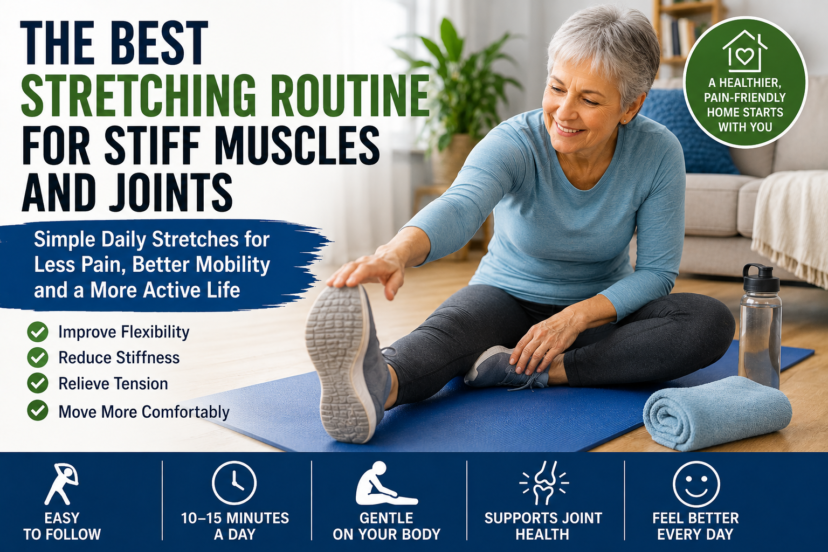
Waking up feeling like your body needs ten minutes just to “get going” can be frustrating. Tight hips, stiff shoulders, an achy back, and joints that don’t move as freely as they once did can make ordinary activities feel harder. A simple stretching routine for stiff muscles may help restore comfortable movement without requiring complicated equipment or an expensive gym membership.
Muscle and joint stiffness becomes more noticeable for many adults after long periods of sitting, reduced activity, repetitive movements, poor sleep, or changes that occur with aging. But becoming less flexible isn’t something you simply have to accept.
Regular movement, gentle stretching, and strength training can help maintain mobility and make walking, bending, reaching, and exercising easier.
The key is stretching intelligently. You shouldn’t force painful positions or chase extreme flexibility. A short routine performed consistently can be far more useful than an aggressive stretching session once a week.
⭐ Quick Answer: Stretching Routine For Stiff Muscles
A practical stretching routine for stiff muscles should take about 10–15 minutes and gently move the neck, shoulders, upper back, hips, thighs, calves, and ankles. Warm up with several minutes of easy movement first, then hold comfortable static stretches for about 15–30 seconds without bouncing. Stretching should create mild tension—not sharp pain. For lasting mobility, combine stretching with regular walking and progressive strength training.
Key Takeaways
Most likely cause: Muscle and joint stiffness commonly develops from prolonged sitting, reduced physical activity, muscle tension, repetitive movements, and age-related changes in flexibility and strength.
Usually serious? Usually not, especially when stiffness improves after moving. Persistent stiffness accompanied by significant swelling, weakness, severe pain, or other unusual symptoms deserves medical evaluation.
First thing to check: Before starting a stretching routine for stiff muscles, notice which areas feel restricted and whether stiffness improves after several minutes of gentle movement.
Best solution: Combine comfortable daily stretching with regular walking, mobility exercises, strength training, good posture habits, and frequent movement breaks throughout the day.
🧠 Why Muscles And Joints Become Stiff
Stiffness doesn’t necessarily mean something is damaged.
Often, your body simply hasn’t been moving enough.
Spend several hours sitting at a computer or watching television and your hips, back, shoulders, and ankles may feel noticeably tighter when you stand.
Muscles and connective tissues adapt to how they’re regularly used. If your daily routine involves limited ranges of motion, certain movements may gradually become less comfortable.
Other contributors include:
- Reduced Physical Activity
- Repetitive Movements
- Muscle Weakness
- Osteoarthritis
- Previous Injuries
- Poor Sleep
- Stress And Muscle Tension
- Long Periods Of Sitting
- Certain Medical Conditions
Aging can also influence muscle strength and joint mobility, but regular physical activity can help preserve function.
That’s why stretching works best as one part of a broader healthy-movement routine.
🔥 Warm Up Before You Stretch
One of the most common stretching mistakes is going directly from sitting to an intense stretch.
Instead, warm your body up first.
Spend about three to five minutes doing easy movement.
You could:
- Walk Around The House
- March Gently In Place
- Perform Slow Shoulder Rolls
- Move Your Arms Comfortably
- Use A Stationary Bike At Low Resistance
Your goal isn’t to become tired.
You simply want to increase circulation and prepare your body to move through a greater range of motion.
Once you’re warm, begin your stretching routine for stiff muscles slowly.
🤸 10-Move Stretching Routine For Stiff Muscles And Joints
You don’t need to perform every movement perfectly.
Stay within a comfortable range and breathe normally. Never bounce or force your body deeper into a stretch.
1. Gentle Neck Rotation
Sit or stand comfortably with your shoulders relaxed.
Slowly turn your head toward the right until you feel a comfortable stretch.
Hold briefly, return to center, and repeat toward the left.
Avoid forcing your chin toward your shoulder.
Try: 3–5 slow repetitions per side.
This movement may be useful after extended periods of reading, driving, or computer work.
2. Shoulder Rolls
Let your arms hang comfortably.
Slowly roll your shoulders backward in a controlled circular motion.
Complete several repetitions and then reverse direction.
Try: 8–10 rolls each way.
Shoulder rolls provide gentle movement rather than an aggressive stretch and can be useful throughout the workday.
3. Chest And Shoulder Stretch
Stand near an open doorway.
Place your forearm comfortably against the door frame and gently rotate your body away until you feel mild tension across the chest and front of the shoulder.
Hold: 15–30 seconds.
Repeat on the other side.
Stop if the position causes pinching or sharp shoulder pain.
4. Seated Upper-Back Stretch
Sit toward the front of a sturdy chair.
Place your hands in front of you and gently reach forward while allowing your upper back to round slightly.
You should feel comfortable movement through the upper back and shoulder area.
Hold: About 15–20 seconds.
Return slowly to your starting position.
5. Standing Hip Flexor Stretch
Stand in a staggered position with one foot in front of the other.
Keep your torso upright and gently shift your weight forward while keeping the back leg extended comfortably.
You may feel a stretch near the front of the hip on the back-leg side.
Hold: 20–30 seconds per side.
Avoid aggressively arching your lower back.
6. Seated Hamstring Stretch
Sit near the front edge of a sturdy chair.
Extend one leg in front of you with the heel resting on the floor.
Keep your back relatively neutral and gently hinge forward from your hips until you feel mild tension along the back of the thigh.
Hold: 20–30 seconds.
Switch legs.
There’s no need to reach for your toes.
7. Figure-Four Hip Stretch
Sit securely in a sturdy chair.
If comfortable, place one ankle across the opposite thigh.
Keeping your spine comfortable, gently lean forward until you feel tension around the hip or buttock.
Hold: 20–30 seconds.
Repeat on the other side.
Skip this movement if crossing your leg causes hip, knee, or groin pain.
8. Standing Quadriceps Stretch
Stand next to a sturdy counter or chair for balance.
Bend one knee and bring your heel toward your buttock.
If comfortable, hold your ankle or pant leg while keeping your knees relatively close together.
Hold: 15–30 seconds.
Switch sides.
If reaching your ankle is difficult, don’t force the position. A physical therapist can show you alternative quadriceps stretches.
9. Wall Calf Stretch
Place your hands against a wall.
Step one foot backward and keep that heel comfortably on the floor.
Bend your front knee slightly while keeping the back leg relatively straight.
You should feel a stretch through the calf.
Hold: 20–30 seconds.
Repeat on the opposite side.
Flexible calves and ankles can support comfortable walking and stair climbing.
10. Gentle Ankle Mobility
Sit in a sturdy chair with one foot slightly raised.
Slowly point your toes forward and then bring them back toward you.
Next, make small controlled circles with your ankle.
Try: 8–10 movements in each direction.
Repeat with the other foot.
Ankle mobility can be particularly useful after long periods of sitting.
⏱️ How Long Should You Hold A Stretch?
For general flexibility, many adults can hold a comfortable static stretch for roughly 15–30 seconds and repeat it two or more times.
You don’t need to stretch until it hurts.
Aim for mild to moderate tension.
You should still be able to breathe normally and relax into the position.
If you’re grimacing, holding your breath, or fighting to remain in position, you’re probably stretching harder than necessary.
When following a stretching routine for stiff muscles, consistency matters more than intensity.
🌅 Is It Better To Stretch In The Morning Or At Night?
The best time is the time you’ll actually do it consistently.
If you’re especially stiff in the morning, begin with gentle movement rather than immediately performing deep stretches.
Walk around your home, take a warm shower, or march gently in place first.
Evening stretching can also feel relaxing, particularly after sitting or working all day.
Another effective approach is to perform short mobility breaks throughout the day instead of relying on one long stretching session.
Try standing and moving for a few minutes every 30–60 minutes during prolonged sitting.
💪 Stretching Alone Isn’t Enough For Long-Term Mobility
Stretching can improve flexibility, but flexibility is only one component of comfortable movement.
Strength matters too.
If your hips feel tight, for example, endlessly stretching them may not address weakness in the muscles supporting your pelvis and legs.
Consider combining your stretching routine with exercises such as:
- Sit-To-Stands
- Glute Bridges
- Wall Push-Ups
- Calf Raises
- Resistance-Band Rows
- Step-Ups
- Gentle Balance Exercises
For most adults, a balanced routine includes aerobic activity, muscle strengthening, and mobility or flexibility work.
The goal isn’t simply being able to stretch farther.
It’s being strong and mobile enough to perform everyday activities confidently.
🪑 Improve Your Posture By Moving More Often
Poor posture is frequently blamed for stiffness, but staying in any position for hours can become uncomfortable.
Instead of trying to sit all day perfectly, change positions.
Stand while making a phone call.
Walk to refill your water.
Move your shoulders between emails.
Alternate between sitting and standing when practical.
If you work at a computer, position your screen and keyboard comfortably and keep commonly used items within easy reach.
A two-minute movement break several times per day can complement your stretching routine for stiff muscles without adding another workout to your schedule.
🌿 Natural Ways To Ease Stiff Muscles At Home
A few simple strategies can make gentle movement more comfortable.
Use Warmth
A warm shower, bath, or heating pad may temporarily relax stiff muscles.
Heat can be particularly pleasant before stretching.
Follow manufacturer instructions and avoid sleeping with a heating pad.
Try Self-Massage
Gentle self-massage may temporarily reduce muscle tension.
A massage ball or foam roller can also be useful, but more pressure isn’t necessarily better.
Avoid aggressively rolling directly over painful joints, injured areas, or unexplained swelling.
Stay Hydrated
Hydration is important for overall health and physical performance, although drinking extra water isn’t a cure for chronic stiffness.
Keep water available throughout the day, particularly when exercising or spending time outdoors in hot weather.
Protect Your Sleep
Poor sleep can affect recovery and make physical discomfort harder to tolerate.
Aim for a consistent sleep schedule and create an environment that supports restful sleep.
🩺 When Physical Therapy May Help
A physical therapist can be particularly useful if stiffness prevents you from walking normally, exercising, climbing stairs, or completing everyday activities.
Instead of simply prescribing more stretches, a therapist can assess:
- Joint Range Of Motion
- Muscle Strength
- Balance
- Walking Mechanics
- Movement Patterns
- Previous Injuries
- Functional Limitations
Your treatment may include stretching, strengthening, balance training, manual therapy, or modifications to everyday movements.
This can be especially valuable if you have arthritis, chronic pain, a previous joint replacement, or recurring back, hip, knee, shoulder, or neck problems.
🚨 When To See A Doctor About Muscle And Joint Stiffness
Occasional stiffness after inactivity is common.
However, make an appointment with a healthcare professional if stiffness is persistent, progressively worsening, or significantly limiting your daily activities.
Seek prompt medical attention for symptoms such as:
- A Hot, Red, Significantly Swollen Joint
- Severe Unexplained Pain
- Significant Weakness
- New Numbness Or Tingling
- Fever With Joint Pain
- Inability To Bear Weight
- Pain After A Serious Injury
- Unexplained Weight Loss
Prolonged morning stiffness, especially when combined with swelling or multiple painful joints, also deserves medical evaluation because inflammatory conditions can sometimes cause these symptoms.
❓ FAQs About Stretching Routine For Stiff Muscles
What Is The Best Stretching Routine For Stiff Muscles?
A good routine gently targets the neck, shoulders, chest, upper back, hips, thighs, calves, and ankles. Warm up first, move slowly, and avoid forcing painful positions.
How Long Does It Take For Stretching To Reduce Stiffness?
Some people feel temporarily looser immediately after stretching. More lasting flexibility improvements generally require consistent practice over weeks rather than one stretching session.
Should I Stretch Every Day If My Muscles Are Stiff?
Gentle stretching can often be performed regularly if it feels comfortable. Your routine should also include appropriate strength training and general physical activity.
Is Stretching Good For Arthritis Stiffness?
Gentle range-of-motion and flexibility exercises may help maintain movement for people with arthritis. Exercise should be adapted to your symptoms and abilities, particularly during significant flare-ups.
Why Am I So Stiff After Sitting?
Remaining in one position for a long time can make muscles and joints temporarily feel stiff. Regular movement breaks and changing positions throughout the day can help.
Should Stretching Hurt To Work?
No. Stretching should generally create mild tension rather than sharp or severe pain. Forcing painful stretches can irritate sensitive tissues.
Is Walking Good For Stiff Muscles And Joints?
Walking provides gentle repetitive movement and can be an excellent way to warm up stiff muscles and joints. Start with a distance and pace you tolerate comfortably and gradually increase activity.
🌟 Final Thoughts: Move A Little Every Day
The best stretching routine for stiff muscles isn’t necessarily the longest or most complicated one.
It’s the routine you can perform comfortably and consistently.
Spend a few minutes warming up. Stretch the areas that feel restricted. Move throughout the day. Add strength training. Walk regularly. And give your body time to adapt.
Don’t measure success by whether you can touch your toes.
Measure it by the things that actually improve your life: getting out of bed more easily, reaching overhead comfortably, walking farther, climbing stairs with confidence, or playing with your grandchildren without feeling as restricted.
Small improvements add up.
Stay patient, respect pain signals, and focus on building a body that remains strong, mobile, and capable for years to come.
Medical Disclaimer: This article is for educational and informational purposes only and is not intended to diagnose, treat, cure, or prevent any medical condition. It does not replace personalized advice from a physician, physical therapist, or other qualified healthcare professional. Seek professional medical advice for persistent, severe, unexplained, or worsening stiffness or pain, and before beginning a new exercise program if you have significant medical or mobility concerns.
 Explore more:
- Why Do Stairs Make My Knees Hurt More?
- Why Is My Back Pain Worse When I Am Tired?
- Recovery Takes Longer With Age: 9 Reasons